Sliding Door Treatments in Chester and Delaware County PA
A wide slider can change the whole feel of a room in Chester and Delaware County, PA. In the morning, it pours light across the floor. By late afternoon, it can turn a family room into a bright hot box, leave a dining area feeling exposed, or create that constant awkward shuffle around a panel that never quite stacks where you want it to. Sliding door treatments in Chester and Delaware County PA are not just about covering glass. They are about making one of the busiest openings in the home easier to live with.
Bumble Bee Blinds of Chesco and Delco helps homeowners across the area find custom solutions for patio doors, deck doors, and large glass openings that need to look polished while still working smoothly every single day. Whether the home is a newer build in Chester Springs, a stone colonial near Wayne, or a townhouse in Exton with a compact rear slider, the right treatment should move well, fit cleanly, and feel like part of the room instead of an afterthought.
Large Glass Doors Behave Differently Than Standard Windows
A sliding glass door asks more from a window treatment than a regular bedroom or office window does. The scale is different, the traffic is heavier, and the operating pattern is constant. People are heading outside with coffee, letting the dog out, carrying groceries in from the patio, or opening the door during a backyard gathering. If the treatment drags, tangles, or blocks the doorway in an awkward way, you feel it immediately.
That is why sliding door treatments need to be chosen with movement in mind. The best option is not only about color or fabric. It also has to stack neatly, clear the handle, align with the opening, and allow access without becoming irritating after a week of real use. A beautiful treatment that fights the door is never the right answer.
A Practical Fit for Patios, Decks, Sunrooms, and Backyard Access
Across Chester County and Delaware County, sliding doors often connect the busiest spaces in the home. They lead from kitchen to deck, family room to patio, breakfast nook to backyard, or primary suite to a private terrace. In many houses, that means the door gets used dozens of times a day.
That daily wear changes the recommendation. A homeowner in Garnet Valley with children running in and out may need a treatment that glides quickly and stands up to repeated use. Someone in Kennett Square with a sunroom opening onto a garden may care more about filtered light and preserving the view. In Broomall or Newtown Square, a rear slider facing close neighboring homes may need stronger privacy in the evening without making the room feel shut in during the day.
Styles That Work Especially Well for Sliding Doors
Not every window covering belongs on a sliding glass door. The best-performing options are usually the ones designed for width, motion, and repeated operation. Depending on the room and the look you want, strong possibilities may include:
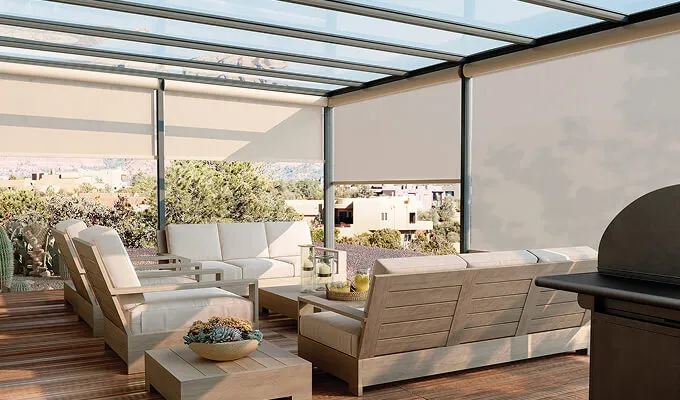
- Sliding panels for a clean, modern appearance
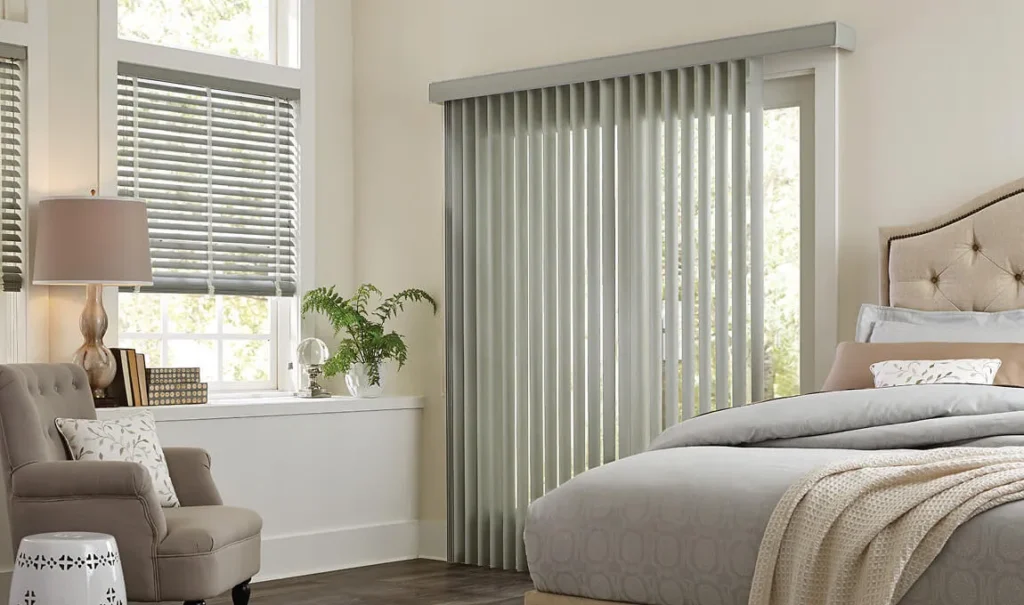
- Vertical blinds for straightforward light control and easy function
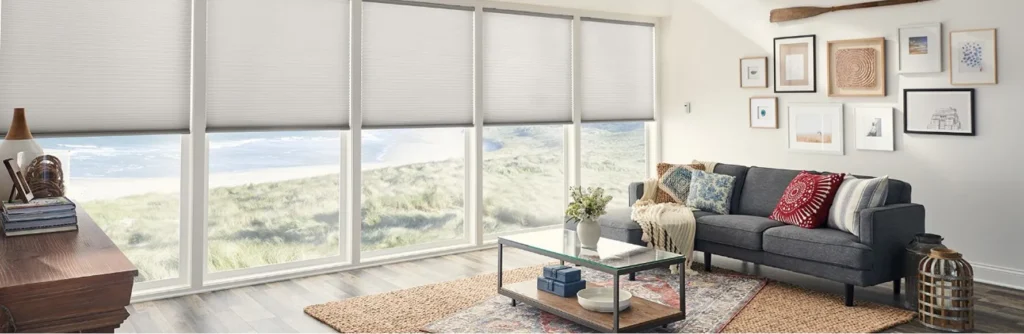
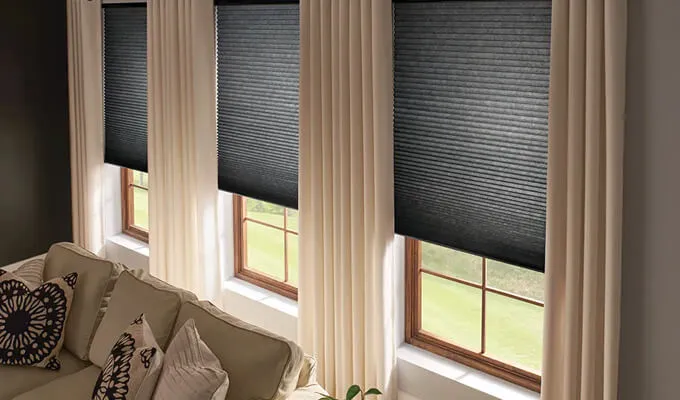
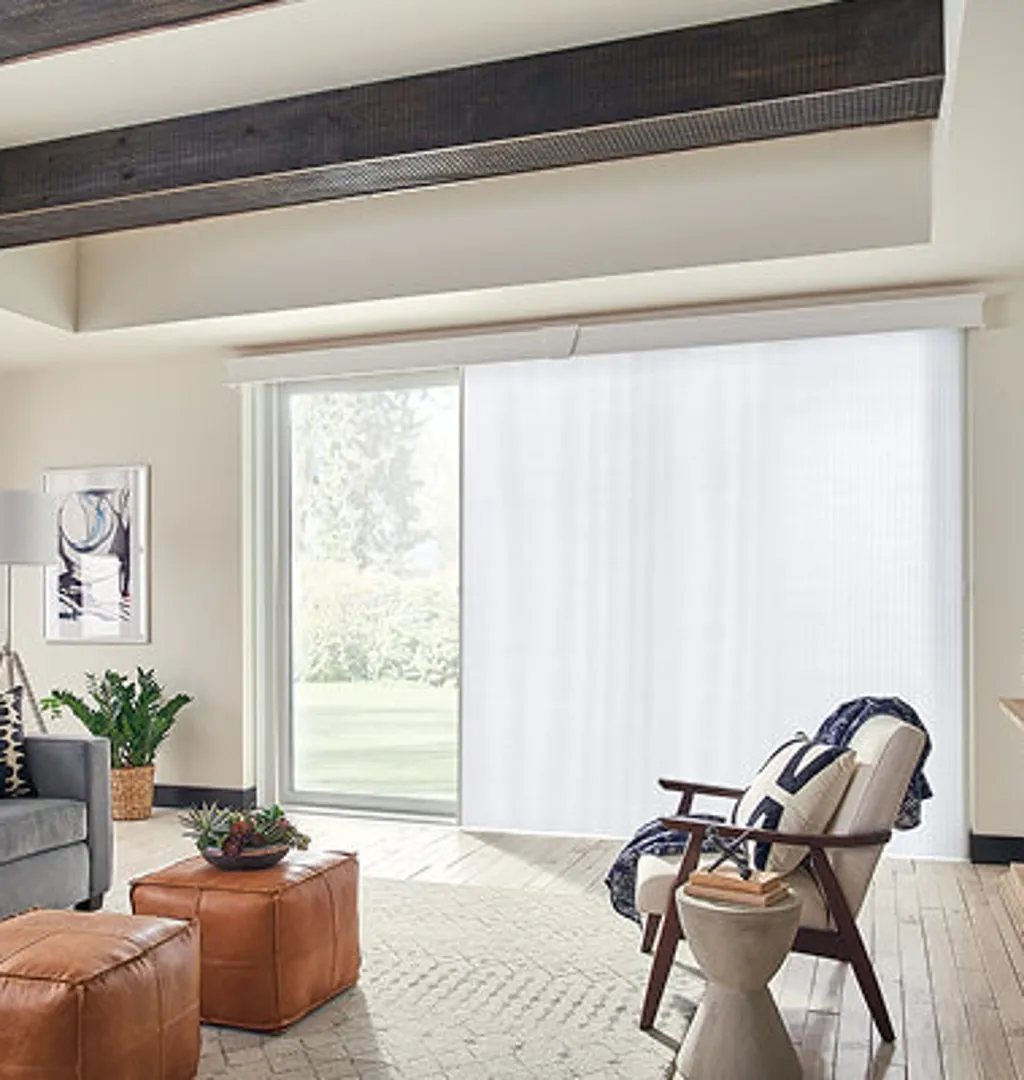
- Vertical cellular shades for a softer look with added insulation
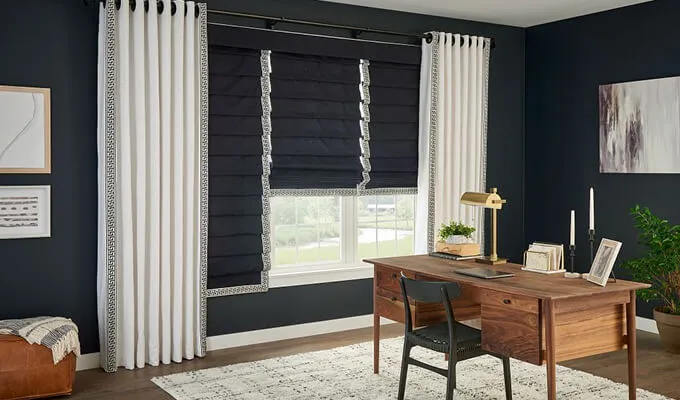
- Drapery panels for rooms that need warmth, softness, or a more decorative finish
- Motorized solutions for wide openings or hard-to-reach configurations
The right product depends on how formal or casual the space feels, how much room there is to stack the treatment, and how often the door is used. A casual family room may call for something durable and simple, while a dining room with a backyard view may benefit from a more tailored treatment that frames the glass instead of just covering it.
Older Homes and Newer Builds Create Different Design Challenges
One thing that makes this area interesting is the mix of housing stock. In parts of Delaware County and along the Main Line, older homes may have deep trim, uneven framing, or door openings that do not match modern standard assumptions. In newer developments around Downingtown, Malvern, and Phoenixville, the issue is often the opposite: larger expanses of glass, open-concept rooms, and a stronger need to coordinate the slider with nearby windows.
That difference matters. A treatment that looks balanced in a newer great room can feel too bulky in an older den with tighter proportions. Likewise, a product that works on a modest patio door may look undersized on a broad rear wall of glass. Custom measuring helps avoid those visual mistakes, but just as important, it helps prevent operational problems like poor stacking, rubbing, or awkward clearances around handles and trim.
Light Control at the Back of the House Is Often the Real Issue
For many households, the biggest challenge is not the door itself. It is what that door does to the room between noon and sunset. Rear-facing glass in PA homes can create glare on televisions, fade flooring and furniture, and heat up open living areas fast during bright months.
A well-chosen sliding door treatment can soften that effect without erasing the sense of openness people love about large glass doors. Some homeowners want filtered daylight. Others want room-darkening for media spaces or better privacy after dark. The goal is to tune the room, not smother it. A slider should still feel like an asset, just one that behaves better.
Operation Matters More Here Than Almost Anywhere Else
On a standard window, a small operating annoyance might be tolerable. On a sliding door, it becomes part of your routine. That is one reason cordless and motorized options are so valuable in this category. They reduce clutter, simplify use, and can make a wide opening feel much easier to manage.
This is especially useful for homes with kids and pets. Fewer cords mean a cleaner look and a safer setup, but there is also a durability benefit. Treatments on patio doors get touched constantly. They are opened in a hurry, moved with one hand, bumped during parties, and used while carrying things outside. Smooth operation is not a luxury here. It is part of whether the product will still feel like a smart choice a year from now.
Matching the Door Treatment to the Rest of the Room
A sliding door rarely sits alone. It usually shares a wall or sightline with nearby windows, and the room can look disjointed if the treatments do not relate to each other. That does not mean everything has to be identical. It means the textures, lines, and level of formality should make sense together.
For example, a living room in West Chester might pair a tailored sliding panel system on the rear door with coordinating shades on adjacent windows. A more traditional home in Bryn Mawr or Devon may call for drapery that softens the glass and ties into the architecture. The goal is a finished look that feels intentional from every angle, especially in open layouts where the slider is impossible to ignore.
Why In-Home Consultation Makes a Difference on Door Projects
Sliding door treatments are hard to choose from a screen because scale and movement are everything. What looks sleek online may feel too narrow in person. What seems soft and elegant in a photo may stack too wide for the space beside the glass. Seeing samples in the room helps clarify not just color, but proportion, function, and how the treatment will actually live in the home.
Bumble Bee Blinds of Chesco and Delco brings that process into the space itself. That matters for door projects because the surrounding trim, nearby furniture, light direction, and walking path all influence what will work best. A solution for a heavily used slider in Aston may be very different from one for a more formal entertaining space in Paoli, even if the doors are roughly the same size.
Custom Installation Helps the Finished Result Feel Effortless
Sliding door treatments have to look clean when open and when closed. That sounds simple, but it depends on good measurements, sound product selection, and precise installation. A little misalignment is much more noticeable on a large glass opening than it is on a smaller window.
Professional installation helps ensure the treatment hangs correctly, clears the frame, operates smoothly, and sits where it should across the full width of the opening. The result should feel easy. That is usually the sign the job was done right. The treatment does what you need it to do, and the room finally feels settled.
Find a Sliding Door Solution That Suits the Way Your Home Moves
A good sliding door treatment should make everyday life smoother while also improving the look of the room. It should manage light, protect privacy, and give you easy access to the outdoors without becoming one more thing in the house that needs to be worked around.
Bumble Bee Blinds of Chesco and Delco serves homeowners throughout Chester County and Delaware County, PA with custom sliding door treatments designed for real rooms and real routines. If your patio door, deck door, or large glass opening is overdue for a better solution, the next step is simple: schedule a consultation and compare options in the space where they will actually be used.