Published by Bumble Bee Blinds of Spring Hill | Spring Hill, FL
If you’ve lived in Hernando or Pasco County for more than one summer, you know Florida doesn’t do “mild weather.” Between the intense sun beating through your windows from May through September and the year-round humidity that makes everything feel sticky, your window treatments work harder here than they would almost anywhere else in the country.
The wrong blinds or shades won’t just look bad — they’ll warp, fade, mold, or simply fail to keep your home comfortable. The right ones can meaningfully reduce your energy bill, protect your furniture, and make your living spaces actually livable even in peak summer.
Here’s what works best for Florida homes, and why.
Why Florida Is Different
Most window treatment advice is written for four-season climates. Florida homeowners face a different set of challenges:
- UV intensity. Florida receives some of the highest levels of UV radiation in the continental U.S. Standard fabrics fade in months, not years. Wood warps. Cheap vinyl cracks.
- Humidity. Average indoor humidity in a Florida home — especially near the coast or in heavily wooded areas like parts of Spring Hill — can run 60–70% even with AC running. This creates mold and mildew risk in organic materials like real wood or natural-fiber fabrics.
- Heat gain through glass. Large windows and sliding glass doors (common in Florida construction) let in enormous amounts of solar heat, forcing your AC to work overtime.
- Afternoon sun angles. Many Florida homes face west or southwest, meaning brutal late-afternoon sun hits living rooms and bedrooms directly.
With that context, here are the window treatments that hold up best.
1. Solar Roller Shades — Best for Heat & Glare Control
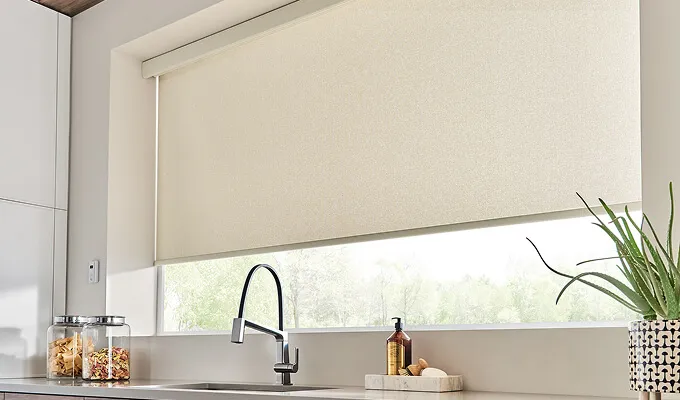
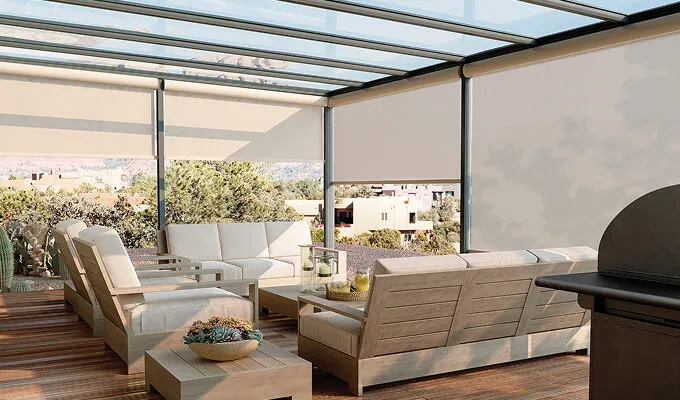
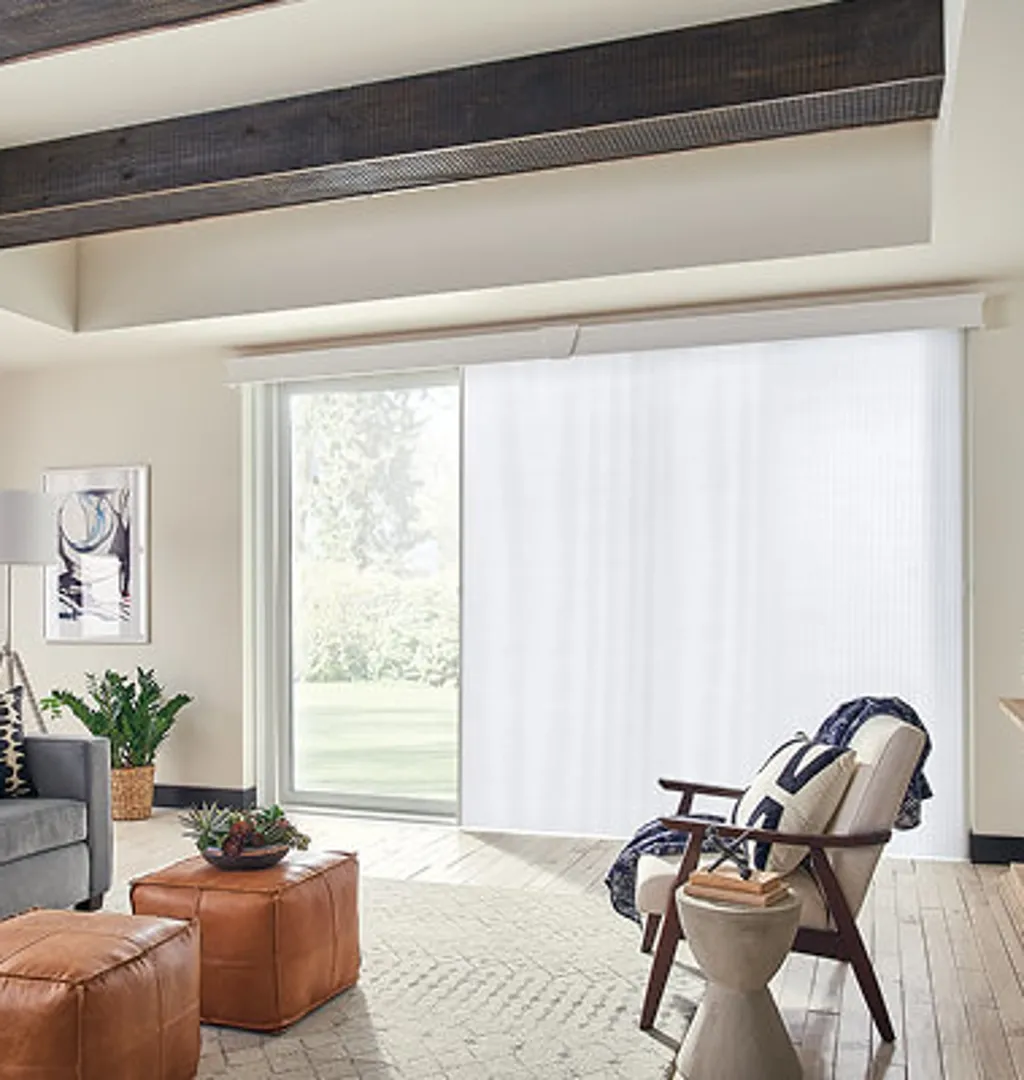
Solar roller shades are probably the single most practical window treatment for Florida. They’re designed specifically to block UV rays and reduce solar heat gain while still letting in diffused natural light — so your room stays bright without turning into a greenhouse.
Why they work in Florida:
- Openness factors range from 1% to 14%. A 3–5% openness blocks the majority of UV and heat while still giving you an outdoor view.
- Most are made from fiberglass or polyester — both highly humidity-resistant materials that won’t warp, crack, or mold.
- They reduce cooling costs by blocking heat before it enters the glass.
Best for: Living rooms, home offices, and any room with large windows or a west-facing exposure.
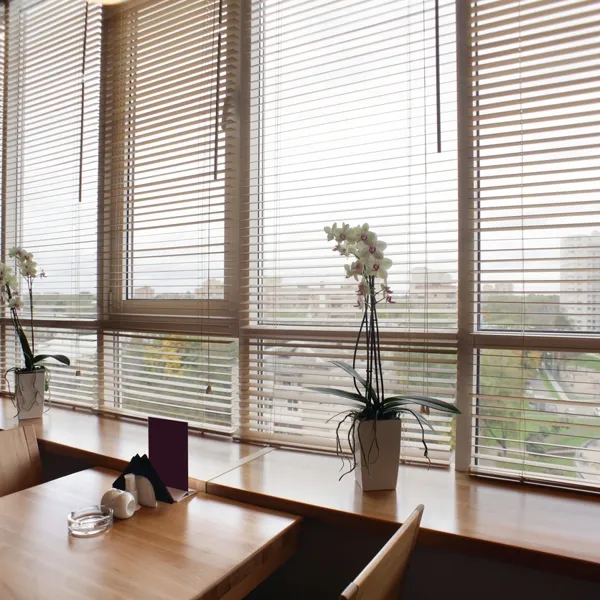
2. Faux Wood Blinds — Best Humidity-Resistant Alternative to Real Wood
Real wood blinds look beautiful, but they’re a poor choice for Florida’s climate. Solid wood absorbs moisture, swells, warps, and eventually won’t close properly — especially in kitchens, bathrooms, and anywhere near a screened lanai.
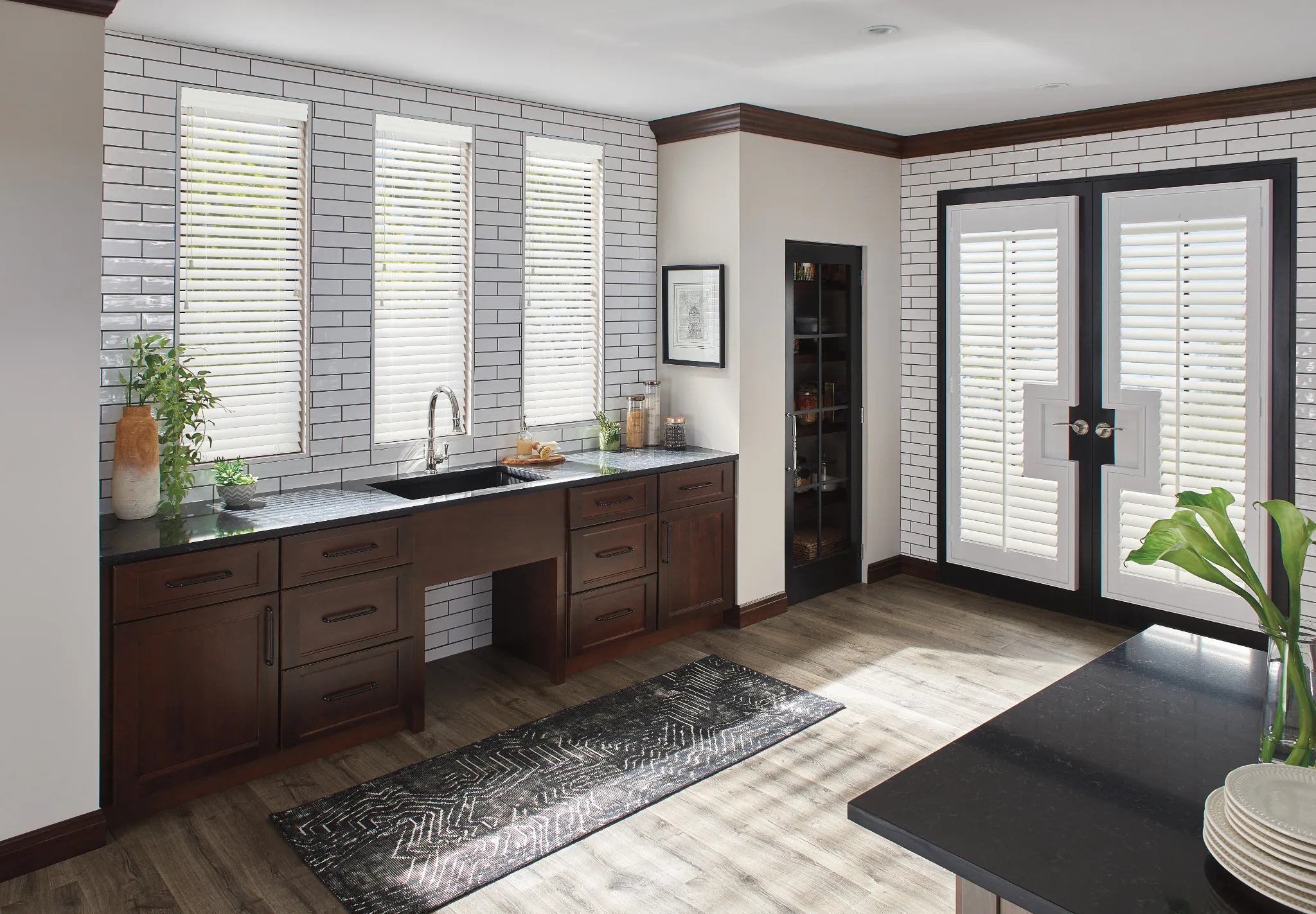
Faux wood blinds are engineered to mimic the look of real wood while resisting moisture completely. Quality faux wood uses a composite material that handles humidity and temperature swings without issue.
Why they work in Florida:
- Won’t warp, crack, or swell even in high-humidity rooms
- Easy to wipe clean (important in kitchens and with Florida’s dust and pollen)
- Much more durable in direct sun than real wood
- More affordable than real wood, with nearly identical aesthetics
Best for: Kitchens, bathrooms, laundry rooms, garages with windows, and any room that gets seasonal humidity spikes.
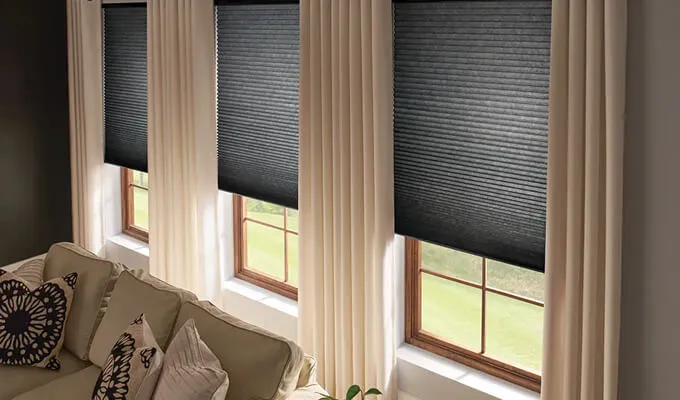
3. Cellular (Honeycomb) Shades — Best for Energy Efficiency
If reducing your FPL or TECO bill is a priority, cellular shades are worth a serious look. Their honeycomb structure traps air in small pockets, creating an insulating barrier between your window glass and your room.
In Florida, this matters less for keeping heat in (like in northern climates) and more for keeping solar heat out while maintaining cooler indoor air.
Why they work in Florida:
- Double-cell options provide significantly better insulation than single-cell
- Available in light-filtering and room-darkening fabrics
- Cordless and motorized options remove safety hazards for families with kids and pets
- Fabric options resist moisture and fading better than older materials
Best for: Bedrooms, nurseries, and rooms where you want maximum temperature control and privacy.
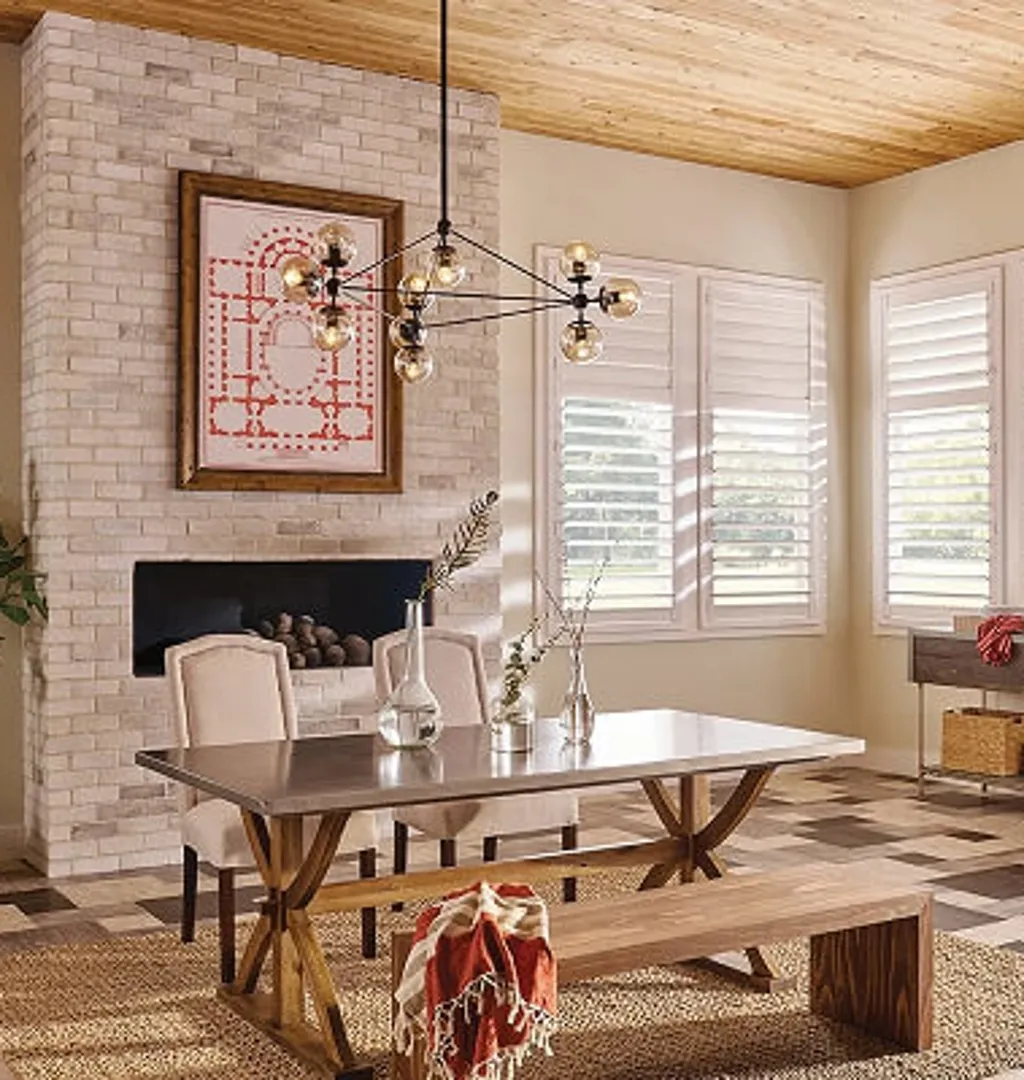
4. Plantation Shutters — Best Long-Term Investment
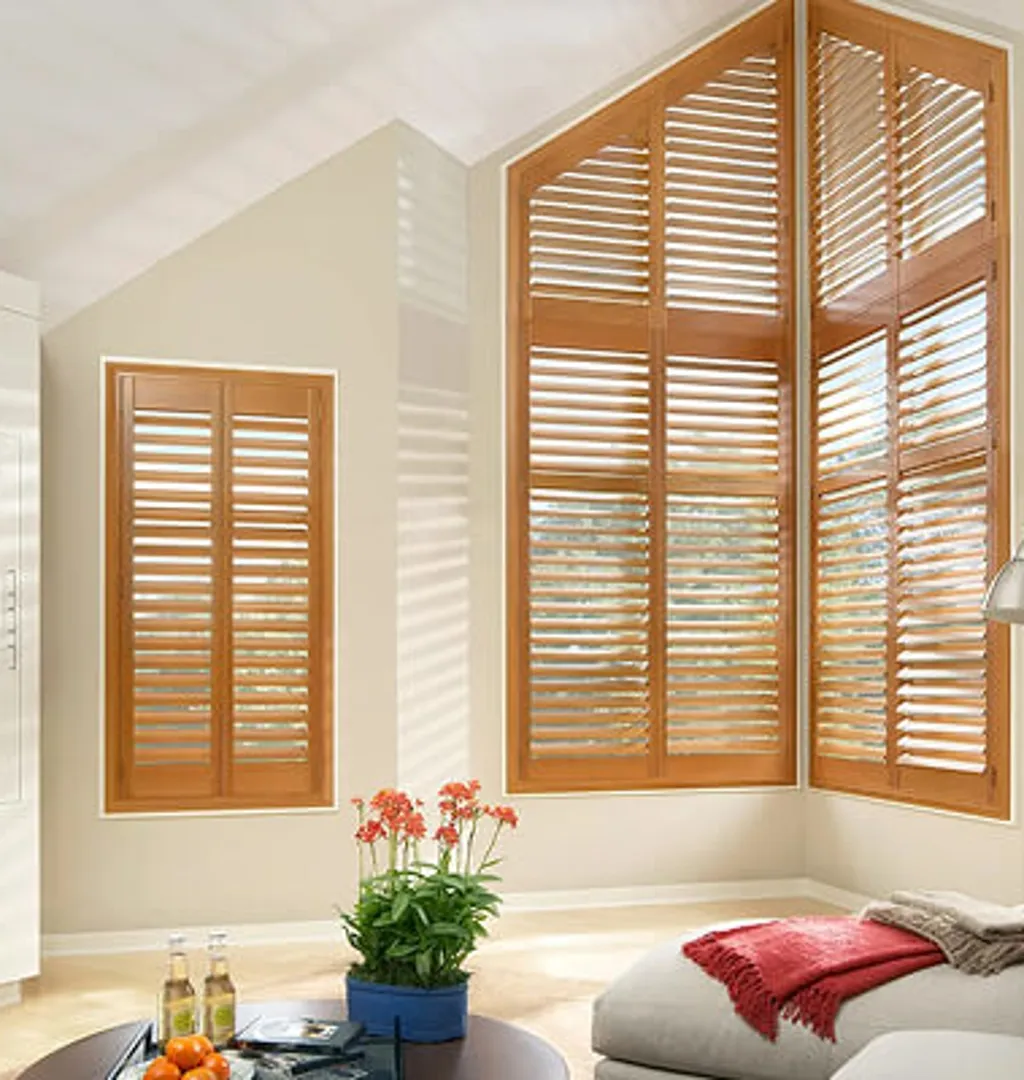
Plantation shutters are the premium choice for Florida homeowners, and for good reason — they’re built to last decades, they look great in nearly every architectural style common in Central Florida, and they give you precise control over light and airflow.
Why they work in Florida:
- Vinyl and composite shutters (the right choice for humid climates) are completely immune to moisture damage
- Wide louvers allow you to direct airflow into the room while maintaining privacy useful during Florida’s “windows-open” months in fall and spring
- They don’t fade, discolor, or degrade with UV exposure the way fabric treatments do
- Add to home resale value
The one caveat: Real wood shutters, despite looking beautiful, carry the same risks as real wood blinds in high-humidity environments. Stick with vinyl or composite for any room with moisture exposure.
Best for: Living rooms, dining rooms, master bedrooms, and homes where you want a permanent, high-value upgrade.
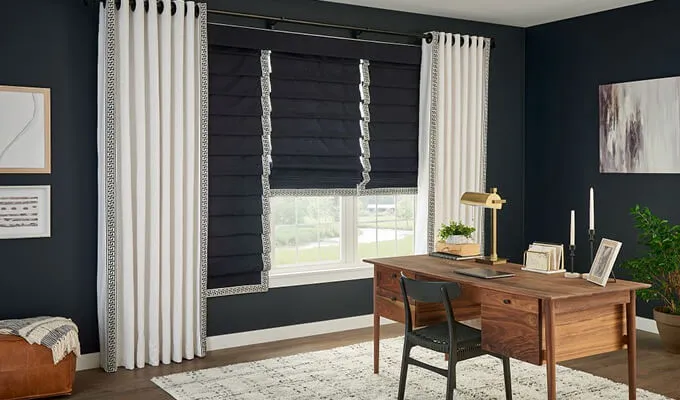
5. Motorized Window Treatments — Best for Convenience & Energy Management
Motorized shades and blinds aren’t just a luxury — in Florida, they’re a practical energy management tool. When you can program your shades to close automatically during peak sun hours (typically 1–5 PM on west-facing windows), you reduce heat gain without having to think about it.
Many motorized systems integrate with Alexa, Google Home, and Apple HomeKit, so you can control every window in the house from your phone or with a voice command.
Why they work in Florida:
- Automate shading during peak heat hours to reduce AC load
- No exposed cords — important for Florida’s active outdoor lifestyle and for homes with children and pets
- Can be combined with solar shades, roller shades, or cellular shades for maximum benefit
Best for: Large homes, homes with hard-to-reach windows (vaulted ceilings, skylights), and anyone who wants a smart home setup.
What to Avoid in Florida
A few materials and styles that tend to underperform in Florida’s climate:
- Real wood blinds or shutters in bathrooms, kitchens, or any room near a pool or lanai
- Heavy drapery in dark colors on south or west-facing windows — they absorb heat and can trap moisture
- Low-quality vinyl that cracks and discolors within a year or two of UV exposure
- Horizontal blinds with cords if you have young children or pets
Getting It Right for Your Home
The honest answer is that no single window treatment is right for every room. A Spring Hill home with a west-facing great room, a pool-adjacent lanai, a master bedroom that gets morning sun, and kids’ rooms all have different needs — and different right answers.
That’s exactly why Bumble Bee Blinds offers free in-home design consultations. Our design consultants come to your home with sample books, swatches, and a genuine understanding of what holds up in Florida’s climate. We’ll measure your windows, talk through your priorities (privacy, energy savings, aesthetics, budget), and recommend solutions that actually make sense for your specific space.
Ready to find the right window treatments for your Florida home?
Call us at (727) 334-0964 or schedule a free design consultation online — we serve Spring Hill, Land O’ Lakes, Wesley Chapel, Hudson, New Port Richey, Brooksville, and the surrounding communities.
Bumble Bee Blinds of Spring Hill offers custom blinds, shades, shutters, and motorized window treatments with free in-home consultations and professional installation. See all window treatment options →