

Here is the short answer on curtains vs drapes. Drapes are heavier, lined panels that usually run to the floor. Curtains are lighter, often unlined panels that can stop at the sill, fall just below it or reach the floor. The catch is that shoppers and stores use the two words for the same thing, so a label tells you less than the build does. Fabric, lining, length and hardware decide how a panel looks and works in your room. This post sets the two side by side, then walks through light, privacy, winter warmth, hardware, care and cost. It ends with a room-by-room guide for Cedar Rapids homes, so each window gets the panel that suits it.
Curtains vs Drapes at a Glance
| Feature | Curtains | Drapes |
|---|---|---|
| Fabric weight | Light to medium: cotton, linen, polyester, sheers | Medium to heavy: velvet, silk, wool, heavier linen |
| Lining | Usually unlined or lightly lined | Almost always lined, with privacy, blackout or interlining |
| Typical length | Café, sill, below the sill or floor | Floor length, with a slight break or a puddle |
| Light control | Soft, filtered daylight | Room darkening to full blackout |
| Insulation | Modest | Stronger, depending on how they hang |
| Formality | Casual and relaxed | Tailored and formal |
| Hardware | Basic rods, tension rods | Sturdy rods, traverse rods or tracks |
| Care | Often machine washable | Vacuuming and professional dry cleaning |
The drapes vs curtains difference sounds firm on paper, and in stores it blurs. The classic definitions follow the fabric: light and casual for curtains, heavy and formal for drapes. Custom drapery follows the room. A made-to-measure panel can use any fabric at any length, so one panel can fit either name. Some makers draw the line between ready-made panels in set sizes and custom panels cut to your window. Each view holds up, which is why the build you choose matters more than the word on the tag.
What Are Curtains?
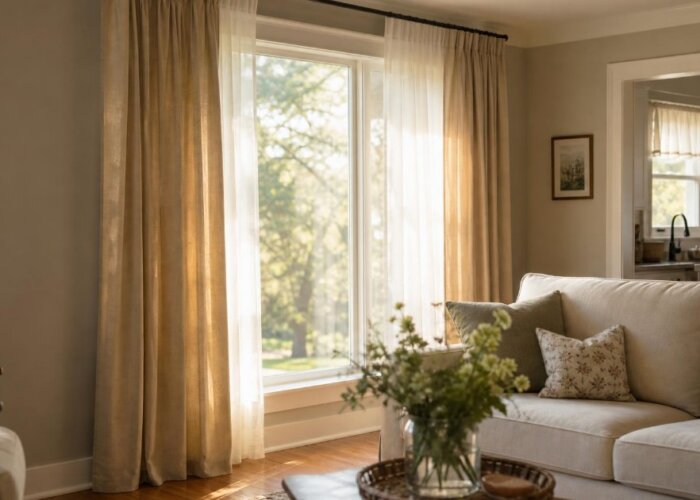
Understanding what drapes vs curtains are starts with curtains, the lighter and more casual of the pair. They come in cotton, linen, polyester and sheer fabrics that let daylight pass through. Most are unlined or lightly lined, which keeps them easy to wash and easy to live with.
Length is flexible. Café curtains cover the lower half of a window, sill-length panels stop at the sill, and longer panels fall just below it or all the way to the floor. That range lets you keep fabric away from a sink, a counter or a radiator.
Curtains hang from several header styles. Grommet panels slide along a rod through metal rings set in the fabric. Tab top panels loop over the rod on fabric tabs. Rod pocket panels have a sewn channel that gathers onto the rod. Each style gives a slightly different fullness, and each pairs with a simple rod. Light panels can even hang from a tension rod that fits inside the window frame without drilling.
The look is relaxed and bright. Curtains suit kitchens, bathrooms, laundry rooms and sunny spaces where you want daylight and an easy-care fabric. They also work well in casual family spaces where a soft layer of color is all the window needs.
What Are Drapes?
Drapes use heavier face fabrics such as velvet, silk, wool and weightier linen. Nearly all of them carry a lining. A privacy lining adds body and an opaque back, a blackout lining shuts out nearly all light, and interlining adds a soft middle layer for extra weight and warmth.
Most drapes run to the floor. Some skim it with a slight break, and others pool on the floor in a puddle for a dramatic finish. The long, full line is what gives drapes their formal look.
Tailored pleats add to that look. Pinch pleats form neat, structured folds at the top of each panel, and ripple fold gives a continuous wave along a track. Both styles need generous fabric, so the panels look full even when the window is closed.
All that fabric has weight, and weight calls for stronger support. Drapes hang best from sturdy rods with rings, or from traverse rods and tracks that glide the panels open and closed with a cord or a motor.
Bumble Bee Blinds of Cedar Rapids offers stationary panels, functional drapes, layered sheers and motorized drapery. Fabrics range from standard blends through linen and velvet, and every panel is made to measure for the window it will hang in. Anyone browsing drapes vs curtains for a living room or primary bedroom can see those options in person during a free in-home design consultation.
Light, Privacy and Sleep
Light control is where the two styles part ways most clearly. Sheer curtains soften daylight and give daytime privacy while the room stays bright. Medium-weight panels filter the sun and cut glare. Lined drapes with room-darkening or blackout linings turn a window into a sleep tool for bedrooms, nurseries and media rooms.
A bedroom meant for sleep should be very dark, and heavy, lined draperies are one way to get there, with attention paid to light entering around the edges. That edge detail deserves real attention. Even a blackout lining loses much of its value when a bright line of light slips past the sides or over the top. Panels that hang wider than the window frame and sit close to the wall keep that glow out.
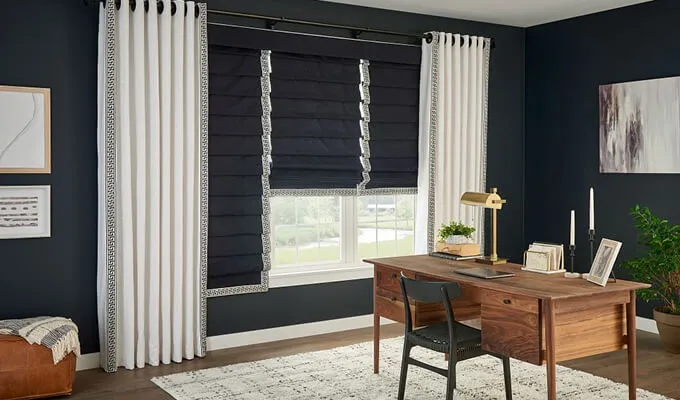
Layering gives you control for the whole day. A sheer panel on an inner rod keeps daytime privacy and gentle light, and a lined drape on an outer rod closes at night for darkness and a feeling of enclosure. Sheers and drapes can be ordered together as a layered set, so the fabrics, lengths and colors work as one design.
Heavier lined panels also soften sound. A bedroom on a busy street or a media room with a big speaker setup feels calmer when thick fabric covers the glass.
Insulation and Winter Drafts
Cedar Rapids winters ask a lot of a window. The normal January average temperature here is 19.6°F, and in a typical single-family home, 25% to 35% of heat is lost through windows. Drapes help with that loss, and the way they hang decides how much.
Drapery hung conventionally on a traverse rod cuts window heat loss by about 5% to 10%. Drapery in a tightly woven fabric with a separate lining, sealed at all four edges, cuts it by about 25%. Those figures assume a single-glazed window. The method of installation matters more than the fabric, because a gap lets cold air slide down the glass and into the room in a steady loop.
To close that loop, hang panels so they reach the sill or the floor, overlap them about four inches at the center, close off the top with a cornice or a ceiling-close mount, and fit the sides snugly to the wall. The still layer of air trapped between fabric and glass does the insulating.
Daily habits add to the benefit. Open sun-facing drapes in the daytime so the sunshine warms the room, then close them at dusk. When a warm air register sits below a window, a deflector sends the heat into the room and keeps it out from behind the fabric.
Space heaters, fireplaces and wood stoves need clearance too. Heating equipment is involved in an estimated 37,365 home fires a year, and anything that can burn belongs at least three feet away from a heat source. That three-foot zone includes drapes.
Hardware, Care and Cost
Hardware follows weight. Light curtains hang happily from basic rods or tension rods. Drapes need heavier rods with strong brackets, rings, or traverse rods and tracks that carry the load. A rod that is too light for the fabric will bow within months, so match the support to the panel before you buy either one. Motorized drapery adds remote or voice control for wide windows and hard-to-reach ones.
Cords deserve a thought in homes with young children. Cordless coverings are the safest option, and Bumble Bee Blinds of Cedar Rapids offers both manual cordless control and motorized coverings that remove cords from the product.
Care differs as well. Many curtains go straight into the washing machine. For drapery, the Bumble Bee Blinds team recommends vacuuming periodically with a drapery hose attachment, with professional dry cleaning generally recommended for the panels.
Cost rises with fabric, lining and tailoring. Ready-made curtain panels come in set sizes at modest prices. Lined, made-to-measure drapes use more fabric and more labor. The published custom drapery ranges run about $1,500 to $4,500 for one room, $4,500 to $11,000 for two to four rooms, $11,000 to $20,000 for five to eight rooms and $20,000 to $35,000 for a whole home. Each includes a free in-home design consultation, professional installation and manufacturer warranty coverage.
Panels that are too short or too narrow are the most common mistake. Full-width, floor-length drapes look rich, and skimpy ones look like an afterthought.
Choosing Between Curtains and Drapes, Room by Room
Kitchens, bathrooms and laundry rooms call for short, washable curtains that stay clear of splashes, steam and appliances. A sill-length panel in cotton or polyester keeps the window bright and the fabric easy to launder.
Bedrooms and nurseries do best with lined or blackout drapes, ideally layered over a sheer for daytime. Darkness helps sleep and naps, and heavy fabric adds a quiet, cozy feel.
Living and dining rooms suit formal drapes in a rich fabric. Where daylight matters more, choose sheers, or a light drape with a soft lining, so the room keeps its glow.
Home offices need glare control on screens. Medium-weight panels or sheers soften the sun and keep the room bright enough for work.
Sliding doors and wide windows look best with a single wide panel or a pair of panels on a track. The track lets fabric stack clear of the opening, so the door slides freely.
Bumble Bee Blinds of Cedar Rapids lists drapes, curtains and hardware as best for family rooms, bedrooms, dining rooms, home offices and decorative rooms. Whatever you choose, match the formality of the panel to the room's existing décor. A casual cotton curtain sits well in a relaxed farmhouse kitchen, and velvet drapes belong in a traditional dining room.
Seeing Fabrics in Your Own Windows
Fabric looks different at your window than it does on a showroom shelf. Bumble Bee Blinds of Cedar Rapids brings the showroom to you with a free in-home design consultation. Your Design Consultant arrives with swatches and sample books, measures your windows and provides a quote. Professional installation and warranty coverage follow your order, and the visualizer tool lets you preview a look before you buy.
Ready to see swatches against your own light and walls? Schedule a design consultation through the Contact Us page and bring your questions about curtains, drapes or both.