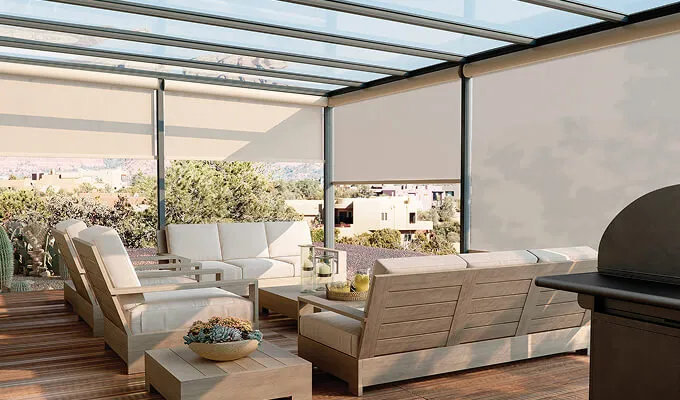

Investing in high-quality window treatments is one of the most effective ways to enhance the aesthetic and functional value of a Lafayette home. However, the unique environmental conditions of the Colorado Front Range—specifically the high altitude, intense UV exposure, and semi-arid climate—place unique stresses on these fixtures.
The best way to maintain window coverings in Lafayette is through a combination of regular light dusting and consistent mechanical inspections. By adopting a proactive care routine, you can prevent the premature degradation of fabrics, protect the integrity of motorized components, and ensure your investment lasts for decades rather than years.
Understanding the Lafayette Environment
Lafayette sits at an elevation of roughly 5,200 feet. At this altitude, the atmosphere is thinner, meaning the sun’s ultraviolet (UV) rays are significantly more potent than at sea level. This constant bombardment can lead to "sun-rot," a condition where fabric fibers become brittle and eventually disintegrate. Furthermore, the low humidity levels in Colorado can cause natural materials like wood to shrink or crack, and plastic components to become brittle.
Maintaining your blinds, shades, and shutters isn't just about aesthetics; it is about mitigating these environmental risks.
How to Clean Dust and Allergens from Different Types of Shades
Lafayette homes are prone to seasonal dust, particularly during the dry, windy months of spring and fall. Because many modern shades use textured fabrics or intricate honeycomb structures, dust and allergens can become deeply embedded if not addressed weekly.
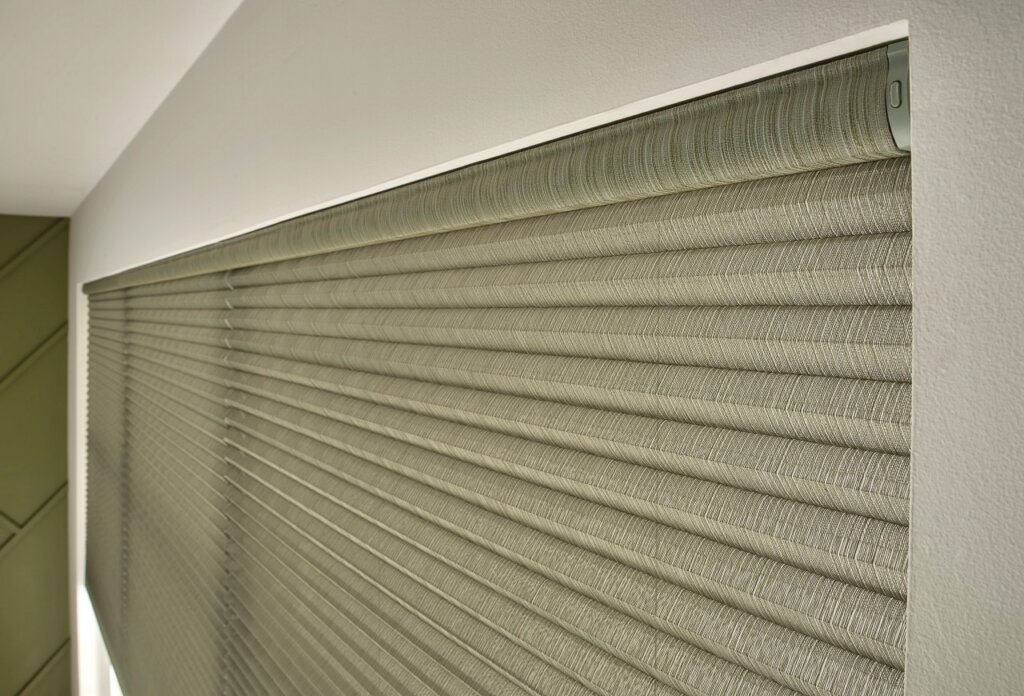
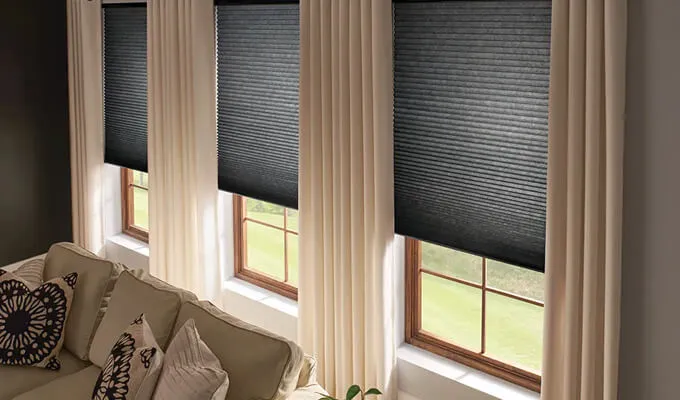
- Cellular and Honeycomb Shades: These are a favorite in Boulder County for their insulation properties. However, the "cells" can act like a vacuum for dust and small insects. The most effective way to clean them is using a hairdryer on a cool, low setting. Simply blow the air through the side of the cells to clear out debris. For the exterior fabric, use a vacuum with a soft brush attachment, moving in horizontal strokes following the pleats.
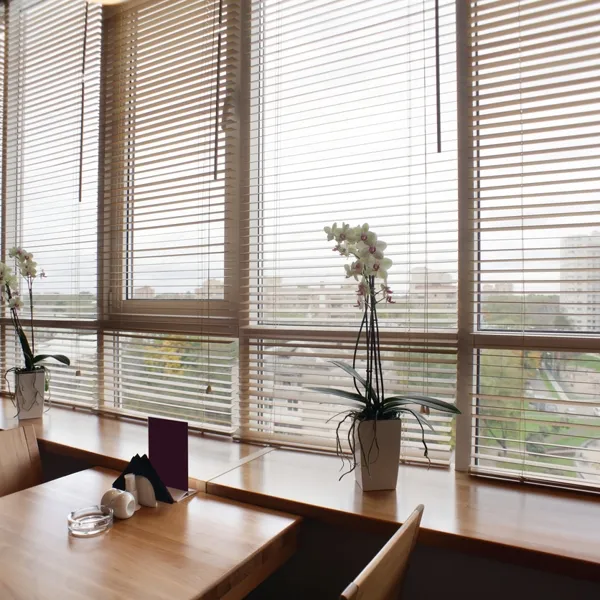
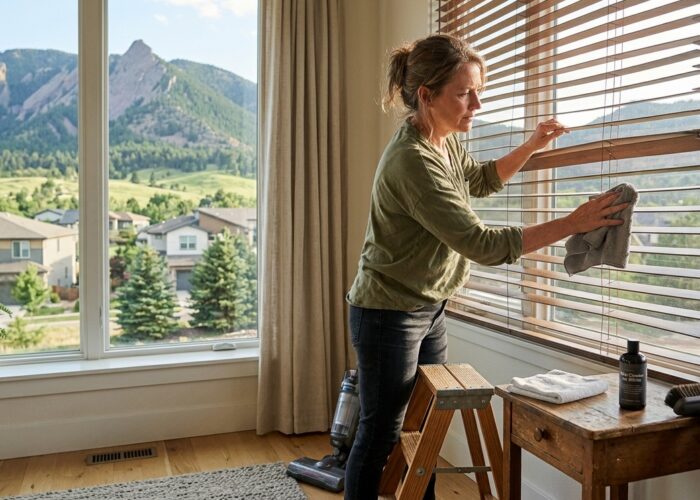
- Wood and Faux-Wood Blinds: Dust is highly visible on dark wood slats. When cleaning natural wood, always wipe in the direction of the grain. This prevents microscopic scratches that can dull the finish over time. For faux-wood, which is more resilient, a microfiber cloth lightly dampened with water is usually sufficient.
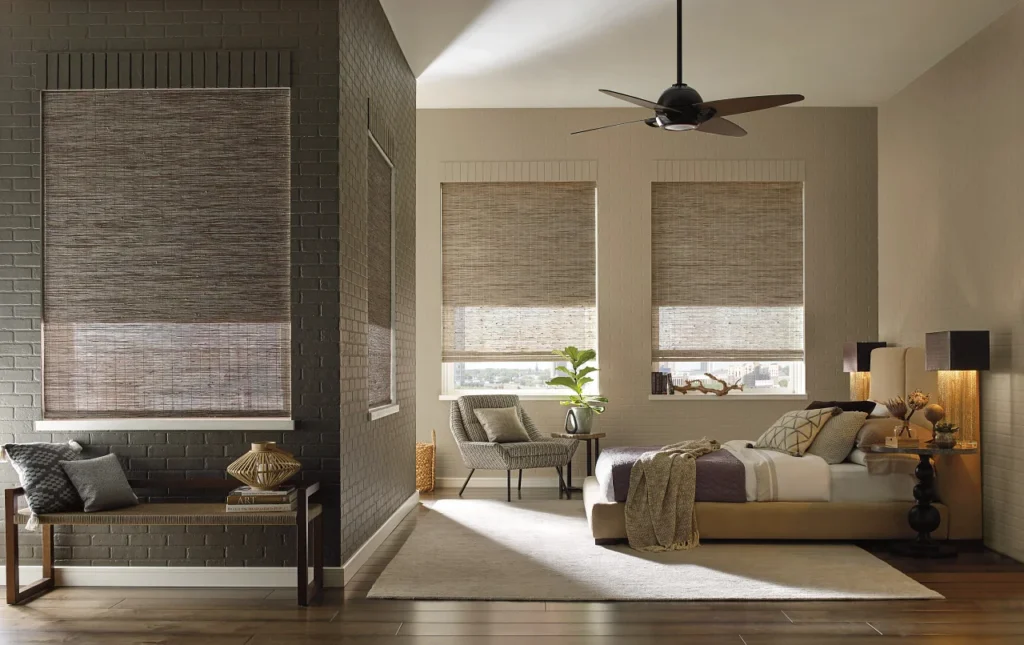
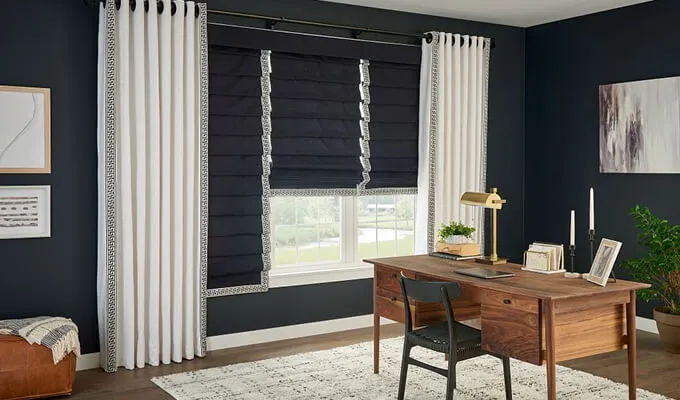
- Roman Shades: Because these are often made of delicate drapery fabrics, they should be treated with care. A light steam can refresh the fabric and release wrinkles without soaking the material. Avoid heavy saturation, as this can cause the fabric to sag or "bleed" its dye.
Selecting Safe Cleaning Agents for Modern Treatments
Many Lafayette homeowners make the mistake of using standard household glass cleaners on their window treatments. This can be a costly error. Modern blinds and shades are often treated with UV-resistant topcoats and anti-static finishes designed to repel dust.
Harsh chemicals, particularly those containing ammonia or bleach, act as a solvent to these protective layers. Once the coating is stripped, the fabric will yellow quickly under the Colorado sun.
The Golden Rule of Cleaning: The safest solution is almost always a mixture of warm water and a single drop of mild dish soap. When spot-cleaning a stain, never rub aggressively; instead, blot the area with a clean microfiber cloth. Always perform a "patch test" on a hidden area—such as the back of a slat or the inside of a hem—before applying any liquid to the visible portion of the treatment.
Maintaining Hardware and Motorization Systems
In our dry climate, mechanical friction is the enemy of longevity. When the air lacks moisture, the plastic and metal components in your blinds can experience increased wear.
- Lubrication: If your shutters are squeaking or your horizontal blinds feel "sticky" when tilting, you likely need lubrication. Never use oil-based products like WD-40. Oil is a magnet for Colorado dust and grit, which will eventually create a thick, "gummy" paste that can permanently seize the mechanism. Instead, use a dry silicone spray. It provides a slick surface that repels debris.
- Motorized Shades: Motorization is becoming the standard in Lafayette for hard-to-reach windows. Most "broken" motors are actually just depleted batteries. In the cold winter months, batteries can lose their charge faster. We recommend a full six-hour charge for lithium-ion batteries twice a year. If a shade stops responding to a remote, try a "soft reset" by holding the programming button on the motor head before calling for a professional repair.
Preventing "Sun-Rot" and UV Damage
If you have west-facing windows overlooking the foothills, you know how intense the afternoon sun can be. This heat is great for natural light, but it is devastating for drapes and fabric shades.
To prevent sun-rot, consider these three strategies:
- Protective Liners: Ensure your drapes are backed with a high-quality white or cream liner. This acts as a sacrificial layer that absorbs the UV damage, leaving your decorative fabric pristine.
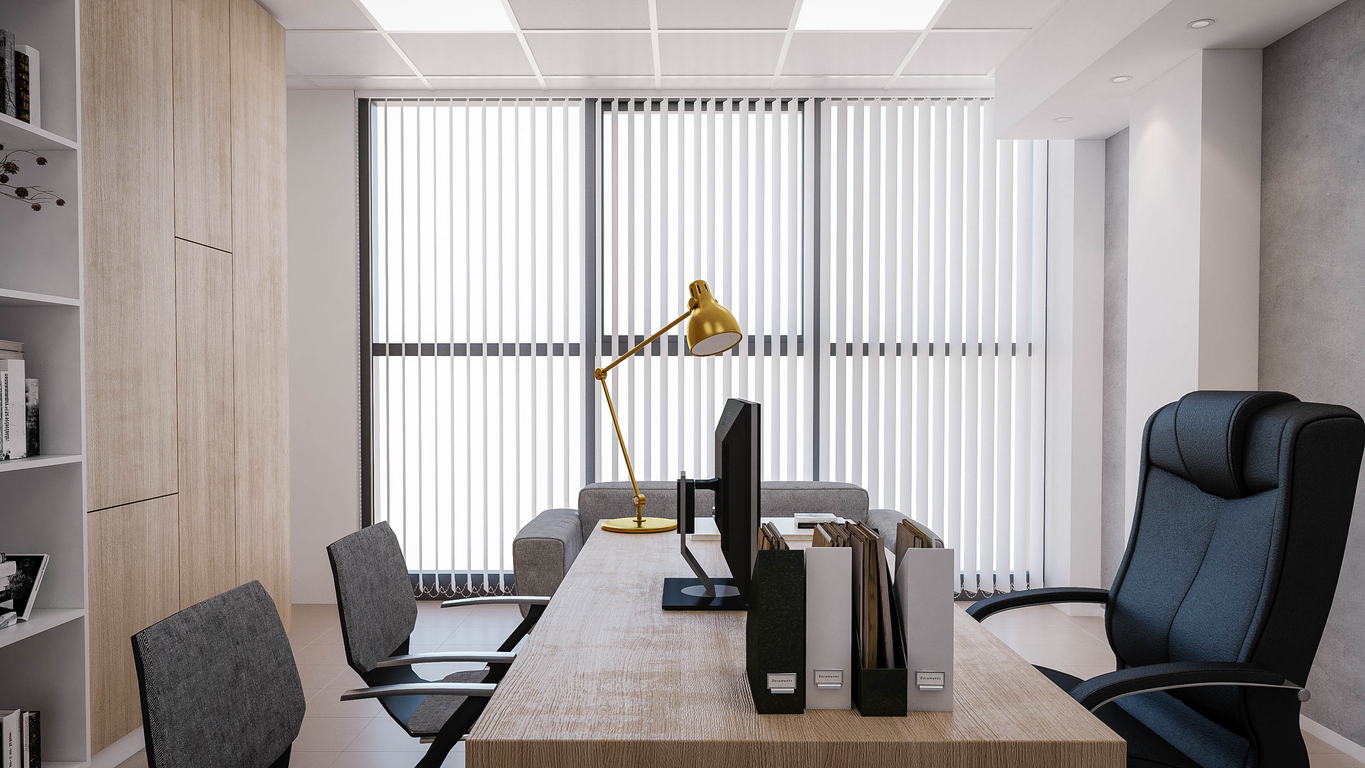
- The 45-Degree Tilt: For blinds, tilting the slats at a 45-degree angle (with the front edge facing up) redirects the harshest rays toward the ceiling. This provides natural illumination while shielding your furniture and the window treatment’s own fabric from direct exposure.
- Automated Scheduling: Use smart home integration to automatically close shades during the "peak heat" hours of 2:00 PM to 5:00 PM.
Specialized Care for High-Moisture Areas
Even in a dry climate, bathrooms and kitchens create micro-environments of high humidity. In Lafayette homes, bathroom shutters are often exposed to mineral-heavy water.
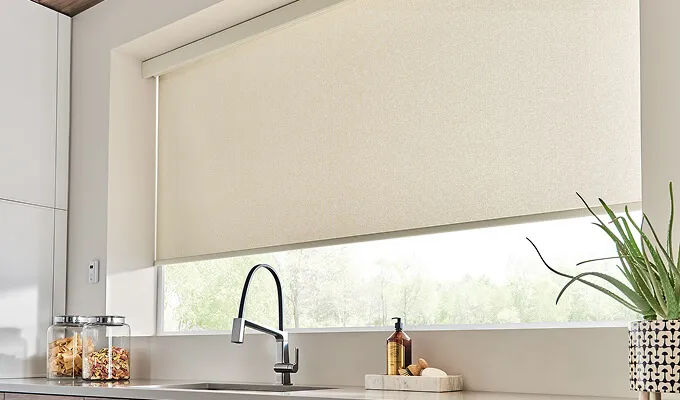
If you have vinyl or faux-wood shutters in a bathroom, ensure the room is properly ventilated during and after showers. If condensation builds up on the slats, wipe them dry immediately. This prevents the formation of mineral spots, which can be difficult to remove once they "bake" onto the surface under the sun. For kitchen shades, regular dusting is vital to prevent airborne cooking oils from bonding dust to the fabric.
Why Professional Maintenance Matters
While DIY care is essential for weekly upkeep, professional deep cleaning is recommended every 2 to 3 years. Household vacuums simply cannot reach the particulates trapped deep within the fibers of a cellular shade or the intricate folds of a Roman shade.
Professional ultrasonic cleaning or injection-extraction methods can remove deep-seated allergens and pollutants, significantly improving the indoor air quality of your home.
Expert Window Treatment Care in Lafayette
At Bumble Bee Blinds of Boulder, we understand that your window coverings are a significant part of your home’s value and comfort. Whether you are looking to refresh your current treatments, need help troubleshooting a motorized system, or are ready to upgrade to more durable, low-maintenance options designed for the Colorado climate, our team is here to help.
Proper maintenance doesn't just keep your home looking beautiful—it ensures your window treatments continue to provide the privacy, insulation, and UV protection you need.