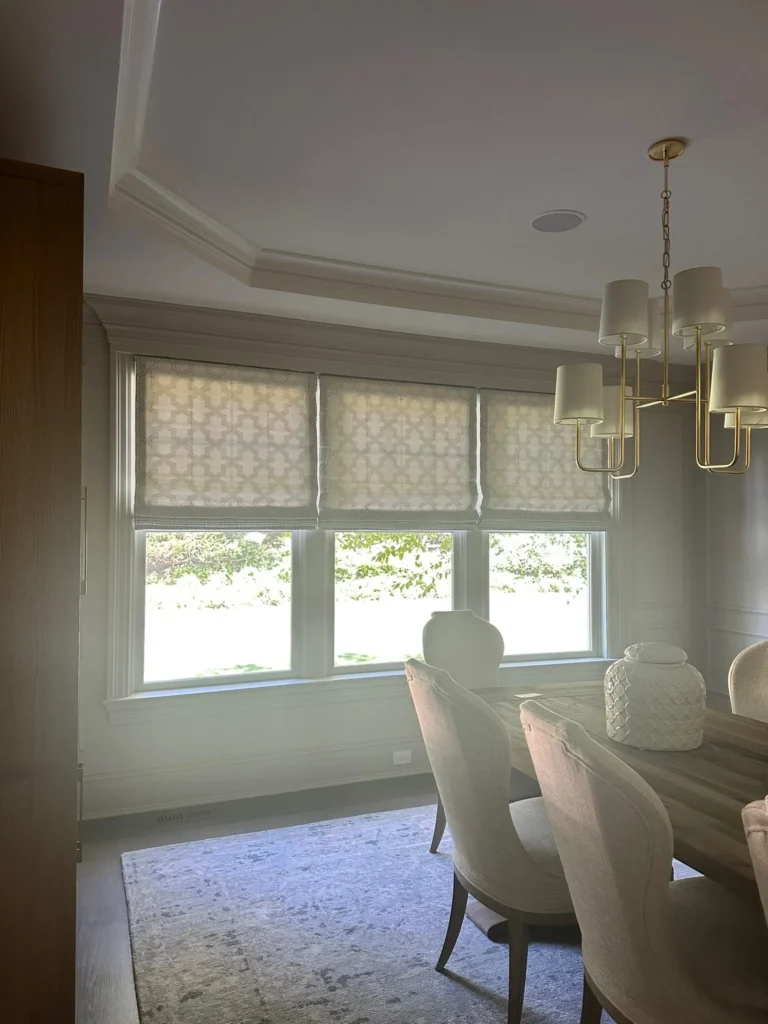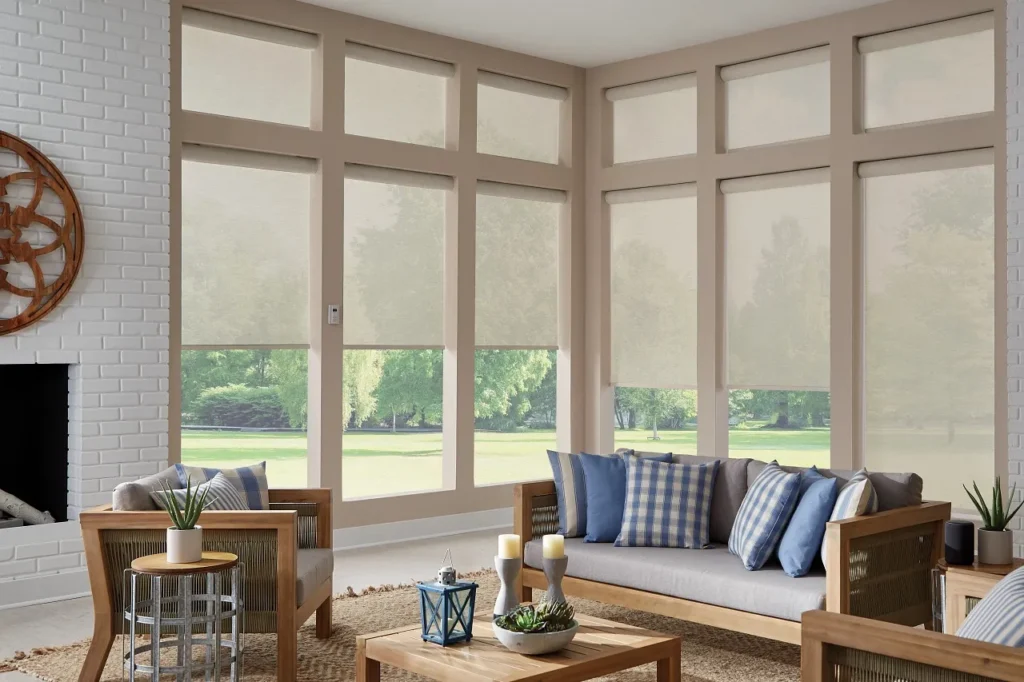
Fairfield County homeowners deal with more than just hot summer temperatures — intense afternoon sun, large windows, and seasonal temperature swings can all make it harder to keep a home comfortable and energy efficient.
Installing high-performance cellular shades creates an insulating barrier at the window, helping reduce unwanted heat gain in summer while also limiting heat loss during Connecticut’s colder months. The result is a more comfortable home, less strain on your HVAC system, and a window treatment that delivers practical performance without sacrificing natural light or the views that make your home special.
Why are cellular shades considered one of the most energy-efficient window treatments for Fairfield County homes?
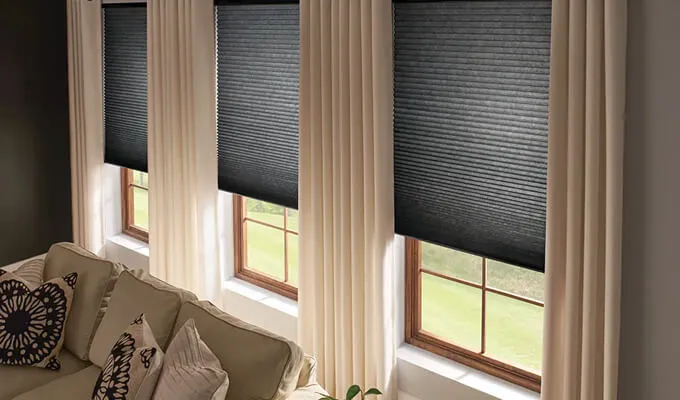
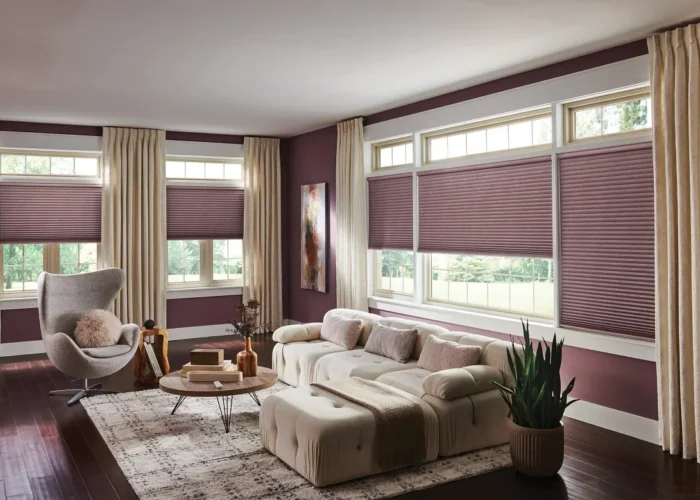
Cellular shades, also called honeycomb shades, feature a pleated design that creates air pockets between the window and the room. Those pockets act as insulation, helping slow the transfer of heat through the glass.
In Fairfield County, that matters throughout the year. During summer, direct sunlight can quickly raise the temperature near windows, forcing your air conditioner to work harder. In winter, the same windows can become a significant source of heat loss. Cellular shades help create a more consistent indoor environment by adding an insulating layer where your home needs it most.
Unlike traditional blinds with open slats, honeycomb shades are designed around insulation. Their cellular construction helps reduce thermal transfer while still giving homeowners precise control over privacy and daylight.
For homes in communities such as Greenwich, Westport, Darien, Fairfield, and Stamford, where large windows and expansive glass are common, cellular shades can be an especially effective way to improve comfort without replacing the windows themselves.
How much can a homeowner realistically save on energy bills by upgrading their window treatments?
The amount you can save depends on factors such as window size, glass type, orientation, insulation, HVAC efficiency, and how consistently the shades are used. However, improving the insulating performance of your windows can reduce the amount of work your heating and cooling systems need to do.
The greatest opportunity often comes from windows that receive significant direct sunlight. Closing cellular shades during the hottest part of a summer afternoon can help limit solar heat entering the room. In winter, keeping shades closed after sunset can provide an additional insulating layer against cold glass.
For a Fairfield County homeowner with numerous large windows, these small changes can add up over the course of an entire heating and cooling season.
There’s also a potential benefit for your HVAC system. When your home maintains a more stable indoor temperature, your heating and cooling equipment may not need to work as hard to compensate for temperature fluctuations.
Do cellular shades provide better UV protection than standard horizontal blinds?
Cellular shades can provide excellent protection from the sun’s ultraviolet rays while still allowing homeowners to enjoy natural daylight.
Traditional horizontal blinds are effective for privacy and light control, but their open construction can leave portions of the window exposed. Cellular shades provide a continuous fabric surface across the window, helping reduce the amount of direct sunlight entering the room.
That protection can be particularly valuable for Fairfield County homes with hardwood floors, area rugs, artwork, upholstered furniture, and other interior finishes that can fade with prolonged sun exposure.
You don’t necessarily have to choose between UV protection and a bright room. Light-filtering cellular fabrics diffuse incoming daylight, creating a softer glow while reducing direct exposure. For bedrooms, media rooms, and other spaces where darkness is important, blackout cellular shades provide much greater light control.
What makes custom-fitted shades more efficient than cut-to-size options from big-box stores?
The performance of an insulating window treatment depends not only on the material but also on how well it fits the window.
Off-the-shelf shades are manufactured in standard sizes and may leave noticeable gaps around the sides of the window. Custom window treatments are measured specifically for each opening, allowing the shade to provide more complete coverage and helping minimize areas where conditioned air and heat can transfer around the treatment.
At Bumble Bee Blinds of Fairfield County, professional measurements help ensure your cellular shades are properly sized for each window. That’s especially important for oversized, unusually shaped, or hard-to-cover windows where a standard shade may not provide the coverage or appearance you want.
Custom shades also give you access to a much broader selection of fabrics, colors, opacities, and operating systems, allowing you to balance energy efficiency with the style of your home.
How does motorization enhance the energy-saving potential of cellular shades?
Motorized cellular shades make it easier to manage sunlight and temperature throughout the day without manually adjusting every window.
For example, shades on east-facing windows can be programmed to close during the morning when sunlight is strongest, while west-facing shades can lower during the afternoon. In winter, you can reverse the strategy by opening shades during sunny periods to take advantage of natural solar warmth and closing them after sunset.
Automation is especially useful for homeowners who spend the day at work or travel frequently. Rather than leaving shades in the same position all day, a programmed schedule can automatically adjust them based on the time of day.
Motorization can also integrate with many smart-home systems, giving you convenient control from a remote, smartphone, or compatible home automation platform. Your window treatments become more than a decorative element — they become part of the way you manage your home’s comfort and energy use.
Improve Comfort & Protect Your Fairfield County Home
Bumble Bee Blinds of Fairfield County serves homeowners throughout Fairfield County and surrounding communities. We help you choose window treatments based on your home’s architecture, lighting, privacy needs, and lifestyle.
Our team provides professional measurements and installation, with custom options designed to fit your windows and complement your interior.
Contact Bumble Bee Blinds of Fairfield County to schedule your in-home consultation and explore cellular shades designed for year-round comfort.
Summary
- Year-round insulation: Honeycomb construction creates insulating air pockets that help reduce heat transfer through your windows.
- Improved comfort: Cellular shades can help minimize hot and cold spots near windows during Connecticut’s summer and winter seasons.
- UV protection: Specialized fabrics help reduce direct sunlight and protect floors, furniture, rugs, and other interior furnishings from fading.
- Custom fit: Professional measurements provide better window coverage than many standard, cut-to-size alternatives.
- Flexible light control: Choose from light-filtering and room-darkening options to balance daylight, privacy, and comfort.
- Smart operation: Motorized shades can be scheduled to respond to changing sunlight throughout the day.
- HVAC efficiency: Reducing unwanted heat gain and heat loss can help reduce the workload on your home’s heating and cooling systems.
Frequently Asked Questions About Cellular Shades
How long does installation typically take?
Most residential installations can be completed in a single visit, although the exact timeline depends on the number of windows, window configuration, and whether motorized products are being installed. Your installer can provide a more specific timeline after measuring your windows.
Do cellular shades work with my existing smart-home system?
Many motorized cellular shade systems can integrate with popular smart-home platforms and automation systems. During your consultation, Bumble Bee Blinds of Fairfield County can help determine which operating and control options are compatible with your home’s setup.
What’s the difference between single-cell and double-cell honeycomb shades?
Single-cell shades feature one layer of honeycomb pockets and provide an effective combination of insulation, light control, and style. Double-cell shades use an additional layer of air pockets for increased insulation. They can be a strong option for windows that experience significant temperature fluctuations or direct sun exposure.
Are cellular shades useful in winter, too?
Yes. Cellular shades aren’t just for summer. Their honeycomb construction helps create an additional insulating layer between your room and the window, which can help reduce heat loss during cold Fairfield County winters. Closing shades after sunset can provide an additional barrier against cold window glass.
Can I still enjoy natural light with cellular shades?
Absolutely. Light-filtering cellular fabrics are designed to diffuse sunlight rather than completely block it. This allows you to maintain a bright, comfortable room while gaining greater privacy and protection from direct sunlight.