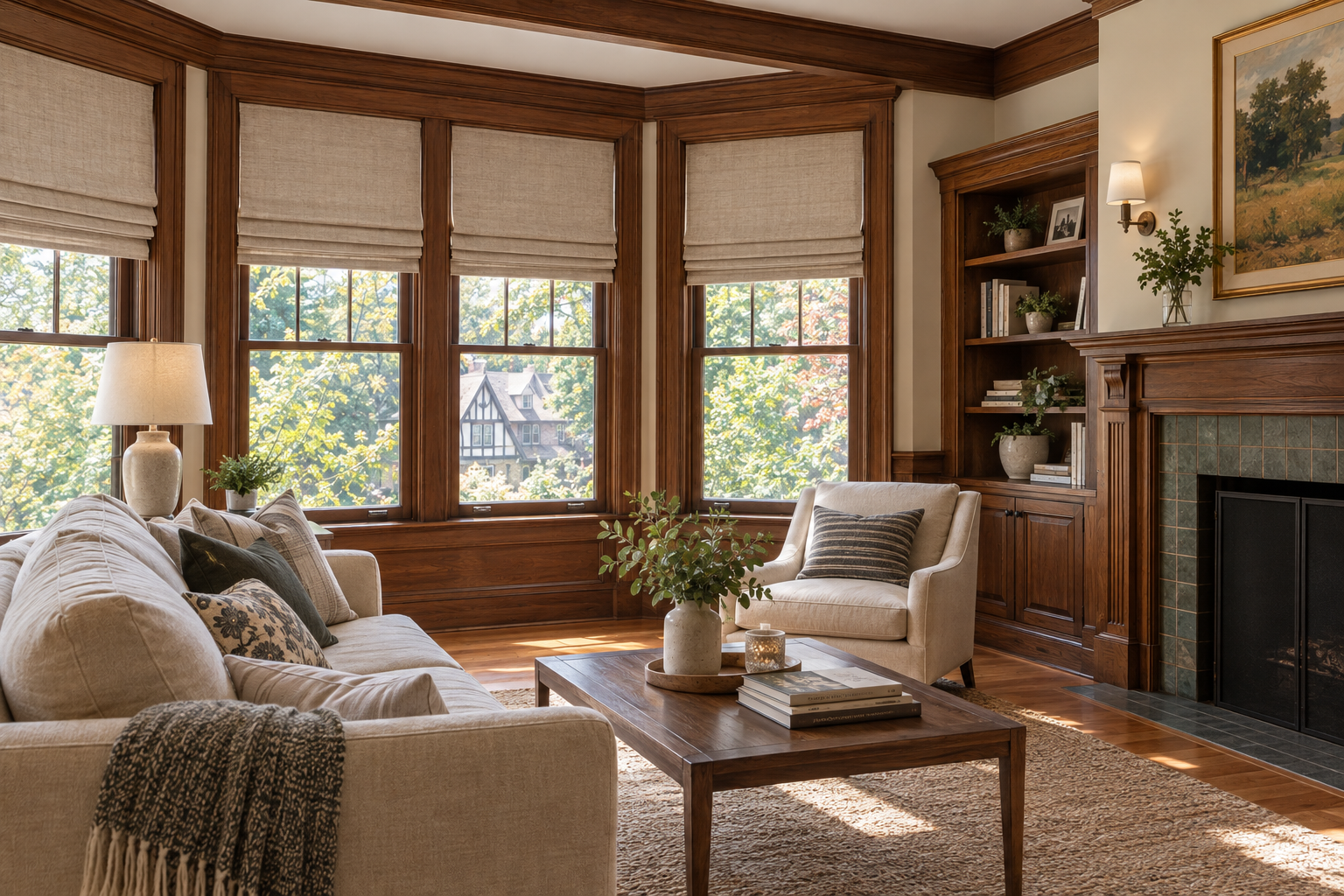
Blinds vs Shades
Choosing between blinds and shades can feel like a small decision until you start comparing styles, materials, privacy, and light control. Both can complement your home’s interior, but they work differently and offer distinct advantages depending on the room and how you use it.
The right choice comes down to your priorities. Do you want adjustable light control, a soft fabric finish, greater privacy, or a streamlined look? Understanding the differences between custom blinds and shades can help you make a more confident decision for your home.
What Is the Difference Between Blinds and Shades?
The main difference is how each window treatment is constructed and adjusted.
Blinds feature individual horizontal or vertical slats that can typically be tilted to adjust the amount of light entering a room. Depending on the design, they can also be raised or drawn aside.
Shades are made from a continuous piece of material that raises and lowers to cover the window. They are available in different fabrics, textures, opacities, and styles, allowing you to tailor the look and level of light control to your space.
Neither option is automatically better. Your windows, room function, design preferences, and privacy needs should guide the decision.
When Should You Choose Blinds?
Blinds are worth considering when you want adjustable control over incoming light and a defined, structured appearance.
1. You want to adjust light throughout the day
Tilting the slats allows you to change the direction of incoming light without necessarily raising the entire treatment. This can be helpful in rooms where sunlight and glare change throughout the day.
Keep in mind that tilted slats do not provide complete room darkening, and the amount of light and privacy depends on the product and installation.
2. You prefer a structured, versatile look
Blinds can complement a variety of interior styles, from traditional rooms to more contemporary spaces. Material and finish choices influence the final appearance, so consider how the treatment will coordinate with your trim, flooring, furniture, and other finishes.
3. You want a defined view of the window
When the slats are tilted or the blinds are raised, you can adjust how much of the window remains exposed. The result depends on the blind style, window dimensions, and how the product operates.
4. You are selecting treatments for different rooms
Blinds may work well in living spaces, offices, and other areas where adjustable slats are useful. The best material and construction will depend on the specific room and its conditions.
When Should You Choose Shades?
Shades are a strong option when you prefer a continuous surface, fabric-based design, or a particular approach to managing daylight.
1. You want a softer appearance
Fabric shades can introduce texture, color, and visual warmth. Depending on the style, they can create a clean, understated look or become a more noticeable design element.
Roller shades, Roman shades, cellular shades, and natural woven shades each offer a different appearance and set of functional considerations.
2. You need a particular level of light control
Shade fabrics come in different opacities. Light-filtering materials soften incoming daylight, while room-darkening and blackout options are designed to limit light more substantially.
The terms are not interchangeable. Actual results depend on the material, mounting method, window coverage, and light entering around the edges. If darkness is important in a bedroom, discuss the desired result before selecting a product.
3. You want to coordinate with your interior design
Shades provide opportunities to coordinate fabrics, textures, and colors with the rest of your room. A neutral roller shade may blend into the background, while a patterned Roman shade can add visual interest.
Think about whether you want your window treatments to stand out or complement the other elements in the space.
4. You are considering motorization
Many shade styles have motorized options, depending on the product selected. Motorization can make it easier to adjust multiple windows, manage hard-to-reach areas, or operate treatments using a compatible remote or control system.
If automation is important, confirm the available power options and smart-home compatibility for the specific product.
Blinds vs. Shades: Which Is Better for Each Room?
The best window treatment can vary from one room to another, even within the same home.
Living rooms
Start with how the room is used. If you want adjustable light control while maintaining a structured look, blinds may be a good fit. If your priority is a softer finish or a particular fabric appearance, shades may be more suitable.
Also consider glare on televisions and screens, the direction your windows face, and how much daylight you want to preserve.
Bedrooms
Privacy and light control are often the priorities. Shades are available in room-darkening and blackout options, while blinds provide adjustable slats. Consider how much light enters around the window edges and whether you need additional window coverage.
Kitchens
Think about the window’s proximity to cooking areas, moisture exposure, cleaning requirements, and ventilation. Choose materials and products appropriate for the specific environment rather than selecting based on appearance alone.
Home offices
Glare on computer screens can make light control especially important. Blinds offer adjustable slats, while shades are available in different opacity levels. Consider when direct sunlight reaches your workspace and how you prefer to manage it.
Large or hard-to-reach windows
Both blinds and shades may be available for larger windows, depending on the dimensions and product specifications. Motorized options are worth exploring when manually adjusting the treatment would be inconvenient.
What About Privacy and Natural Light?
Privacy and daylight often need to be balanced rather than treated as separate decisions.
Blinds allow you to tilt the slats, but the level of privacy depends on the angle, construction, and viewing position. Shades offer different fabric opacities, but a light-filtering material may not provide the nighttime privacy you expect when interior lights are on.
If your windows face a neighboring property, street, or nearby walkway, think about when privacy matters most. A treatment that works during the day may behave differently after dark.
During product selection, explain your specific concern so you can compare suitable options instead of relying on a product label alone.
Are Custom Blinds and Shades Worth Considering?
Custom window treatments can be useful when your windows require specific dimensions, when you want coordinated finishes, or when you need help comparing products for different rooms.
A professional design consultation also gives you an opportunity to review samples, consider how materials look in your own lighting, and discuss mounting and operating requirements before making a selection.
Custom products are not necessarily the right choice for every budget or situation. The value depends on your priorities, the windows involved, the product selected, and the overall project requirements.
How to Choose the Right Option for Your Home
Before deciding between blinds and shades, ask yourself five questions:
- How much light control do I need? Consider direct sunlight, glare, and whether you want filtered daylight or a darker room.
- How important is privacy? Think about sightlines from the street and neighboring properties, including nighttime conditions.
- What look am I trying to achieve? Decide whether you prefer visible slats, a clean fabric surface, or a more decorative finish.
- How will I operate the treatment? Consider window height, accessibility, and whether motorization would be useful.
- What is my budget for the project? Compare the products, features, and installation requirements that matter most to you.
It is also worth considering the home as a whole. You do not have to choose the same treatment for every room to create a cohesive interior. Different products can work together when their colors, finishes, and overall design complement one another.
Explore Custom Blinds and Shades in Montclair, NJ and Surrounding Areas
If you are comparing blinds and shades for your home, Bumble Bee Blinds of Montclair can help you explore options based on your windows, design preferences, privacy requirements, and desired level of light control.
Serving Montclair and the surrounding communities, the team offers design consultations, custom window treatment options, and professional installation. A consultation is an opportunity to discuss your project and evaluate which products may suit each space.
- Montclair
- Upper Montclair
- Livingston
- West Orange
- Mountain Lakes
- Glen Ridge
- Chatham
- Fairfield
- Morristown
- Maplewood
Whether you are updating a single room or planning window treatments throughout your home, a design consultation can help you compare options and find the right fit.
Explore our Montclair window treatment services or view our service areas to learn more.
Frequently Asked Questions
Do blinds provide more privacy than shades?
Not necessarily. Privacy depends on the blind’s slat design and position or the shade’s fabric opacity and window coverage. Your viewing angles and nighttime lighting also matter.
Are shades better for bedrooms?
Shades can be a good choice for bedrooms because room-darkening and blackout options are available. Blinds may also work well, depending on your light-control and privacy preferences. Compare the actual product specifications and expected light gaps.
Can blinds and shades both be motorized?
Yes, motorized options are available for selected blind and shade products. Availability, controls, power options, and compatibility vary by product.
Can I use different window treatments in different rooms?
Absolutely. Room function, window exposure, privacy requirements, and design preferences may vary throughout a home. Different treatments can work together when selected with an overall design in mind.
How do I know which window treatment is right for my home?
Start by identifying your priorities for light control, privacy, style, operation, and budget. A design consultation can help you compare available options and evaluate how they fit your windows and the way you use each room.