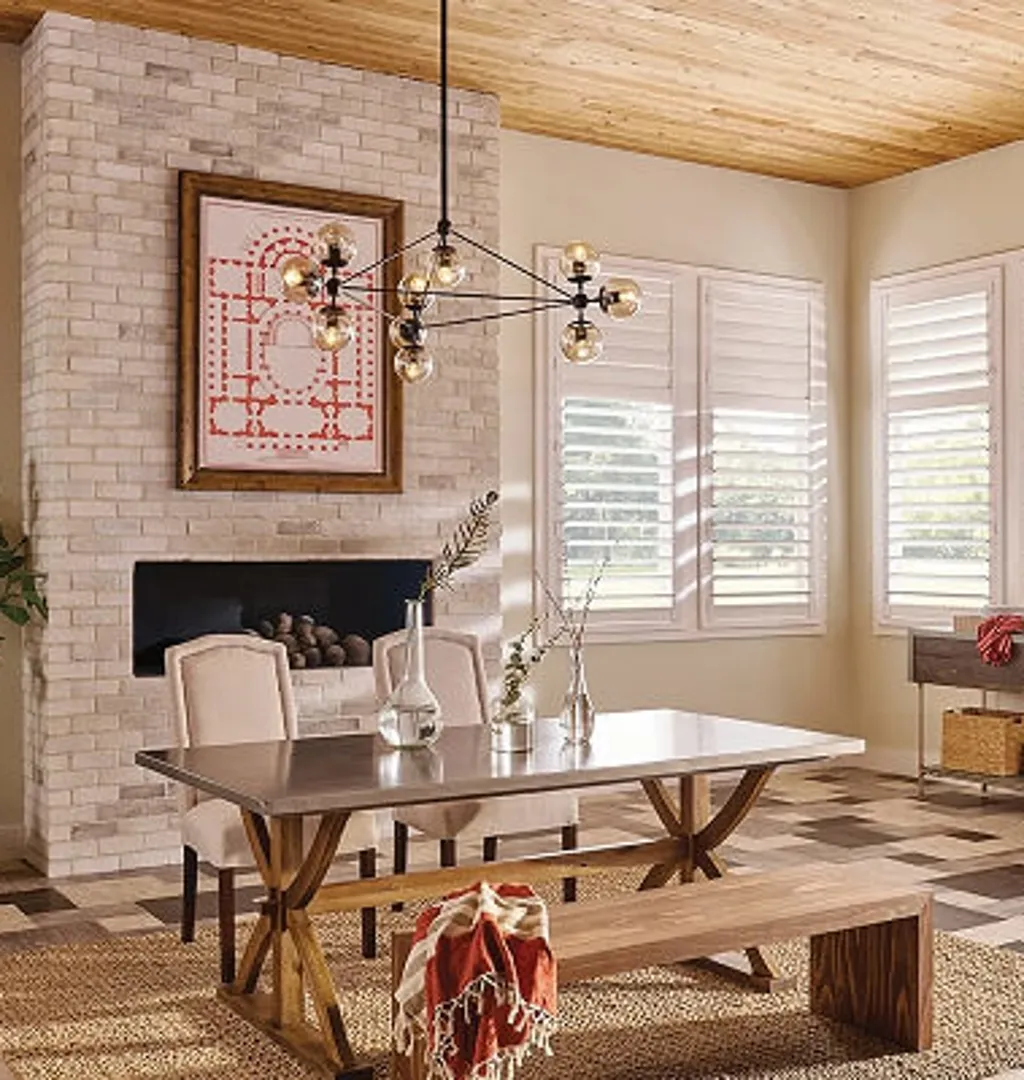

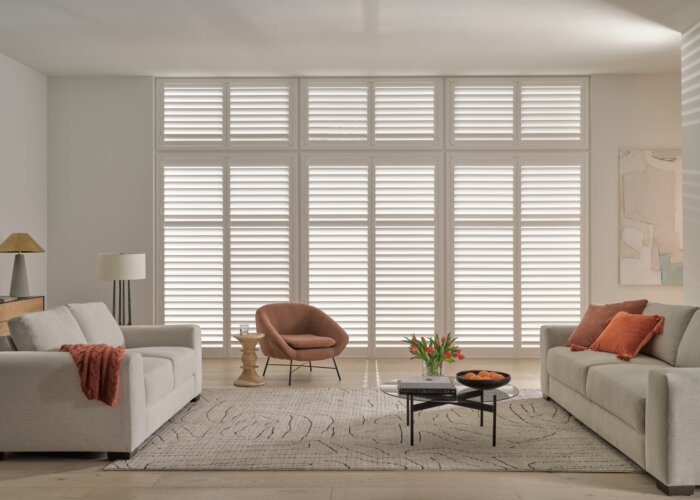
Hunter Douglas shutters are one of the most established window treatment options for homeowners who want a clean, structured, built-in look with long-term durability. They offer a level of finish that feels more like part of the home’s architecture rather than a removable covering.
In Boerne and throughout the Texas Hill Country—including areas like Cordillera Ranch, Fredericksburg, Bulverde, and surrounding ranch communities—shutters are especially popular in custom homes with large windows, open floor plans, and strong natural light.
They work well in spaces where homeowners want something that controls light and privacy without feeling soft or temporary like fabric shades.
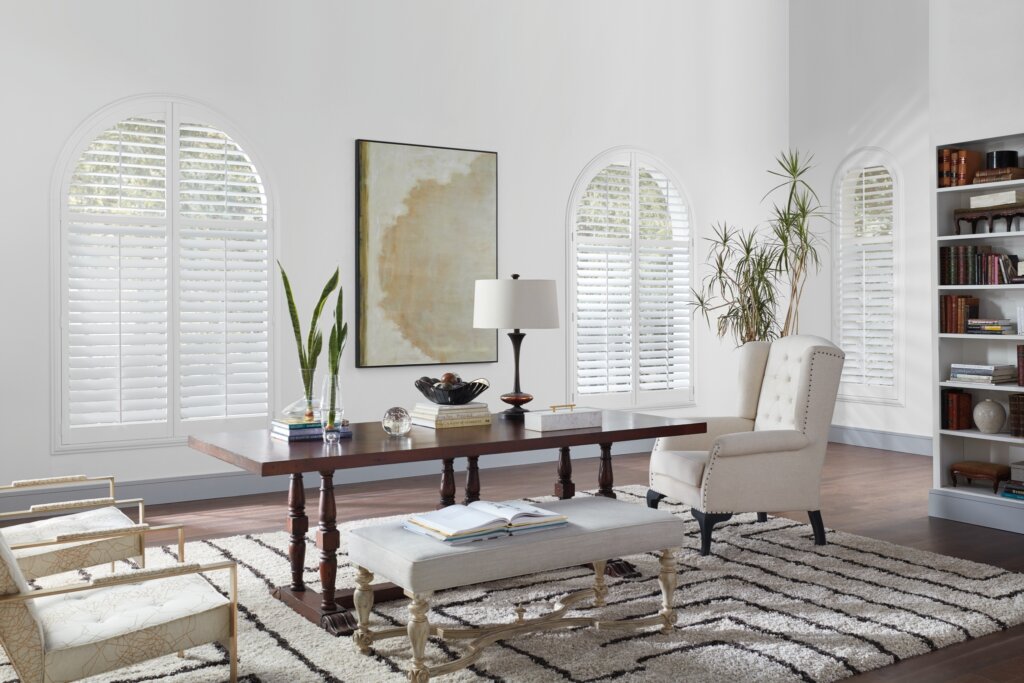
Why Homeowners Choose Shutters
Some homeowners begin their search specifically looking for shutters, while others arrive at them after comparing different window treatment styles like blinds or shades.
In both cases, the decision usually comes down to a few consistent needs:
- Managing strong afternoon sun in living spaces
- Improving privacy in front-facing rooms
- Finishing windows that feel incomplete or unfinished
- Replacing blinds or shades with something more permanent
Shutters solve these needs with a simple, durable design. Instead of fabric or moving parts, you get a solid, built-in window covering that adjusts light and privacy without changing the overall look of the room.
They also tend to feel more architectural, which is a big reason they fit so naturally in Hill Country homes with stone, wood, and open layouts.
Are Hunter Douglas Shutters Worth It?
For many homeowners, yes—but the value depends on what you’re comparing them to and what you want long term.
Hunter Douglas shutters are typically chosen when homeowners want:
- A long-term window solution that doesn’t need frequent replacement
- Strong, reliable light control throughout the day
- A clean, built-in architectural appearance
- A low-maintenance option that feels permanent
While they are a higher upfront investment than blinds or basic shades, shutters are often viewed more like cabinetry or flooring—they become part of the home rather than something that will be replaced every few years.
Shutter Styles and Materials
Hunter Douglas offers a few different shutter materials, and the right choice usually depends on where the shutters are going in the home.
Heritance® Wood Shutters
Best for: Living rooms, dining rooms, and design-focused spaces
These are made from real wood and offer the most natural, furniture-like appearance. They are visually beautiful and often chosen when homeowners want a warm, traditional finish around their windows.
However, in the Texas Hill Country, we don’t recommend wood shutters as often due to the combination of heat, humidity, and strong sun exposure. Over time, wood can expand, contract, or warp—especially on larger windows or west-facing rooms.
When conditions are right and the goal is a natural aesthetic, they remain one of the most visually appealing options available.
NewStyle® Composite Shutters
Best for: Bedrooms, hallways, and everyday living spaces
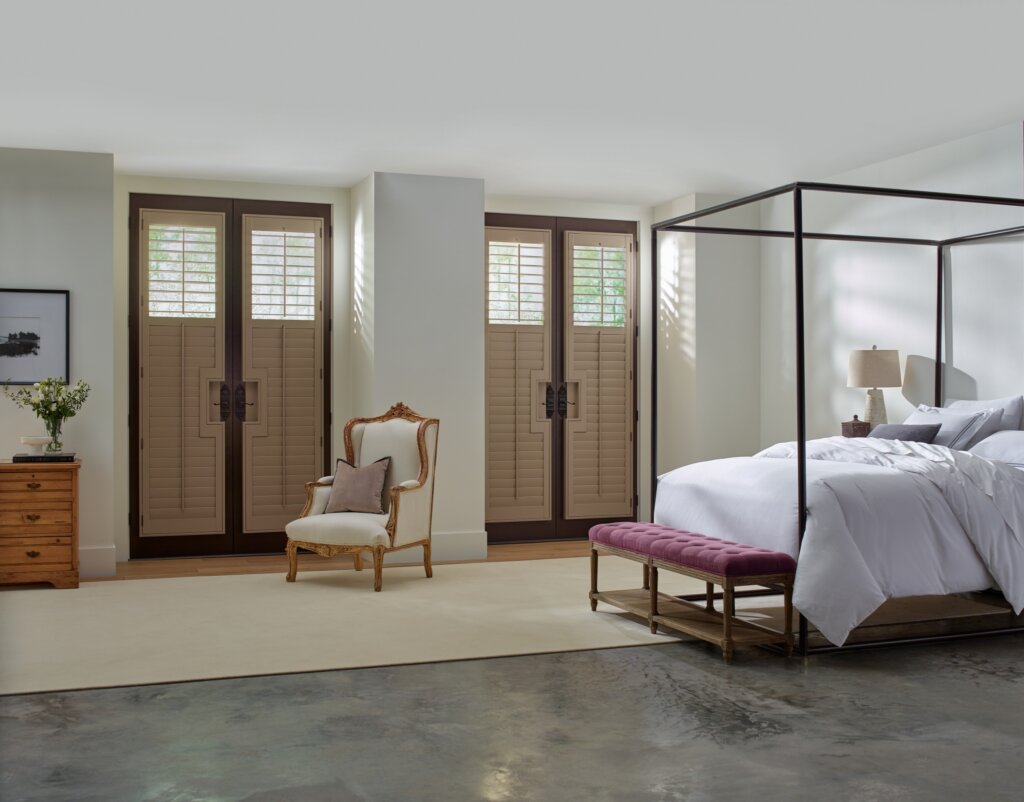
NewStyle® composite shutters are designed to look like traditional painted wood shutters, but they’re built with a more durable engineered material underneath. That combination is what makes them such a common “middle ground” choice for homeowners who want the classic shutter look without the maintenance concerns that come with real wood.
What sets them apart is the way they balance appearance and performance. From a distance, they look very similar to wood shutters—clean, structured, and custom-built. But up close and in everyday use, they’re more resistant to the types of changes that can affect natural materials over time.
In Hill Country homes, that matters more than people expect. With Texas heat, seasonal humidity shifts, and strong sunlight—especially in west-facing rooms—real wood shutters can slowly expand, contract, or show wear over time. NewStyle composite shutters are built to handle those conditions more consistently, which helps them maintain their shape and finish longer.
Palm Beach™ Polysatin Shutters
Best for: Bathrooms, kitchens, laundry rooms, and high-sun areas
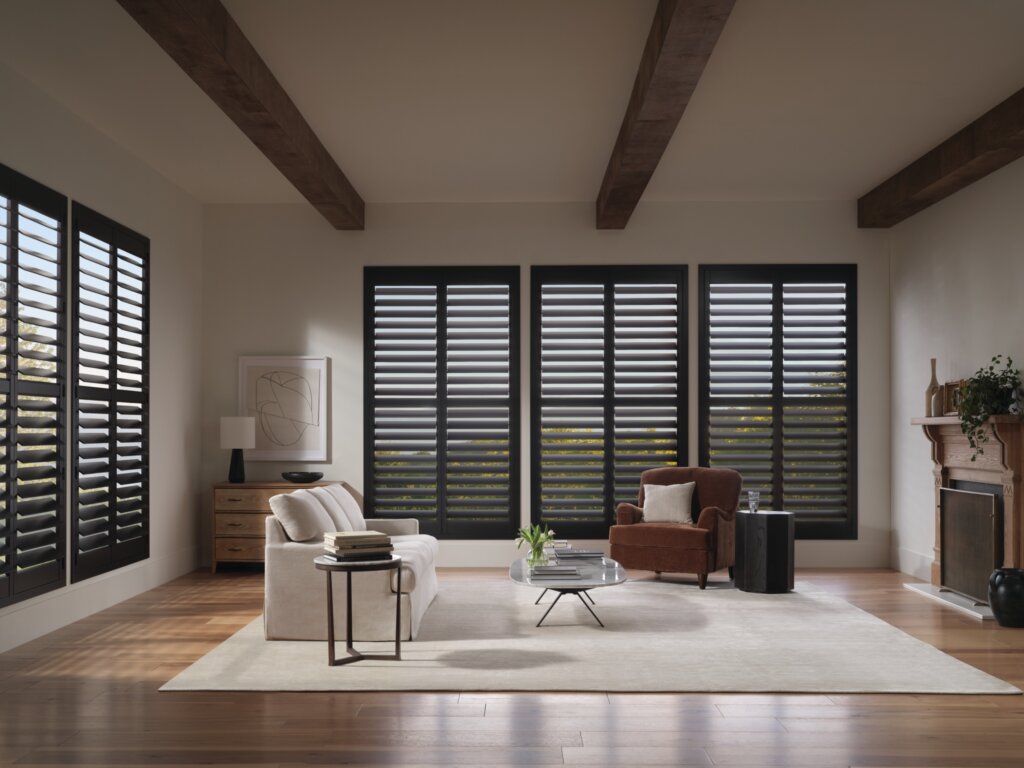
Palm Beach™ Polysatin shutters are designed for environments where traditional materials tend to struggle. Instead of wood or wood-based composites, they’re made from a proprietary synthetic material built specifically to handle heat, moisture, and strong UV exposure without breaking down over time.
What makes them different is that they’re essentially engineered for “problem areas” in the home—the rooms where humidity, direct sun, or temperature swings would normally cause warping, cracking, fading, or peeling in other materials. With Polysatin, the goal isn’t just appearance; it’s long-term stability in harsh conditions.
In Texas homes—especially across the Hill Country where west-facing windows can get intense afternoon sun and bathrooms often deal with high humidity—this material tends to outperform traditional wood-based shutters in terms of consistency and longevity.
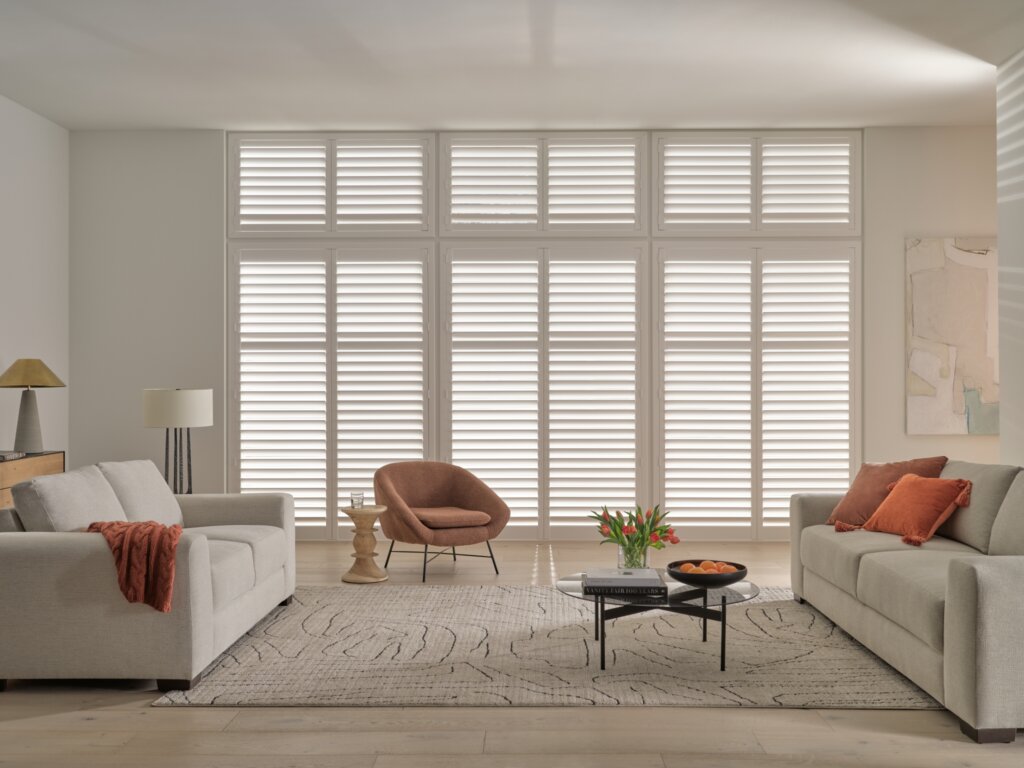
Tilt Options: Front Tilt vs Hidden Tilt
Hunter Douglas shutters typically come with two tilt system options depending on the collection and design.
- Front tilt bar: The front tilt bar is the traditional shutter control system, where a visible vertical bar runs through the center of the panels and connects all the louvers. When you adjust the bar, all the louvers move together to control light and privacy. This is the most familiar shutter design and the one many homeowners recognize right away. It has a classic, timeless look that feels true to traditional plantation shutters, and it’s also very straightforward to use in everyday operation. Because the tilt bar is visible, it adds a slightly more traditional visual detail to the shutter face. Some homeowners actually prefer this look because it feels more authentic and recognizable, especially in homes that lean more classic or transitional in style.
- Hidden tilt system: The hidden tilt system places the operating mechanism behind the louvers instead of using a visible front tilt bar. This creates a cleaner, more streamlined look across the entire shutter panel, since there is no center rod breaking up the design. Functionally, it still does the same thing—tilting all louvers together for easy light and privacy control—but the mechanism is built into the structure of the shutter itself. The result is a more modern, custom-built appearance that feels closer to furniture-grade millwork than a traditional shutter design.This option is especially popular in newer or more design-forward homes where homeowners want a minimal, uninterrupted look across their windows.
Functionally, both options work the same way—they adjust light and privacy through the louvers. The difference is purely visual.
Hidden tilt is especially popular in newer Hill Country homes where homeowners prefer a minimal, streamlined look without visible hardware breaking up the face of the shutter.
Louver Sizes and How They Change the Look
Louver size plays a bigger role in design than most homeowners expect.
- 2.5″ louvers: More traditional and detailed look
- 3.5″ louvers: Balanced and most commonly used
- 4.5″ louvers: Modern, open appearance with wider views
In larger Hill Country homes with tall or wide windows, larger louvers are often preferred because they feel more open and don’t visually over-segment the window.
Do Shutters Help with Heat and Sun in Texas?
Shutters can absolutely improve comfort in Texas homes, especially in areas like Boerne where large windows and strong afternoon sun are common.
They help reduce direct sunlight and glare, which can make rooms feel cooler and more comfortable during peak heat hours.
However, shutters are not designed as a high-insulation product like cellular shades. Their primary strength is in light control, privacy, and visual comfort rather than maximum energy efficiency.
Why Homeowners Choose Shutters Over Shades or Blinds
Shutters are often chosen when homeowners want something that feels permanent and built into the home.
Compared to blinds, they feel more solid and finished.
Compared to shades, they don’t rely on fabric movement or daily adjustment.
Instead, they offer:
- Consistent privacy throughout the day
- Simple and reliable light control
- A clean architectural look
- Very low maintenance
For many homeowners, shutters become a “set it and forget it” solution.
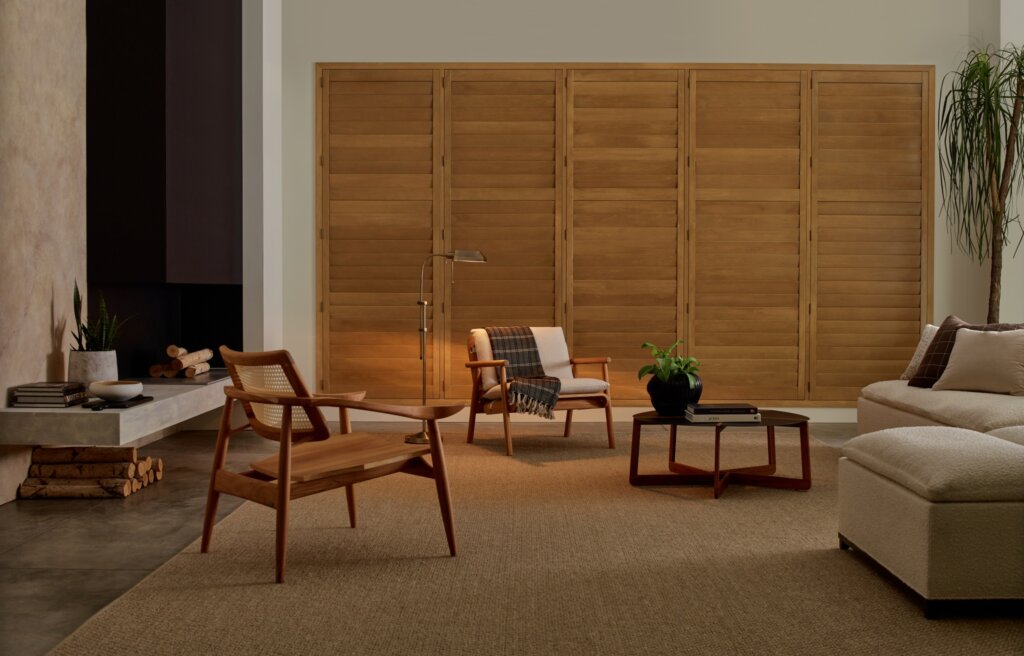
A Quiet Advantage: Shutters Can Add Home Value
One benefit that often gets overlooked is that shutters are widely viewed as a permanent home upgrade rather than a temporary décor choice.
Because they are custom-fit and built into the window frame, shutters can improve the overall perception of a home’s quality and finish. In many cases, they are treated more like built-in millwork than a removable window treatment.
While they don’t replace major renovations, they can enhance resale appeal and make spaces feel more complete during showings.
Best Rooms for Hunter Douglas Shutters
Shutters perform best in rooms where both design and function matter.
- Living rooms with large windows
- Primary bedrooms
- Home offices with glare concerns
- Bathrooms and kitchens (especially Polysatin)
- Entry areas and front-facing rooms
In Hill Country homes, they are especially common in open-concept living areas where natural light plays a major design role.
Frequently Asked Questions
What is the best shutter material for Hill Country homes?
There isn’t a single best shutter material for every home in the Hill Country. Most homeowners choose based on the room and how much sun, heat, or humidity that space gets.
In many cases, homeowners do stick with one primary material throughout the home for consistency, but certain rooms may call for a different option depending on conditions.
- Wood shutters (Heritance®) are best when the goal is a natural, high-end look. They have the warmest and most traditional appearance, which is why they’re often chosen for living rooms, dining rooms, or more design-focused spaces. That said, in Texas conditions—especially in areas with strong sun exposure or noticeable humidity swings—wood can gradually expand and contract over time. On larger windows or west-facing rooms, this can sometimes lead to minor warping or alignment changes, which is why wood is typically recommended more selectively in the Hill Country rather than throughout the entire home.
- Composite shutters (NewStyle®) are the most commonly used option for whole-home installations. They offer the look of painted wood but are more stable in changing temperatures and humidity, which makes them a reliable choice for bedrooms, hallways, and main living areas.
- Polysatin shutters (Palm Beach™) are designed for the most demanding conditions in the home. They perform especially well in bathrooms, kitchens, laundry rooms, and rooms with strong direct sun, since they are built to resist moisture, heat, and UV exposure without warping or fading.
In most Hill Country homes, composite shutters tend to be the “default” choice, with wood or Polysatin used more selectively depending on the space rather than mixing materials throughout the entire house.
Do shutters completely block light?
Shutters significantly reduce light, but they do not completely block it.
When the louvers are closed, shutters significantly reduce incoming light and create a much darker, more private space. However, because of the way the louvers are designed, there are still small gaps between and around them where some light can filter through—especially during bright Texas afternoons or when the sun is directly hitting the window.
Most homeowners find this level of control ideal for everyday use. You can soften harsh sunlight during the day, reduce glare on TVs or screens, and still keep a room comfortable without making it completely dark.
If full blackout is the goal—like in a nursery or media room—layering shutters with another treatment is usually the better solution.
Are shutters still in style in modern homes?
Yes. Shutters are still widely used in modern homes, and they’ve actually become more design-neutral over time rather than tied to a specific style trend.
What makes them work in both modern and traditional spaces is their clean, structured look. In modern homes, especially newer custom builds in areas like Boerne and the Hill Country, shutters are often chosen because they feel minimal and architectural rather than decorative or busy. They don’t add fabric, cords, or visual clutter around the window, which fits well with more streamlined interiors.
In more traditional homes, shutters still work because they have a classic, built-in appearance that feels intentional and permanent rather than trendy.
Because of that flexibility, shutters tend to stay relevant even as design trends change—they don’t rely on patterns, colors, or styling trends to feel current.
What size louvers should I choose?
Larger louvers (3.5″–4.5″) are popular in newer homes and in larger windows because they feel more open and modern. Smaller louvers create a more traditional, detailed look and may look more proportionate in smaller windows.
Can Hunter Douglas shutters be installed on glass doors?
Yes. Hunter Douglas shutters can be installed on glass doors, but the way they’re built and operated is slightly different from standard window shutters.
For sliding glass doors or French doors, shutters are typically designed as panel systems that either hinge open or slide on a track, depending on the layout of the doorway. This allows the shutters to move with the door or operate independently without blocking access.
In Hill Country homes, glass doors often get a lot of use and also bring in strong natural light, so the goal is usually to balance easy daily access with light and privacy control. Shutters do that well because you can keep them partially open for visibility or fully closed for privacy without relying on fabric movement.
One thing to keep in mind is clearance and stacking space. On wide openings like patio sliders, the shutter configuration has to be planned carefully so the panels don’t interfere with the door operation or limit access when fully opened.
Why choose shutters instead of shades?
Shutters are typically chosen when homeowners want something more permanent and built-in. They become part of the window itself, which gives them a more architectural look compared to shades that sit in front of the window as a softer, fabric-based layer.
From a day-to-day standpoint, shutters also feel simpler. There are no fabrics to replace, no cords or rolling mechanisms to deal with, and very little ongoing maintenance. You adjust the louvers, set your light level, and they stay consistent throughout the day.
Shades, on the other hand, offer more flexibility in terms of fabric options, opacity levels, and layered softness in a room. They’re often chosen when homeowners want a more decorative or textured window treatment.
In general, shutters tend to be the better fit when the goal is long-term durability, a clean architectural finish, and consistent performance over time—especially in homes where the windows are a major visual feature.
A Timeless Fit for Boerne & Hill Country Homes
Hunter Douglas shutters are especially popular across Boerne and surrounding Hill Country communities because they align naturally with the way homes are built in the region—large windows, open layouts, and strong natural light.
For homeowners who want something that feels intentional, durable, and built into the home itself, shutters remain one of the most reliable long-term window treatment investments.