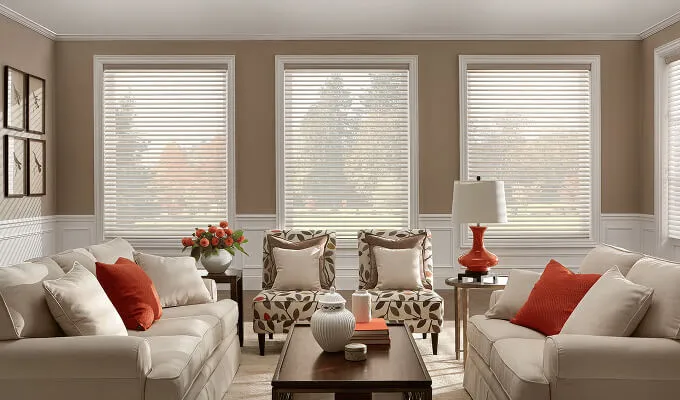
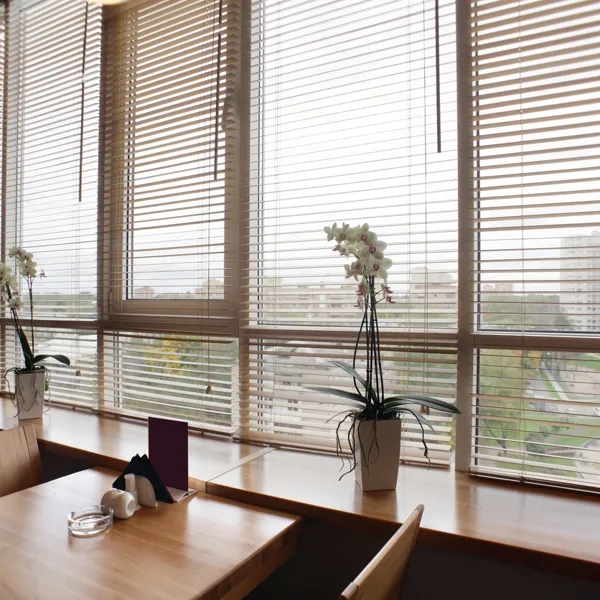
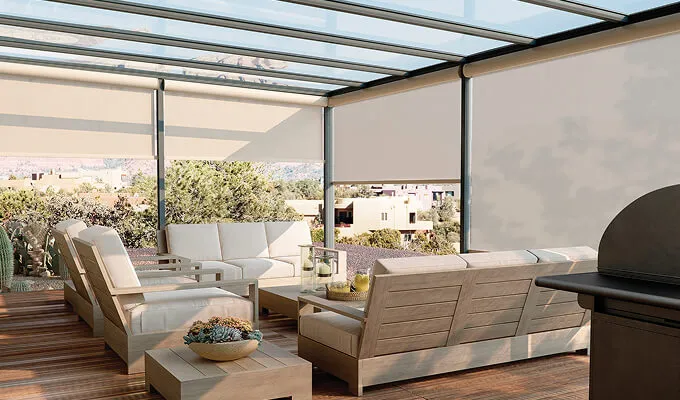
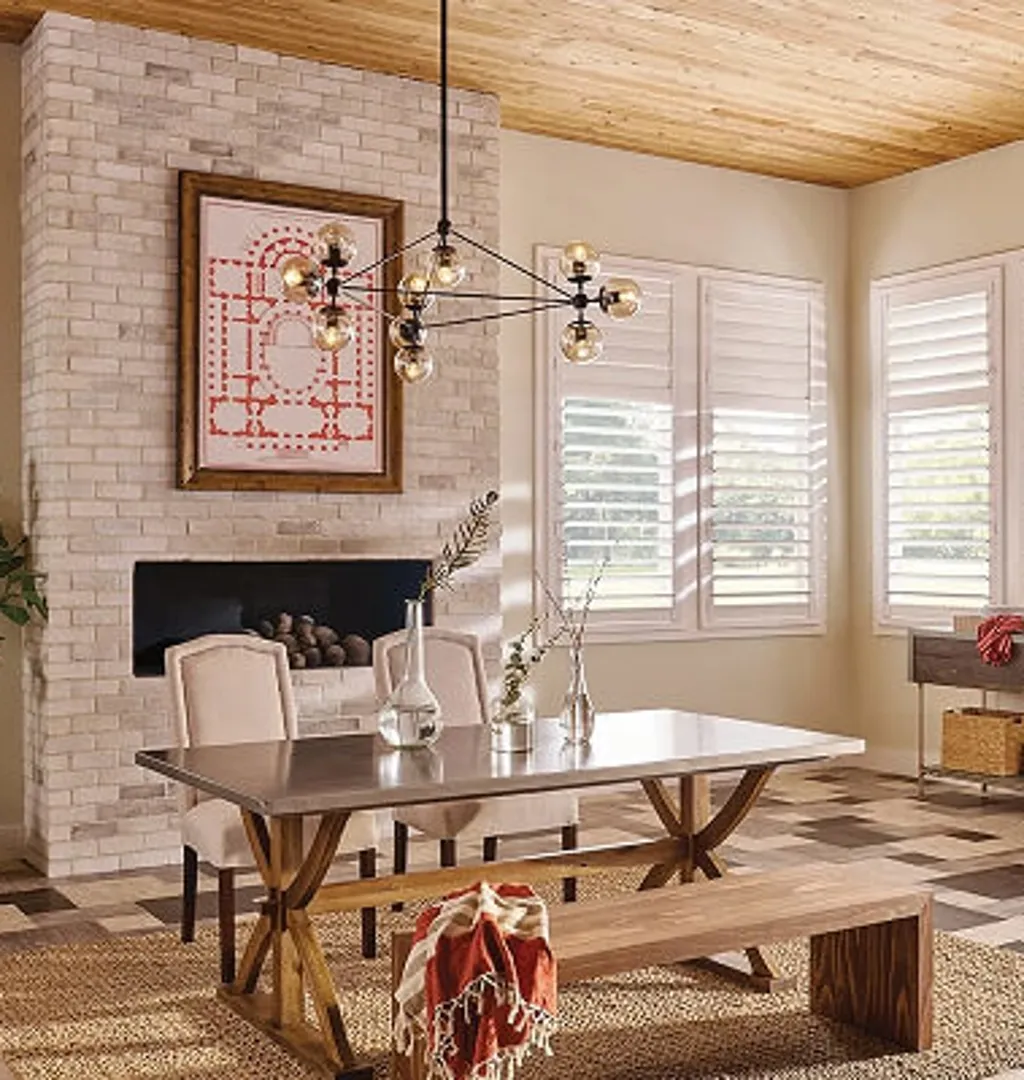
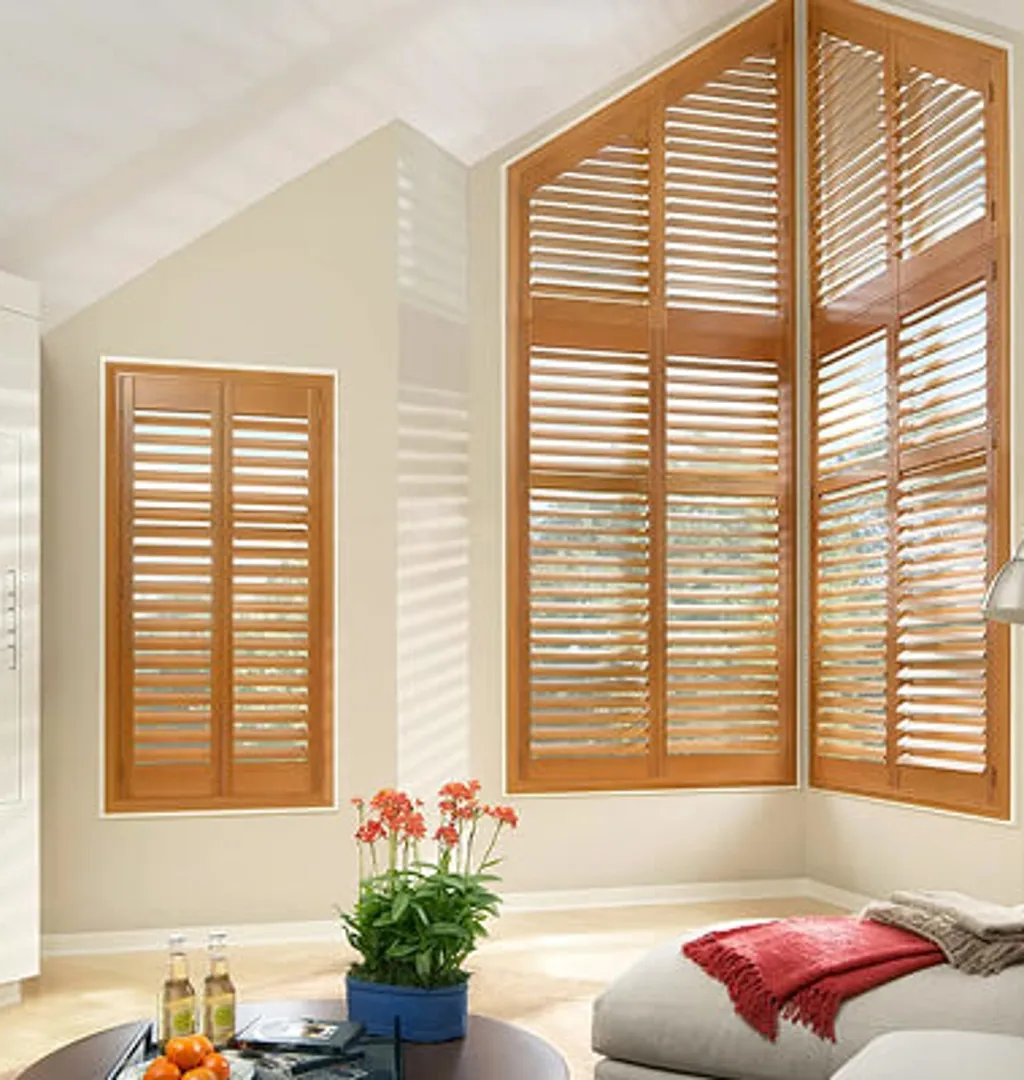
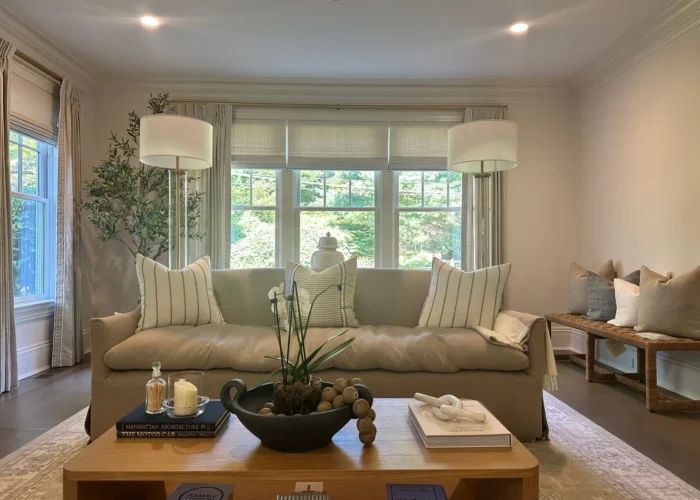
Choosing the right window treatment doesn’t always mean choosing just one. In fact, some of the most attractive and functional windows combine two different treatments, such as Roman shades with drapery panels or woven shades with curtains.
For homeowners throughout Fairfield County, layering window treatments can provide greater control over sunlight and privacy while adding texture, color, and depth to a room. Whether your home is a traditional Colonial in Greenwich, a coastal-inspired property in Westport, or a contemporary home in Stamford, the right combination can make your windows an important part of the room’s overall design.
Why Layer Window Treatments?
Layered window treatments combine function and style. One treatment can handle everyday light control and privacy, while another adds softness and visual interest.
For example, a shade mounted inside the window frame provides convenient light control without taking up much space. Drapery panels installed outside the frame can then soften the appearance of the window and make it feel larger.
Layering can also give you more flexibility throughout the day. You might keep your shades partially open during the afternoon while closing the drapes in the evening for additional privacy.
Roman Shades and Drapery
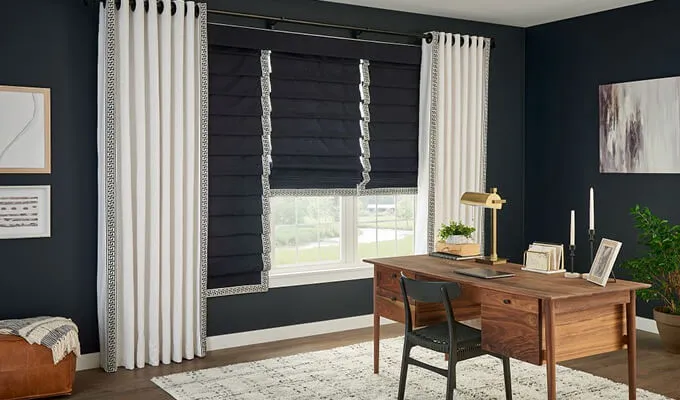
Roman shades and custom drapes are a natural pairing for homeowners who want a polished, sophisticated appearance.
Roman shades offer clean lines when raised but introduce the softness of fabric when lowered. Adding drapery panels on either side of the window creates another layer of texture and gives you an opportunity to introduce complementary colors or patterns.
This combination works especially well in:
- Living rooms
- Dining rooms
- Primary bedrooms
- Home offices
- Formal sitting areas
For a subtle look, choose shades and drapes in similar neutral tones. If you want the windows to become a focal point, consider pairing a neutral Roman shade with patterned or contrasting drapery.
Natural Woven Shades and Curtains
Fairfield County homeowners who prefer a relaxed or organic decorating style can consider combining natural woven shades with fabric curtains.
The texture of a woven shade can bring warmth to a room, while curtains soften the overall appearance. This pairing works particularly well with coastal, transitional, farmhouse, and casual New England interiors.
Natural textures can also help prevent a room filled with whites, creams, grays, and other neutral colors from feeling too flat.
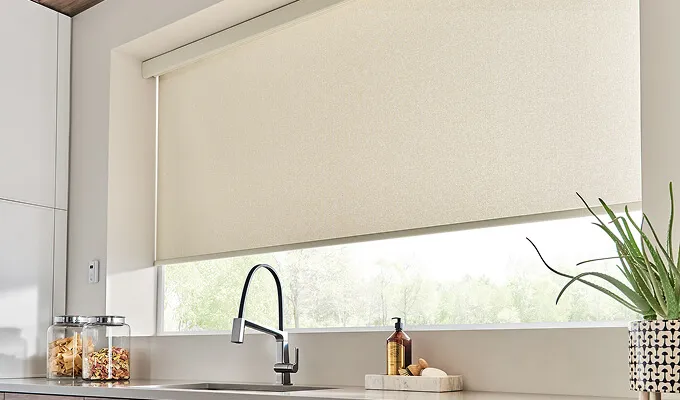
Roller Shades and Drapery Panels
Roller shades are popular because of their simple profile and ease of operation. Their streamlined appearance also makes them an excellent foundation for layered window treatments.
During the day, the roller shade can provide glare reduction or privacy. Decorative drapery panels can remain open to frame the window and add color and texture.
This combination is particularly effective when homeowners want the practicality of a modern shade without sacrificing the softer appearance of traditional drapery.
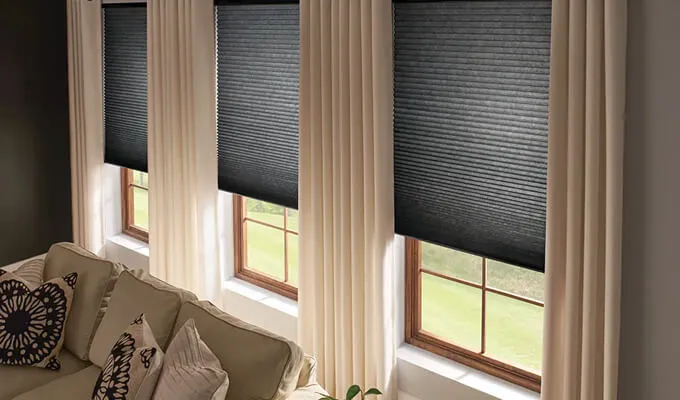
Cellular Shades and Drapes
Comfort is especially important in Connecticut, where homeowners experience cold winters and warm, sunny summers.
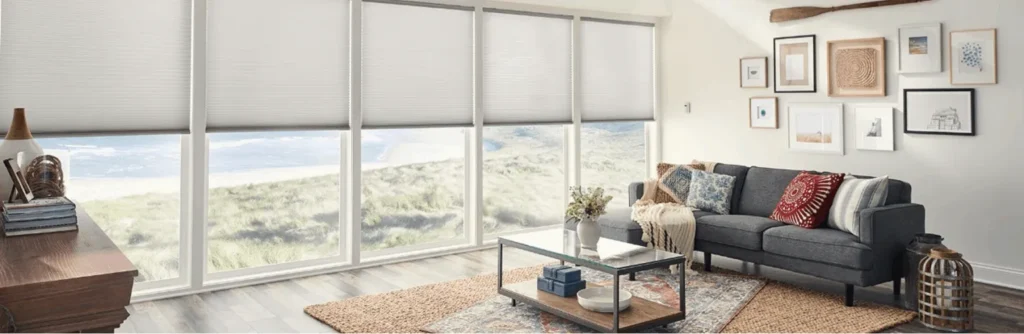
Cellular shades are designed with pockets that trap air at the window. Pairing them with drapery can create an attractive layered appearance while giving homeowners another way to manage light and comfort.
This combination can be particularly useful for bedrooms and other rooms where privacy and temperature control are priorities.
Sheer Shades With Decorative Drapery
If maintaining natural light is important, sheer shades can be paired with decorative drapery panels.
Sheer shades allow filtered daylight into the room while providing adjustable light control. Drapery can then provide additional privacy when needed.
The result is a bright, elegant window during the day with the option for greater coverage in the evening.
Should the Colors Match?
Your window treatments don’t have to be identical.
In many rooms, a layered design looks better when the treatments coordinate rather than match exactly. A warm neutral shade, for example, might be paired with drapes containing subtle blues, greens, or other colors already found in the furniture, rugs, or artwork.
Texture matters too. Pairing a smooth fabric with a woven or textured material can create visual contrast without requiring bold colors.
The goal is to make the treatments look intentional and connected to the rest of the room.
Don’t Forget the Hardware
When layering window treatments, drapery hardware becomes part of the design.
The rod’s finish can coordinate with other elements in the room, such as lighting fixtures, cabinet hardware, door handles, or furniture accents. Rod placement also matters. Installing drapery higher and slightly wider than the window can help create the impression of a taller, larger window.
Because layered treatments require several measurements to work together properly, custom sizing and professional installation can help produce a cleaner finished appearance.
Can Layered Window Treatments Be Motorized?
Absolutely. Layering doesn’t mean giving up modern convenience.
Motorized shades can serve as the functional layer while custom drapery provides the decorative finishing touch. Depending on the products selected, homeowners may also be able to motorize multiple components of their window treatment.
Motorization can be especially useful for large windows, hard-to-reach windows, and rooms where homeowners adjust their shades several times throughout the day.
Find the Right Combination for Your Fairfield County Home
There isn’t one perfect window treatment combination for every home. Window size, sun exposure, privacy needs, interior design, and how you use the room should all influence your decision.
That’s one of the advantages of custom window treatments. Instead of trying to make an off-the-shelf product fit your windows and decorating style, you can select materials, colors, fabrics, operating systems, and combinations designed specifically for your space.
Bumble Bee Blinds of Fairfield County can help you explore custom blinds, shades, shutters, drapes, curtains, and motorized window treatments for your home. During an in-home design consultation, you can compare materials and combinations in the actual room where they’ll be installed.
Ready to give your windows a more finished, designer look? Schedule a consultation with Bumble Bee Blinds of Fairfield County and discover how layered window treatments can combine style, privacy, light control, and comfort throughout your home.