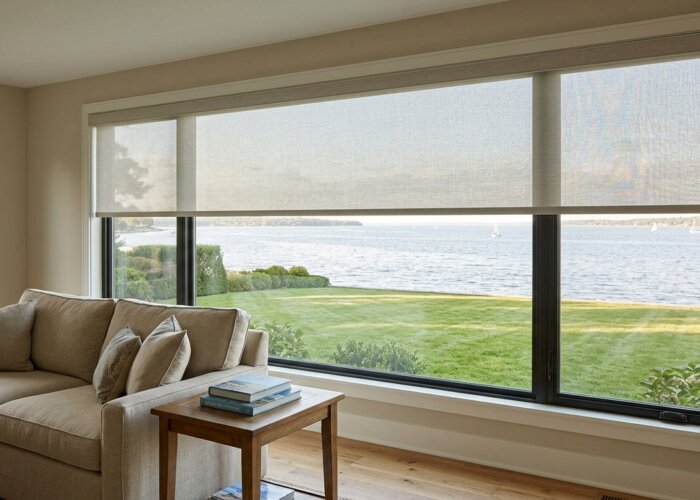
Living near the water is one of the best things about Fairfield County, and one of the more demanding things for your windows. The same wall of glass that frames Long Island Sound also floods a room with glare, fades furniture, and turns the best seat on the sofa into a squint. Window treatments for shoreline homes have to do two jobs at once: tame the sun without hiding the view you paid for.
Here’s how homeowners in Westport, Fairfield, Darien, Rowayton, and other coastal communities can approach it, room by room.
The shoreline problem: big glass, bright light, and a view you don’t want to cover
Coastal homes tend to have larger windows, more of them facing the water, and open sightlines straight through the house. Sunlight reflecting off the water can add to the brightness, and it shifts through the day and across the seasons. A room that’s perfect at 10 a.m. can be unusable by 4 p.m.
The goal usually isn’t to block light entirely. It’s to control it, so you can keep enjoying the room and the view at the same time. That’s why the best shoreline setups tend to use more than one kind of treatment, or one adjustable treatment that can do several jobs.
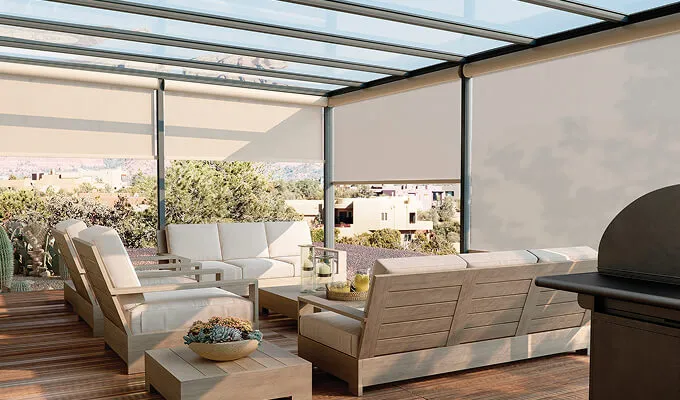
Solar roller shades: cut glare, keep the view
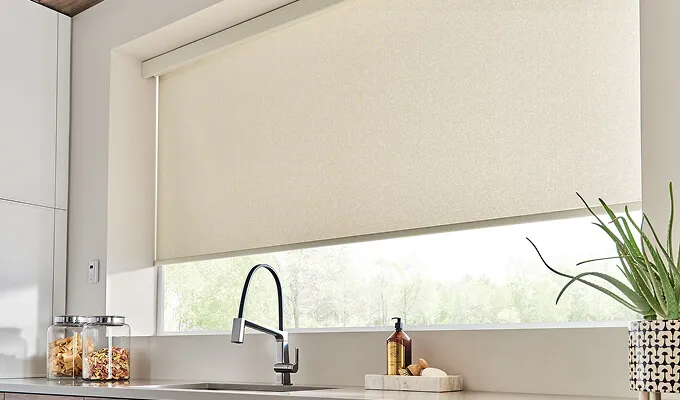
Solar roller shades are woven to filter sunlight while still letting you see outside. Fabrics with a lower openness percentage block more glare and heat, while higher openness fabrics preserve more of the view. For rooms that face the water, they’re one of the most common choices, because they calm the glare without turning the room into a cave.
A practical tip: pick the openness level based on how you use the room. A home office with a screen needs stronger glare control than a sitting room where you mostly want to protect the furniture. Samples help a lot here, since a fabric can look very different in your own light than in a showroom. Your Design Consultant brings swatches and samples to your home for exactly that reason.
Sheer shades: soft light with a clear outlook
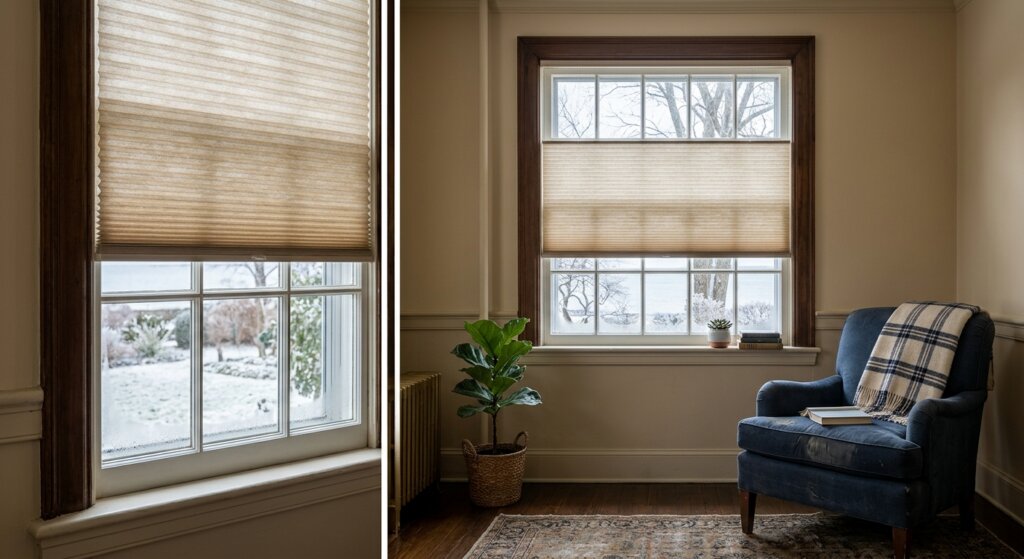
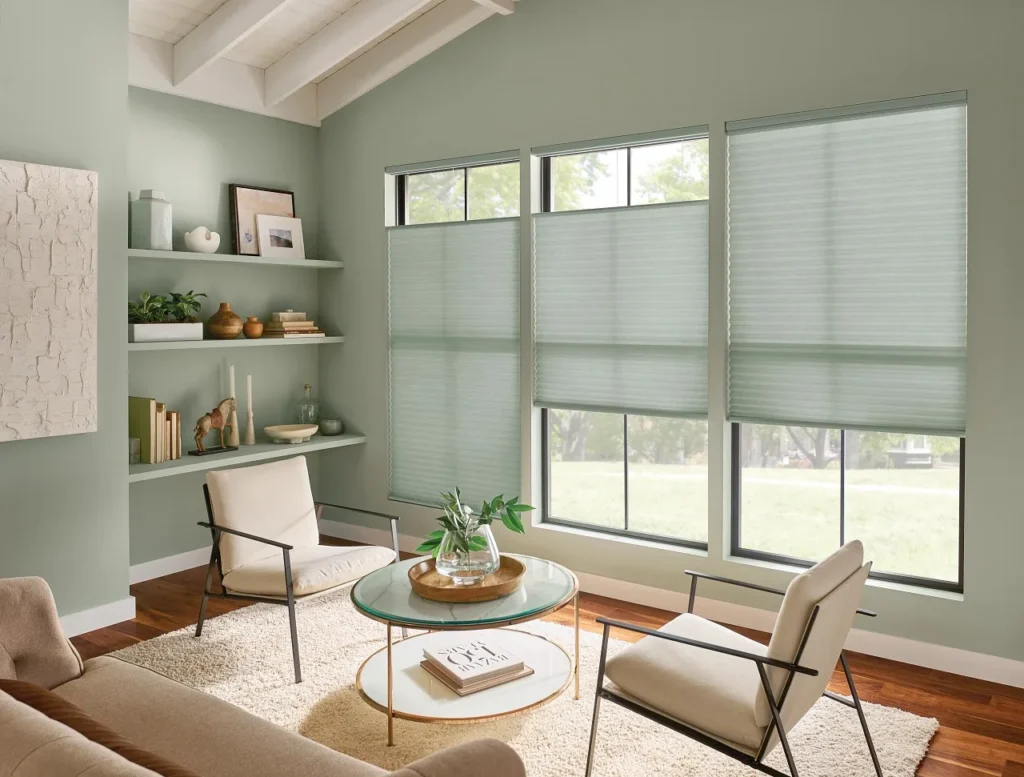
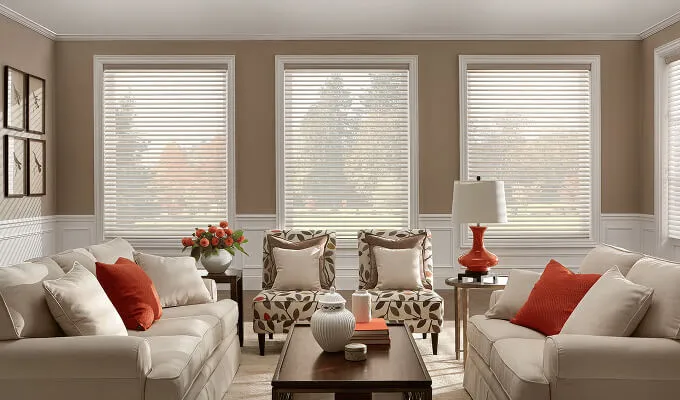
Sheer shades pair soft fabric with adjustable vanes, so you can diffuse bright light into a gentle glow or open the vanes for a clearer view. They bring a softer, more finished look to living rooms and bedrooms than a plain roller shade, which is why they often show up in homes where the interior design matters as much as the sun control.
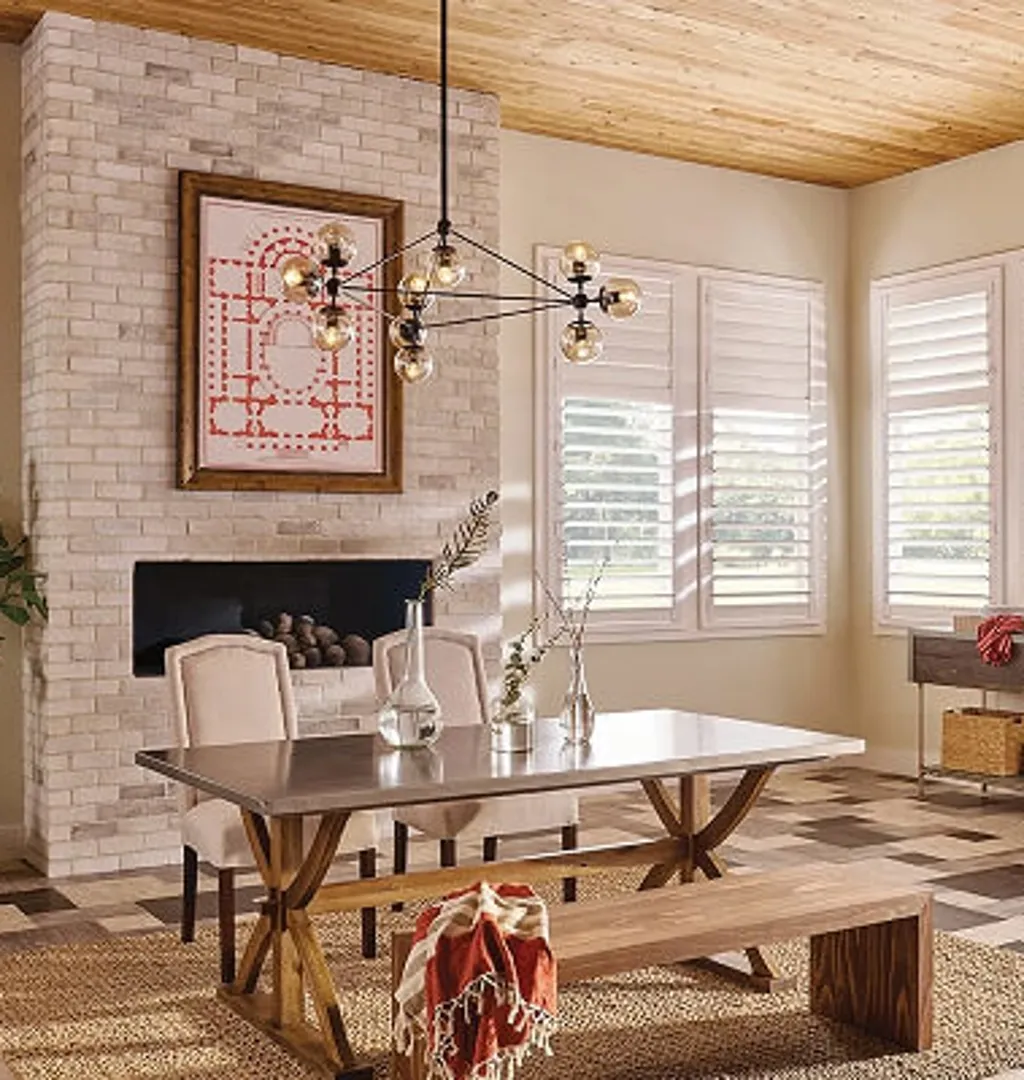
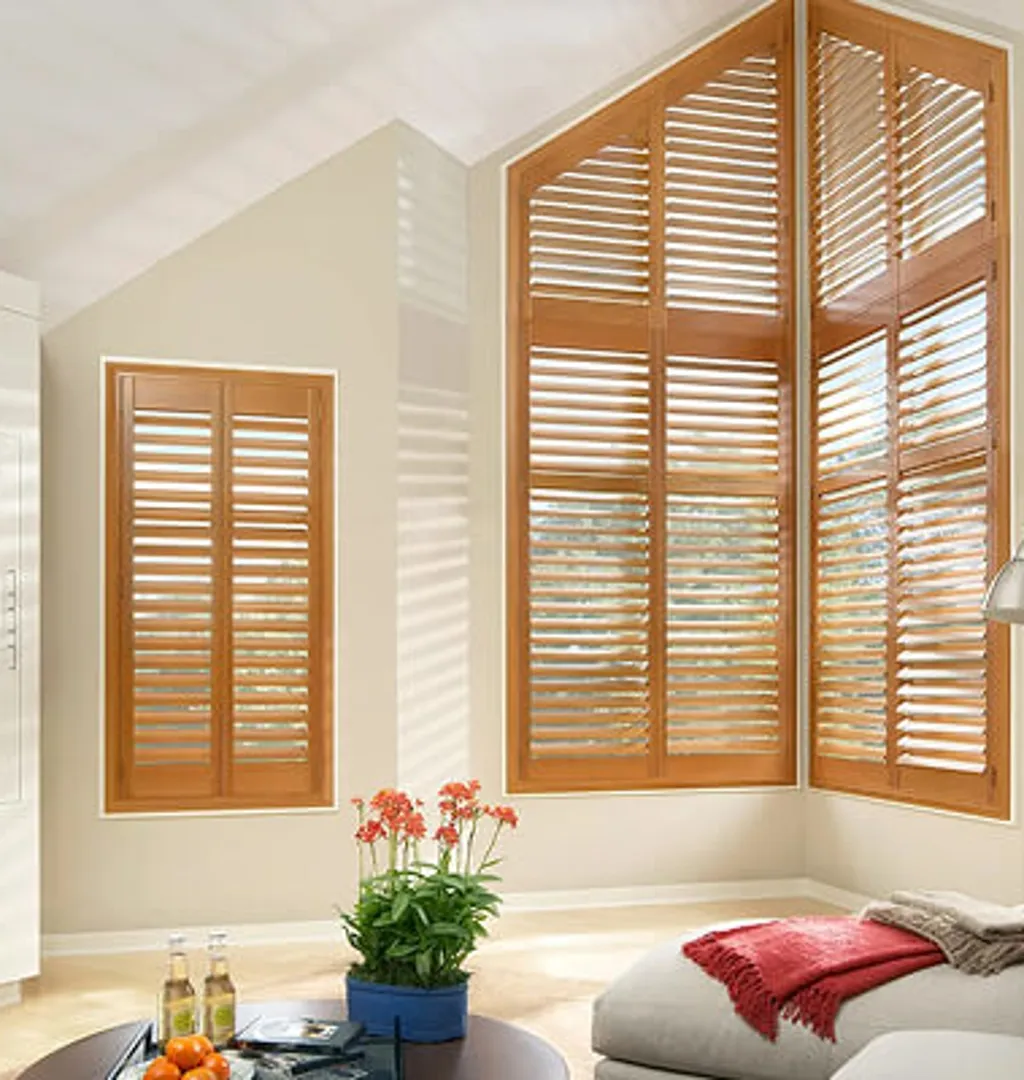
Plantation shutters: adjustable and durable
Plantation shutters let you angle the louvers to decide how much light comes in and from which direction, which is useful as the sun moves across the sky. Close the lower louvers for privacy while leaving the upper ones open for light, or open everything for the view. Composite is the most popular shutter material locally, with poly-vinyl and real hardwood also available, and shutters suit both traditional and coastal looks.
Shutters are a larger investment than blinds or shades, but they’re a permanent fixture and they’re built to handle daily use.
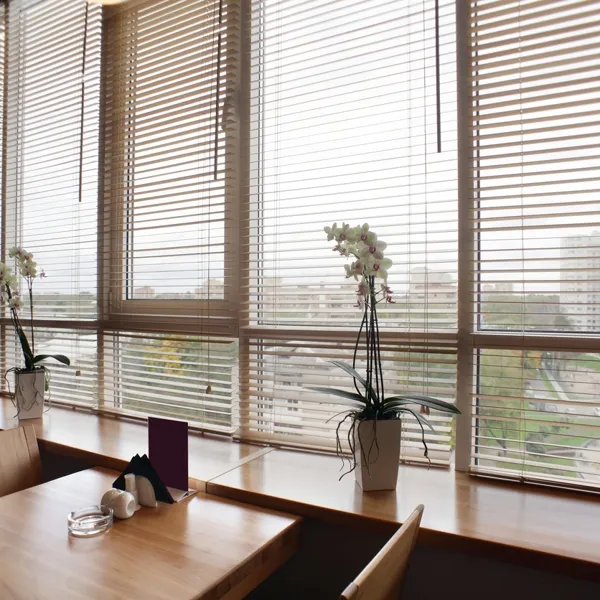
Faux wood blinds: practical for moisture-prone rooms
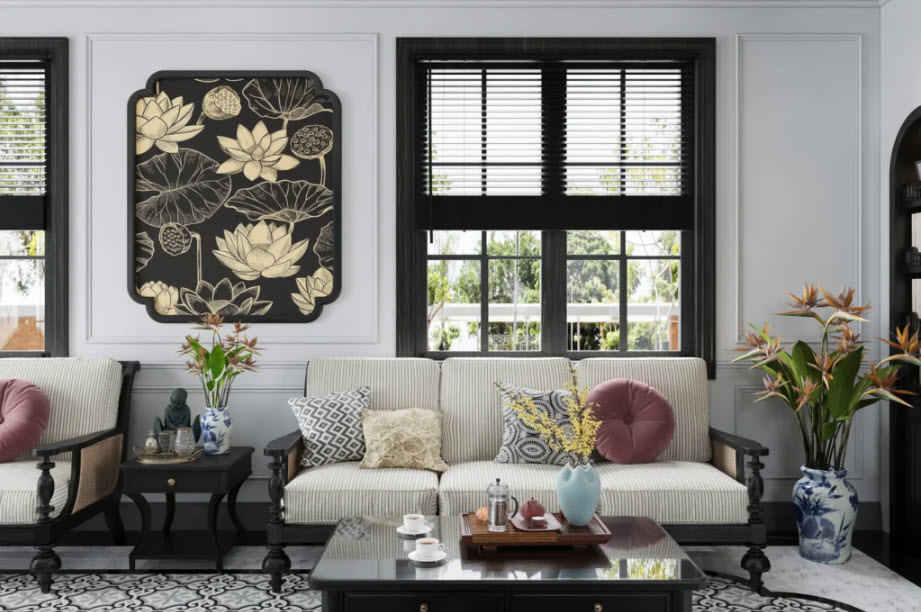
Faux wood is the most popular blind material in Fairfield County, partly because it handles moisture better than real wood. That makes it a sensible choice for kitchens, bathrooms, laundry rooms, and mudrooms, where damp air and wet beach towels are part of life near the water.
Motorized options for big and hard-to-reach windows
Tall windows, window walls, and transoms are common in shoreline homes, and they can be awkward or impossible to reach by hand. Motorized shades and blinds let you adjust light with a remote instead of a pull cord, which also means you’re more likely to actually adjust them throughout the day. Motorized lifts cost more than standard options, and the difference is shown as you build your estimate. Ask your Design Consultant about control options at your consultation.
Drapery and layering
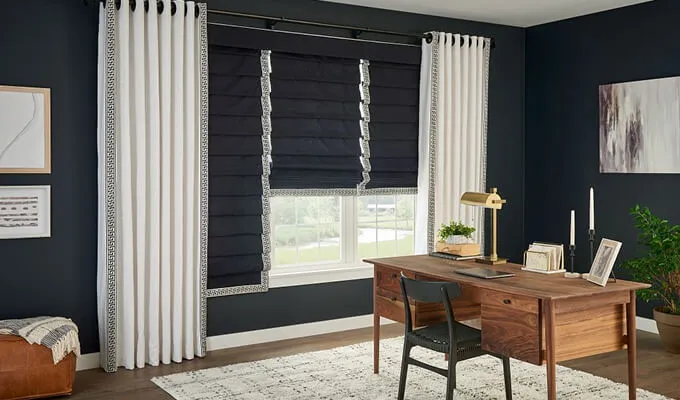
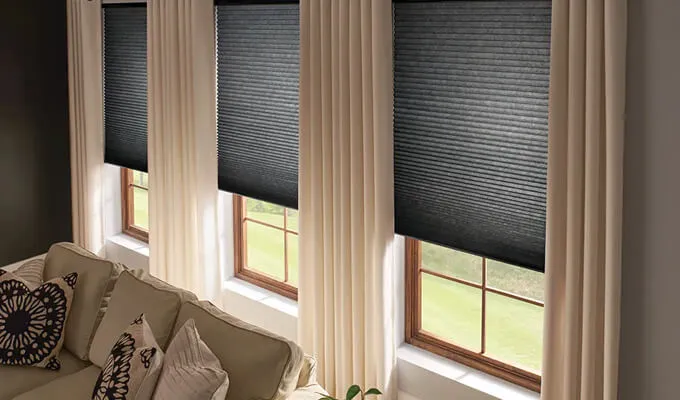
Many shoreline homeowners layer treatments: a solar or sheer shade for everyday glare control, with drapery on top for softness, evening privacy, and a finished look. Layering also lets you pull the drapery fully aside during the day so the view stays uninterrupted.
Think about the sun’s path and the time of day
Before choosing, spend a day noticing when each room is brightest. East-facing rooms get strong morning light, which matters in breakfast nooks and bedrooms. South- and west-facing rooms take the heavier afternoon and evening sun, which is when glare and heat tend to be at their peak. In a house where several rooms face the water from different angles, it’s normal to end up with different treatments in different rooms, chosen to match how each space is used.
Privacy after dark
Large windows that feel open and airy by day can feel exposed after sunset, when the lights are on inside and it’s dark outside. Plan for that. Shutters, drapery, or a lower-openness shade give you evening privacy without sacrificing the daytime view, and a layered approach handles both.
Outdoor living: porches, decks, and patios
Many coastal homes get as much use out of the porch or patio as the living room. Bumble Bee Blinds also offers outdoor shades, which can help with sun and privacy outdoors. Pricing for outdoor products is confirmed at your consultation.
A few practical tips
- Think by room, not by house. A living room facing the water has different needs than a bedroom facing the street.
- Notice when you use each room. Morning glare matters in a breakfast nook, afternoon glare in a family room.
- Choose materials for moisture. Faux wood blinds and composite shutters are popular locally for good reason. Ask your consultant what suits each room.
- Plan for night as well as day. A second layer solves evening privacy.
- Preview your options. The Visualizer Tool lets you see treatments before you decide.
What it costs
Pricing depends mostly on how many windows you’re covering and which product you choose. Custom shades typically run $300 to $16,000 across Fairfield County, installation included. Large and specialty windows can affect a project, so the most accurate number comes from a consultation. For a quick starting range, use the free pricing estimator. It takes about 60 seconds, and there’s no phone call or obligation.
What’s included in every price
- A free in-home design consultation, where your Design Consultant brings swatches and samples to you
- Precise measuring of every window
- Products made to your exact window dimensions
- Professional installation by a trained installer
- Manufacturer warranty coverage
Flexible financing is also available.
Next steps
Start with a range from the estimator, then book a free in-home design consultation. Seeing samples in your own water-facing light is the best way to choose, and your Design Consultant will measure every window and confirm your exact quote.
Frequently asked questions
What window treatment is best for a room with water views?
Solar roller shades and sheer shades are common choices because they reduce glare while preserving much of the view. Plantation shutters offer adjustable light control. The right choice depends on the room and your priorities.
Will window treatments hold up in a humid coastal environment?
Faux wood blinds and composite shutters are popular in Fairfield County partly because they handle humidity better than real wood. Your Design Consultant can recommend materials suited to each room.
Can I control tall or hard-to-reach windows easily?
Yes. Motorized shades and blinds can be operated by remote, which is helpful for tall windows, window walls, and transoms.
How can I keep my view and still block the glare?
Solar shades with the right openness level filter glare while keeping the outlook, and layering drapery over a shade lets you open everything fully when you want an unobstructed view.
How much do shoreline-style window treatments cost?
Custom shades typically run $300 to $16,000 and plantation shutters $500 to $26,000, depending on window count. Use the free estimator for a range based on your home.