By November in Fairfield County, the mornings are cold and the heat is back on. If you’ve ever sat near a big window in January and felt the chill coming off the glass, you’ve probably wondered whether better window treatments could help. They can, within limits. Here’s an honest look at what works, what doesn’t, and what it costs.
Why windows feel so cold in winter
Glass loses heat faster than an insulated wall, so the area around a window is often the coolest part of a room. You can feel it as a chill when you sit nearby, even if the thermostat says the room is warm. Older single-pane windows tend to feel this most, but even newer double-pane windows are colder to the touch than the walls around them.
A window treatment adds a layer between the glass and the room. Depending on the product, that layer can slow the movement of cold air off the window, soften the cold radiating from the glass, and make the space feel more comfortable.
What window treatments can’t do
It’s worth being clear about the limits. A window treatment will not repair a failing window. If air is leaking around the frame or the seals have failed, a treatment can soften the effect but won’t solve the underlying problem. Treatments are one part of staying comfortable, alongside the windows, the insulation, and the heating system, not a replacement for any of them.
We also can’t promise a specific dollar amount in energy savings, because results depend on the home, the windows, and how the treatments are used. What we can say is that the right treatment often makes a cold room feel noticeably more comfortable, and it does the same job in summer by cutting down on direct sun.
Cellular shades: the insulating specialist
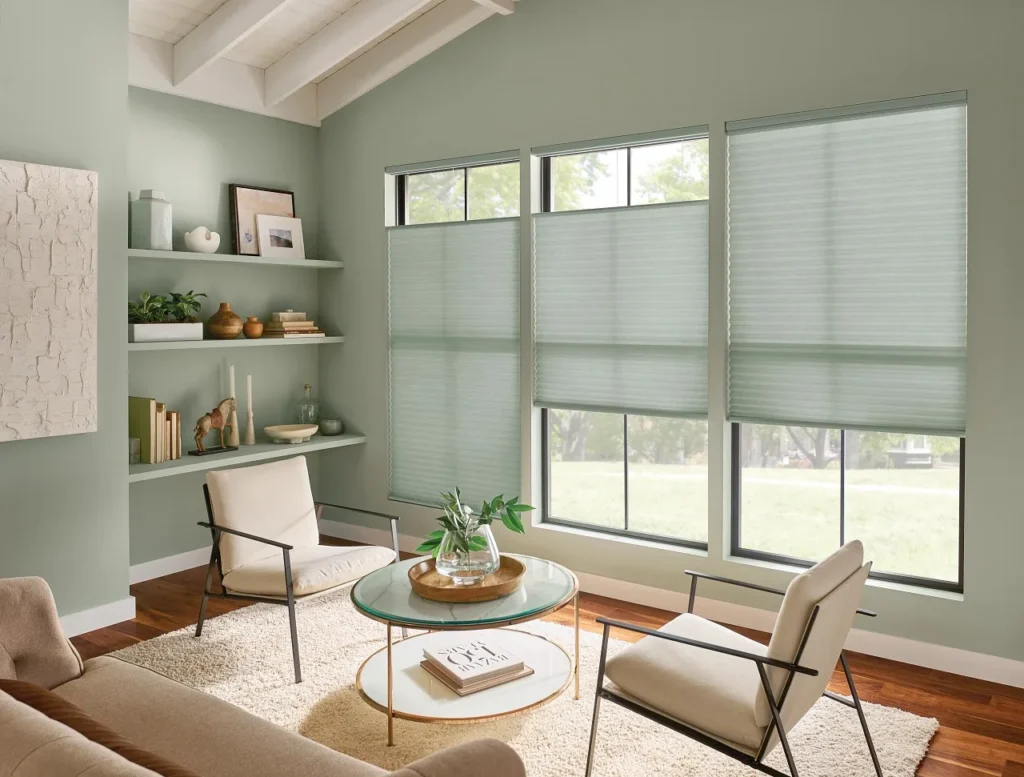
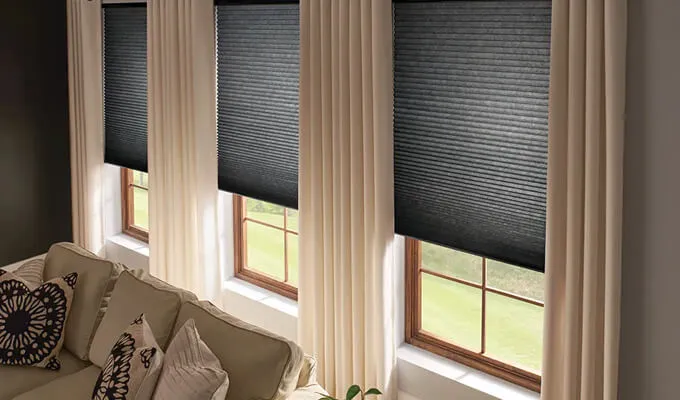
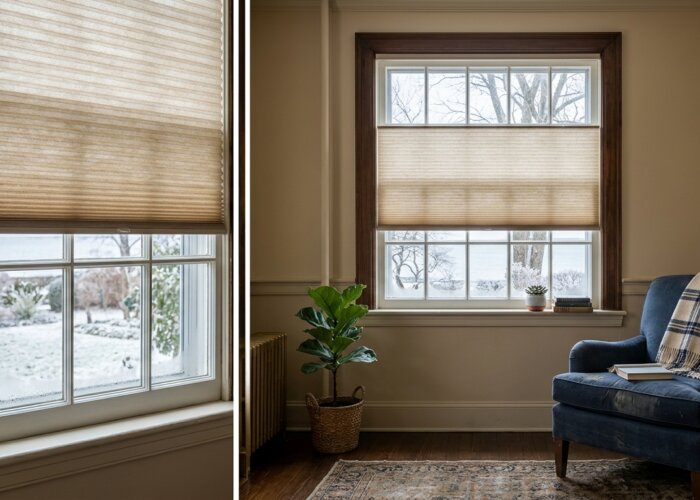
Cellular (honeycomb) shades are built with air pockets in the fabric. Those pockets create a layer of insulation at the window, which is why cellular shades are the product most often recommended when comfort or efficiency is the priority.
They come in sheer, light-filtering, and blackout fabrics, so you can add insulation without giving up daylight, or choose full darkness for bedrooms. Cordless, top-down-bottom-up, and motorized operation are all available. Top-down-bottom-up is handy in winter: you can lower the top to let in daylight while keeping the bottom closed for privacy and warmth.
Plantation shutters: solid, durable, adjustable
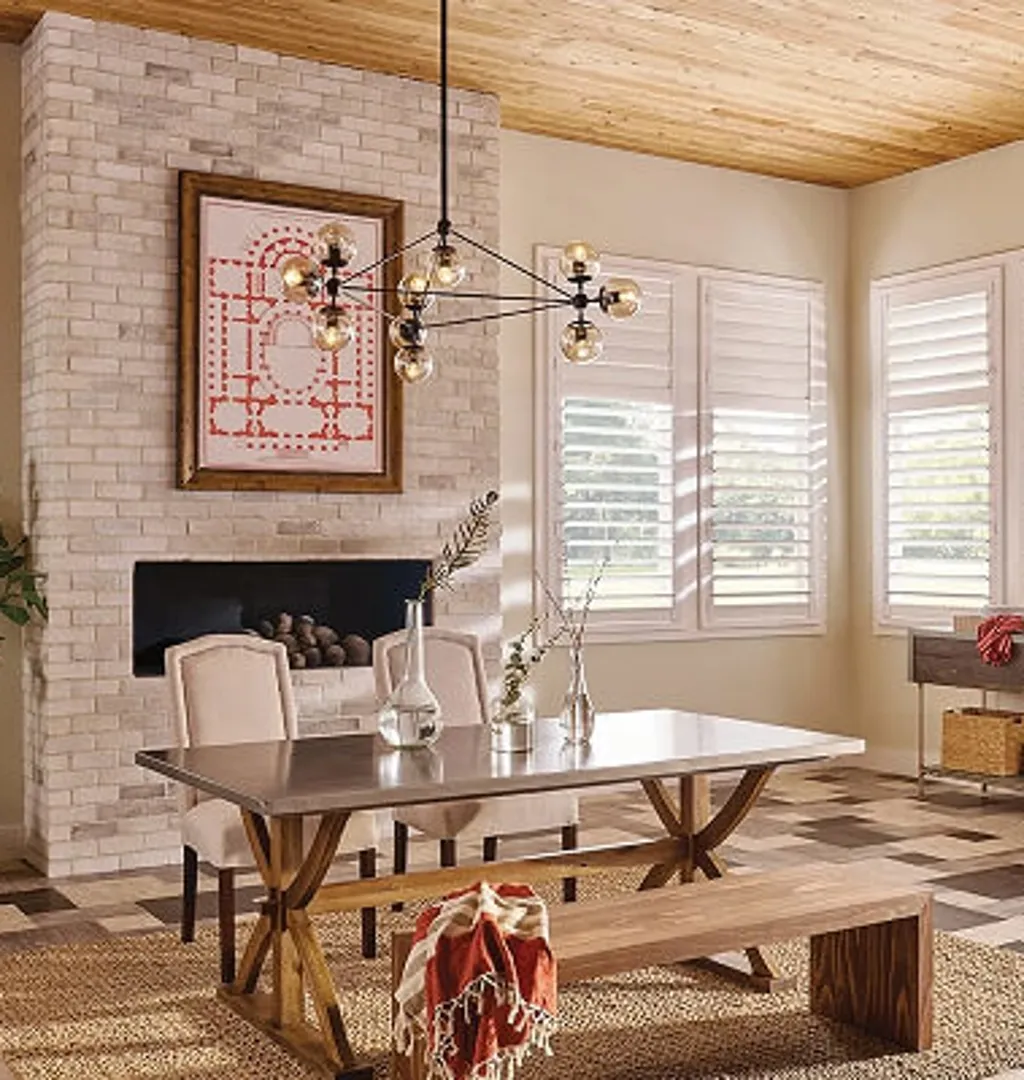
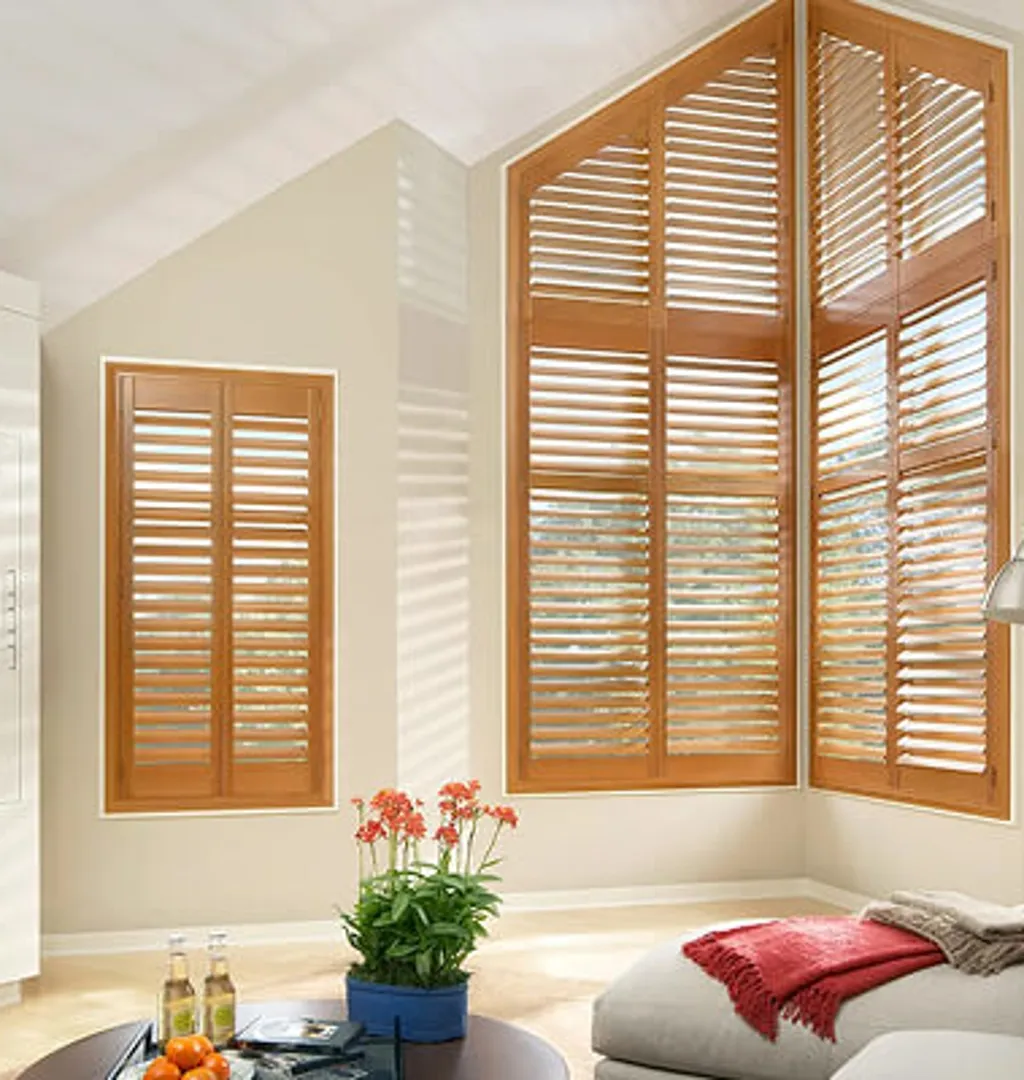
Shutters add a solid layer at the window, and they’re a long-term fixture rather than a seasonal accessory. Most homeowners choose them for durability and appearance, with added comfort as a welcome side effect. Because the louvers adjust, you can let in winter sun on a bright day and close them against the cold at night.
Composite is the most popular shutter material locally, with poly-vinyl and real hardwood also available.
Lined and layered drapery: warmth you can see
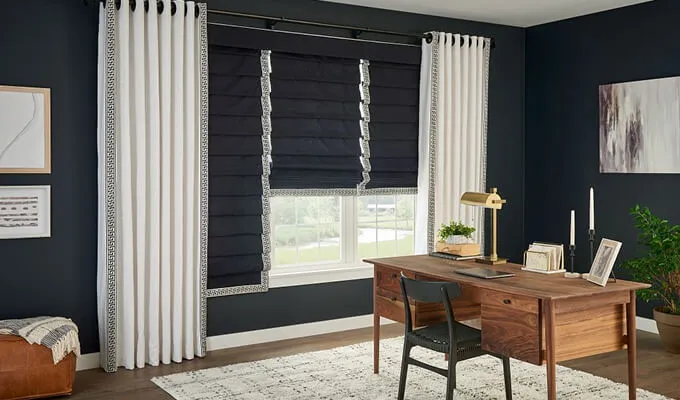
Heavier drapery, especially with a lining, adds a thick layer of fabric that many people find makes a room feel warmer and cozier. It works especially well layered over blinds or shades. The shade handles daytime light control, and the drapery adds evening warmth and a finished look.
Ask your Design Consultant about lining options when you choose fabrics.
Blinds: great for control, less for insulation
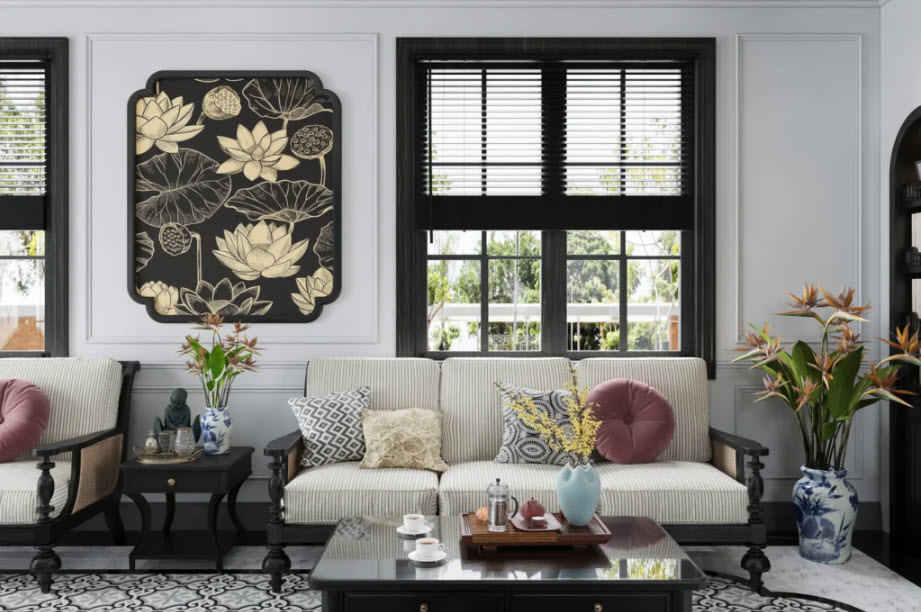
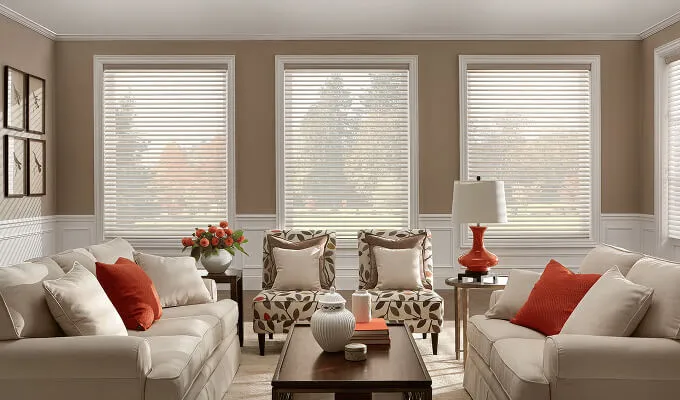
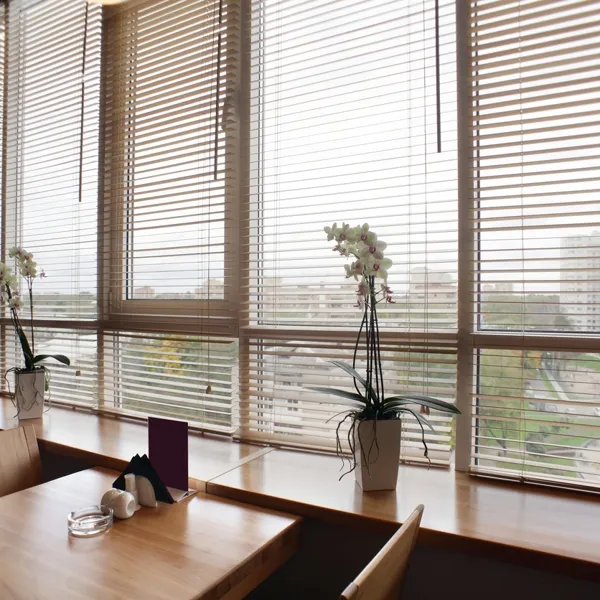
Blinds are excellent for managing light and privacy, and faux wood blinds are the most popular choice in Fairfield County. They aren’t designed as insulation, though, so if winter comfort is your main goal, cellular shades, shutters, or drapery are generally better choices. Blinds still work well in kitchens, bathrooms, and rooms where moisture or budget matter more.
Fit matters as much as the product
A treatment that sits snugly against the window does more than one with large gaps around the edges. That’s one reason precise measuring matters. Every window is measured individually, because even windows that look identical can be slightly different sizes, and that’s especially true in older homes. Your Design Consultant can also talk through mounting options so the treatment fits the window and the room.
Habits that help, whatever you choose
- Open treatments on sunny winter days to let free solar warmth into south-facing rooms.
- Close them at dusk so the window has an extra layer through the coldest hours.
- Start with the coldest rooms. Bedrooms, home offices, and rooms with large windows are often where treatments make the biggest difference.
- Consider motorization for windows you can’t easily reach, so they actually get opened and closed on a routine. Motorized lifts cost more, and the difference is shown clearly as you build your estimate.
- Don’t block your heat sources. Make sure treatments don’t hang directly over a baseboard heater or vent in a way that traps or redirects the heat.
Older homes and drafty windows
Many Fairfield County homes are decades or even centuries old, and original or older windows can be draftier than newer ones. Window treatments can make these rooms noticeably more comfortable, and many homeowners use them as a practical step while they decide whether and when to replace their windows. Because a custom treatment is made to your exact window, it’s worth getting measurements right even on older, slightly irregular openings.
How to plan a winter project
Custom treatments are made to order, so starting before the coldest weeks gives you more time. Begin with the free estimator to see a range for the rooms you have in mind. It takes about 60 seconds, and there’s no phone call or obligation. Then book a free in-home design consultation. Your Design Consultant brings swatches and samples, measures every window, and helps you match products to each room.
What’s included in every price
- A free in-home design consultation, where your Design Consultant brings swatches and samples to you
- Precise measuring of every window
- Products made to your exact window dimensions
- Professional installation by a trained installer
- Manufacturer warranty coverage
Flexible financing is also available if you’d rather spread out the cost.
Frequently asked questions
What window treatment is best for cold windows?
Cellular (honeycomb) shades are the option most commonly associated with insulation because of their air-pocket construction. Plantation shutters and lined drapery also add a useful layer at the window.
Will new window treatments lower my heating bill?
They can help a room feel more comfortable and reduce heat loss at the window, but results vary by home and we can’t promise a specific savings amount. They work best alongside good windows and insulation.
Can window treatments fix drafty windows?
They can soften the chill near the glass, but they don’t repair leaks around a window frame or failed seals. If a window is badly drafty, it may need repair or replacement.
Are blinds or shades better for winter?
Cellular shades generally offer more insulation than standard blinds because of their air-pocket design. Blinds are still a good choice for light and privacy control, especially in moisture-prone rooms.
How much do insulating shades cost in Fairfield County?
Custom shades typically run $300 to $16,000 depending on the number of windows, installation included. Use the free estimator for a range that fits your home.