How to Choose Drapes for Your Home: A Thoughtful Approach to Window Design
Choosing drapes can feel like one of those finishing decisions that should be simple—but once you start looking at fabrics, colors, and styles, the possibilities can quickly become overwhelming.
Should the window blend into the room or become a focal point? Should the fabric coordinate with the furniture or introduce something new? And how do you know whether drapery will actually improve the space?
For homeowners in Montclair and throughout North Jersey, these questions can be especially relevant. Homes in the area feature a wide range of architectural styles, from older residences with distinctive details and traditional interiors to renovated spaces with more contemporary design. A window treatment that looks beautiful in one room may feel completely out of place in another.
The best place to start isn’t with a particular fabric or trend. It’s with the room itself.
Here are several ways to think through your choices and decide what will make the most sense for your home.
1. Look at the Room Before Looking at the Drapes
Before browsing styles or collecting inspiration, take a step back and consider what the room already has going for it.
Look at the larger design elements:
- Wall color and finish
- Flooring and wood tones
- Furniture shapes and upholstery
- Rugs, artwork, and decorative accents
- Natural light and the direction the windows face
- Architectural details that you want to preserve
These elements establish the visual character of the room. Drapery should feel connected to them rather than like an entirely separate design decision.
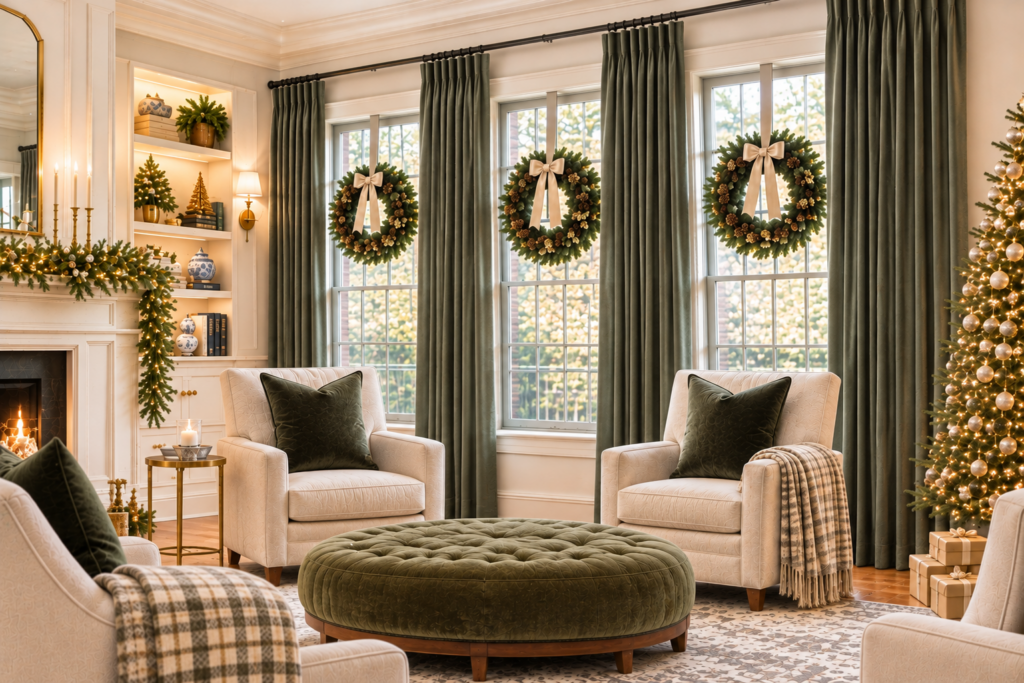
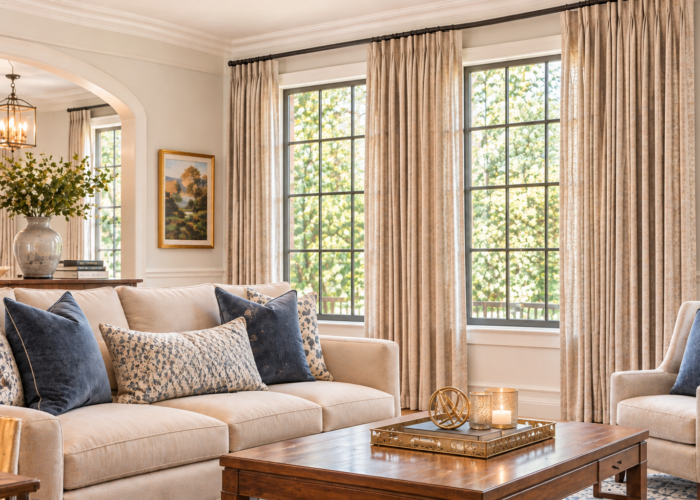
For example, a room with warm wood floors, traditional furnishings, and detailed trim may benefit from a fabric that complements those existing features. A recently renovated space with simpler finishes may offer more room for contrast, pattern, or a stronger color choice.
This is a useful starting point in Montclair homes, where the interior design may reflect the original character of the house, more recent updates, or a combination of both.
2. Decide What You Want the Window to Contribute
Not every window needs to make a statement. Sometimes the goal is to make the window feel more connected to the room. Other times, it may be the perfect opportunity to introduce a new design element.
Ask yourself what feels missing.
Does the room need more warmth?
Fabric can introduce softness into a space with hardwood floors, painted walls, stone, or other harder surfaces.
Does the room feel too plain?
A window can be an opportunity to introduce color, pattern, or texture without changing the larger furnishings.
Does the window feel disconnected from the rest of the room?
A coordinated fabric choice can help tie together the colors and materials already present.
Does the room need a stronger focal point?
A more noticeable design can draw attention to the window and help establish the room’s overall style.
Thinking about the role you want the window to play makes it easier to narrow your options. Instead of choosing something simply because you like it, you have a clearer idea of why it belongs in the room.
3. Find the Right Balance Between Coordinating and Contrasting
One of the most common design questions is whether drapes should match the rest of the room.
The short answer: they don’t have to match exactly.
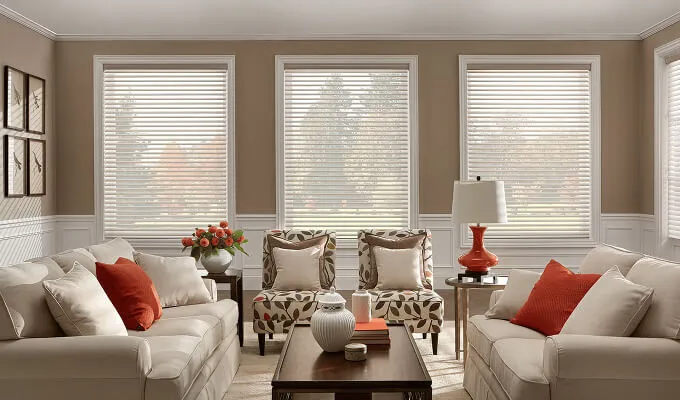
A coordinated look can be created by repeating a color or tone that already appears in the space. For example, a neutral fabric might complement the upholstery, flooring, or wall color without being identical to any of them.
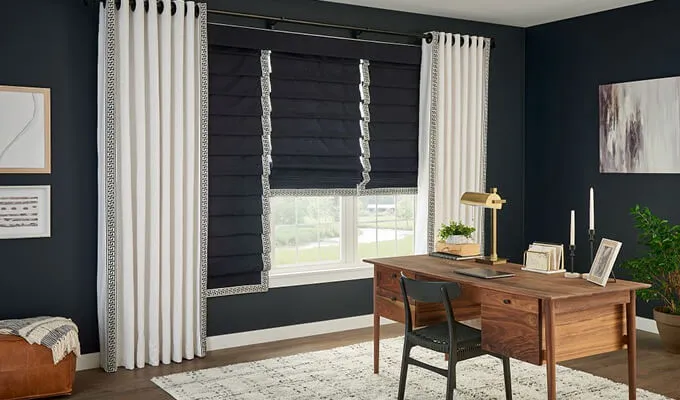
Contrast can work just as well. If the room is mostly neutral, a deeper color or understated pattern can add interest. If the furniture or artwork already has a strong presence, a quieter window treatment may help keep the space balanced.
A helpful approach is to look for a connection rather than an exact match. That connection might be a similar undertone, a complementary color, or a texture that relates to another material in the room.
This also helps prevent a room from feeling overly coordinated. A little variation can make an interior feel more natural and collected over time.
4. Consider the Character of Your Home
A window treatment should feel appropriate for the room, but it should also make sense within the home as a whole.
This is worth considering in Montclair and neighboring communities, where homeowners may be working with original architectural details, updated layouts, or interiors that blend traditional and modern styles.
In a home with detailed millwork, traditional proportions, or original woodwork, the surrounding finishes may influence the direction you take. A more contemporary renovation may call for a simpler approach that complements clean lines and a less formal interior.
That doesn’t mean every room needs to follow the same design style. In fact, different rooms can have their own personality. The goal is to create a sense of continuity so the home feels connected rather than as though each room was designed independently.
When considering drapery, look beyond the window itself. Think about the adjoining spaces, nearby doorways, visible furniture, and how the room fits into the rest of the home.
5. Think About How the Room Changes Throughout the Day
A room can look very different in the morning, afternoon, and evening.
Natural light changes the appearance of colors and materials. A fabric that looks soft and understated in bright daylight may appear deeper or more pronounced after sunset. Artificial lighting can also influence how colors are perceived.
Before settling on a direction, consider when the room gets the most use.
- Does the room receive strong sunlight during certain parts of the day?
- Is it used primarily in the morning or evening?
- Do you want the windows to feel bright and open during the day?
- Does the room need a different atmosphere after dark?
These questions help you think about the experience of the room, not just how it looks in a photograph.
For homeowners who enjoy natural light, preserving the feeling of an open, bright space may be an important part of the decision. In rooms where privacy or light reduction matters more, those priorities should influence the overall window treatment plan.
The important thing is to consider how the space actually functions instead of choosing a look based on inspiration alone.
6. Use Inspiration Photos as a Starting Point, Not a Blueprint
Pinterest, design magazines, and home improvement websites can be helpful when you’re trying to identify what you like. They can also make it difficult to separate the parts of a design that appeal to you.
When saving inspiration photos, look beyond the overall room.
Ask yourself:
- Is it the fabric color that I like?
- Do I prefer the relaxed or more formal feeling?
- Is the appeal coming from the window treatment or the furniture and décor around it?
- Would this look make sense with my home’s existing finishes?
- Am I drawn to the overall style, or just one particular detail?
A photograph may show a beautiful room, but it doesn’t tell you how the design will look with your own flooring, wall color, natural light, or furniture.
Collecting a few examples that share a similar feeling can be more useful than saving dozens of unrelated designs. Over time, patterns may emerge. You might find that you consistently prefer natural-looking materials, understated colors, traditional details, or more modern simplicity.
That gives you a direction without locking you into a specific look too early.
7. Avoid Choosing a Trend Before Considering Your Home
Design trends can be a great source of inspiration, but they shouldn’t be the only reason you choose a particular look.
A style that is popular today may not be what you want to see in your home several years from now. This is especially worth considering when you’re updating a room with established finishes or architectural details that you plan to keep.
Instead of asking what’s currently popular, consider what you naturally gravitate toward.
Do you prefer understated interiors or more decorative spaces? Are you drawn to traditional patterns, subtle textures, or clean and simple designs? Do you want the window treatment to blend in or stand out?
Your answers can help guide a decision that feels more personal and less dependent on what is trending.
A timeless result doesn’t necessarily mean choosing something plain. It means choosing something that works with your home and that you can see yourself enjoying over time.
8. Make the Decision With the Whole Room in Mind
One of the easiest ways to make a design decision more manageable is to stop treating the window as an isolated project.
Consider the room as a whole. Look at the furniture, artwork, lighting, flooring, and other elements that will remain in place. Think about whether the window treatment should introduce something new or reinforce what is already working.
It can also help to gather a few physical samples and view them in the room. Colors and textures can appear different under natural and artificial light, so seeing them alongside your actual furnishings gives you a more useful point of comparison.
If you’re updating multiple rooms, you don’t necessarily need to select the exact same look throughout the home. Instead, consider using complementary colors, textures, or design details to create a natural connection between spaces.
The result should feel intentional without making every room look identical.
Bringing Your Ideas Together
Choosing drapes is ultimately about understanding what your home needs and what you want each room to feel like.
For some homeowners, the goal is to introduce softness into a room with simple finishes. For others, it may be about creating a more cohesive interior, adding personality, or giving an existing space a fresh direction.
There isn’t one style that works for every home. The most successful choices come from considering the room, the home’s character, and the way you want to live in the space.
If you’re beginning to explore ideas for your own windows, the next step is to see how different options could work with your home’s existing design.
Explore our drapes, curtains, and hardware options to learn more about the available styles and possibilities.
Schedule Your Free In-Home Consultation
Ready to give your windows a more finished look? Let Bumble Bee Blinds of Montclair bring the samples and design guidance to you.
Call (973) 240-9072 or visit Bumble Bee Blinds of Montclair, NJ to learn more about custom drapery and schedule an in-home design consultation.
About Bumble Bee Blinds of Montclair
Bumble Bee Blinds of Montclair is a locally owned and operated window treatment business serving homeowners in Montclair, NJ, and surrounding North Jersey communities. Our team helps homeowners explore window treatment options that complement their homes, personal style, and everyday needs.