Custom Window Shades for Light, Privacy and Style
Custom shades turn a window into an adjustable part of the room. Depending on their construction and fabric, they can soften daylight, reduce screen glare, improve privacy, manage solar heat, or darken a space for sleep and media use. Unlike blinds with individual slats, shades generally use a continuous material that rolls, folds, stacks, or compresses as it opens.
Bumble Bee Blinds of Montclair helps homeowners compare shade styles, fabrics, controls, and mounting approaches for their actual windows. Schedule an opening consultation to discuss the rooms, exposures, design preferences, and practical concerns shaping your project.
Explore Shade Styles and Performance
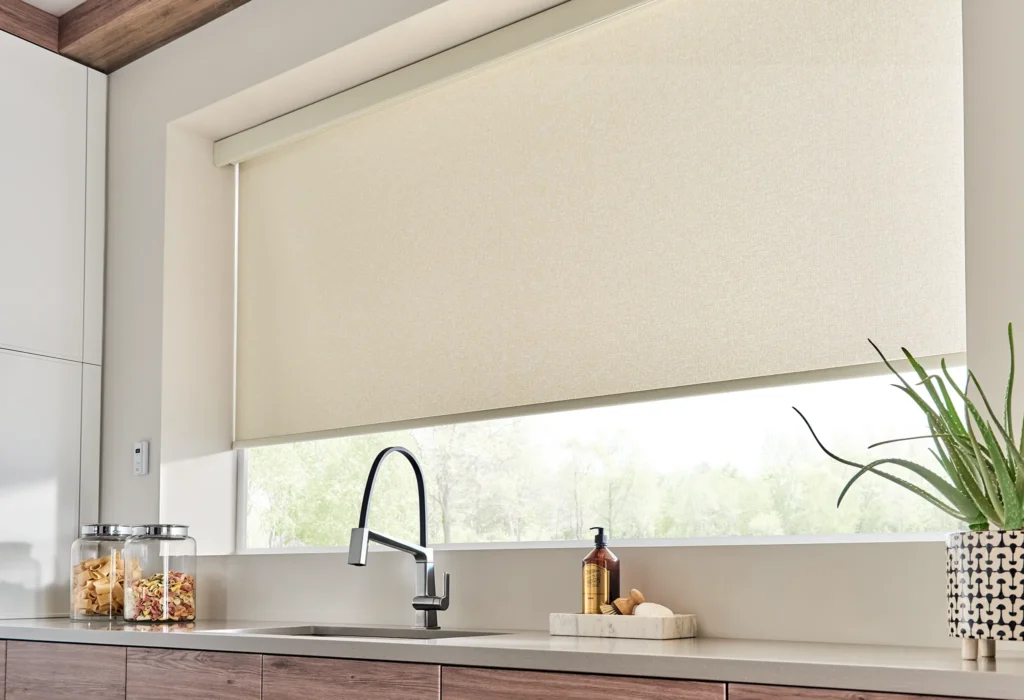
Roller Shades
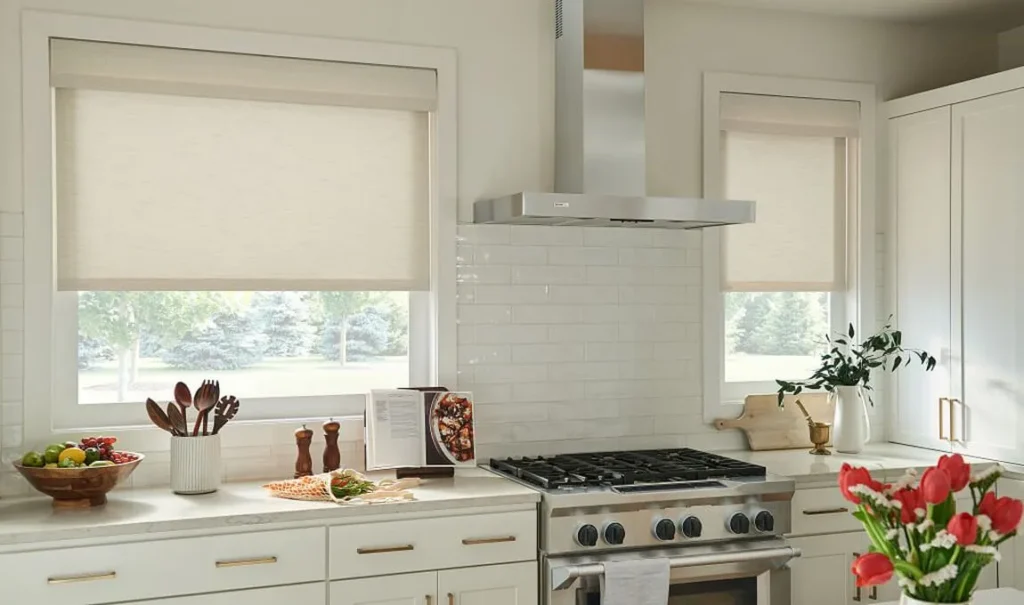
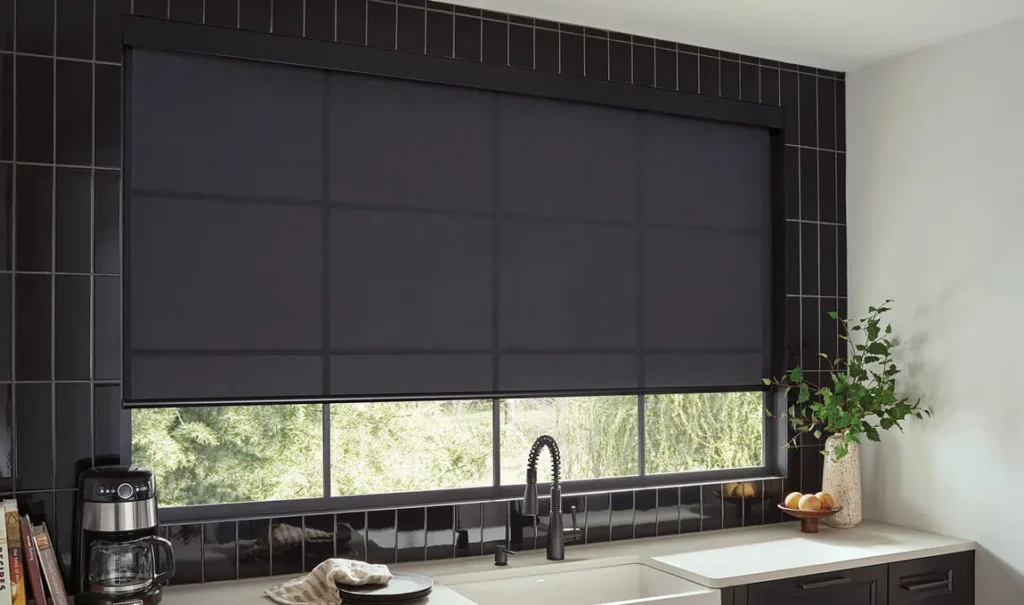
Roller shades use a flat panel of material that winds around a tube. Their compact roll and simple profile suit homeowners who want clean lines without prominent folds or texture. Fabric choices can range from light filtering to opaque, making rollers useful in living rooms, offices, bedrooms, and other spaces where uncomplicated coverage is preferred.
A roller shade’s performance depends heavily on fabric and fit. Light can remain around the edges of an inside-mounted shade, and a single opaque panel does not offer the intermediate view control of adjustable vanes. Wider or heavier rollers also need an operating system sized for the load.
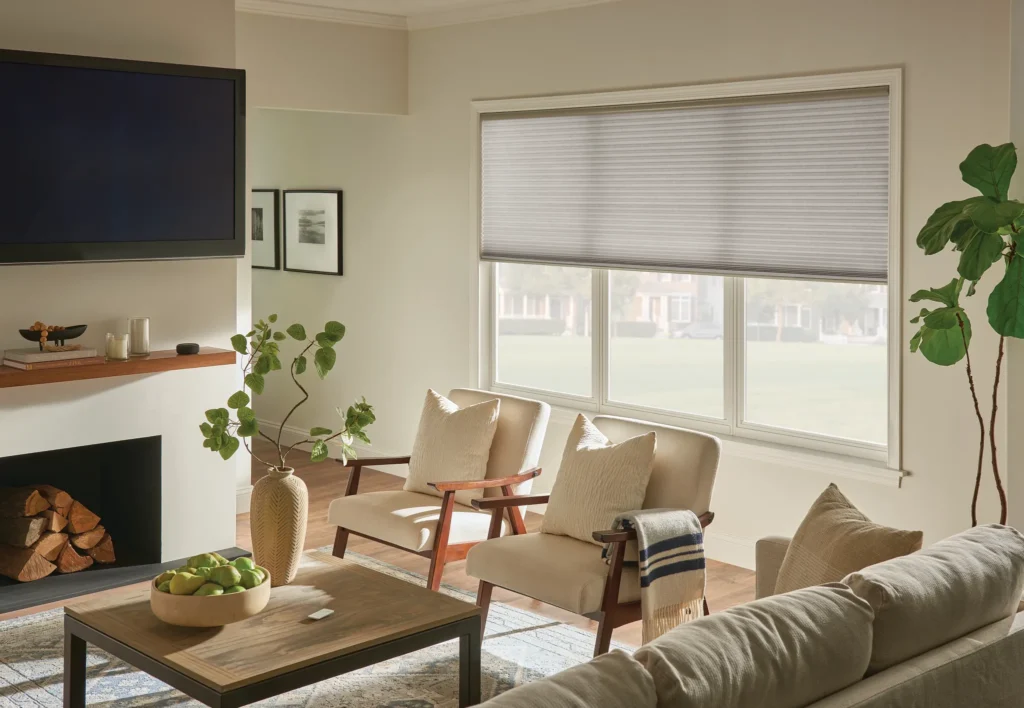
Cellular Shades
Cellular shades form honeycomb-shaped air pockets between layers of material. These pockets reduce heat transfer at the glass, making cellular construction the strongest insulating option among the shade categories covered here. Double-cell designs generally provide more insulation than single-cell versions, while single-cell shades can have a slimmer profile for shallow openings.
Light-filtering cellular fabrics soften daylight without clear view-through, while blackout versions provide stronger darkness and privacy. Top-down/bottom-up operation can cover lower sightlines while admitting light above. Cellular material can lose crispness if crushed, and its cells and pleats need gentler cleaning than a flat roller surface.
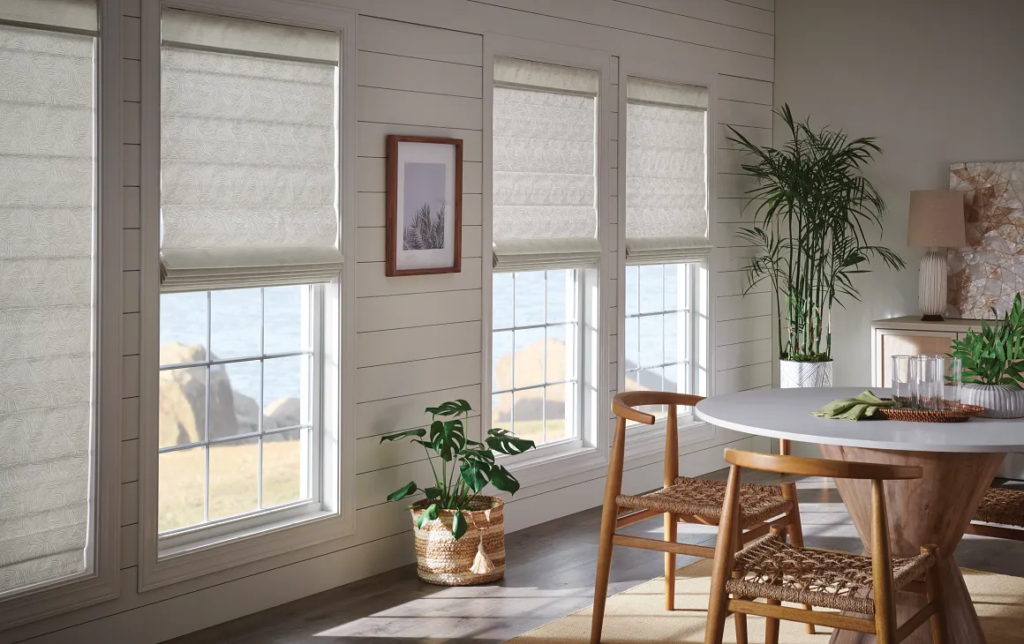
Roman Shades
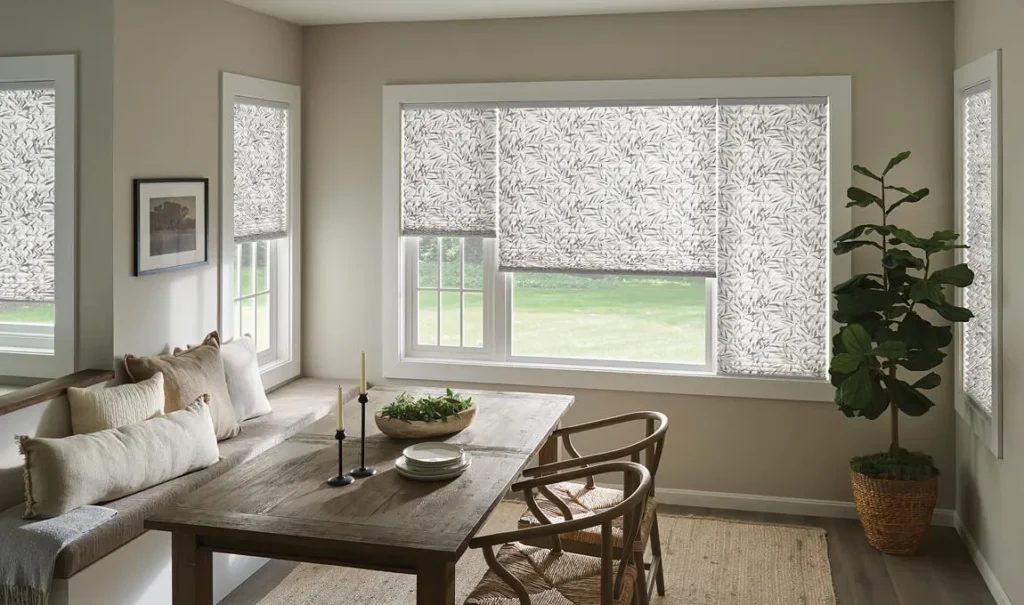
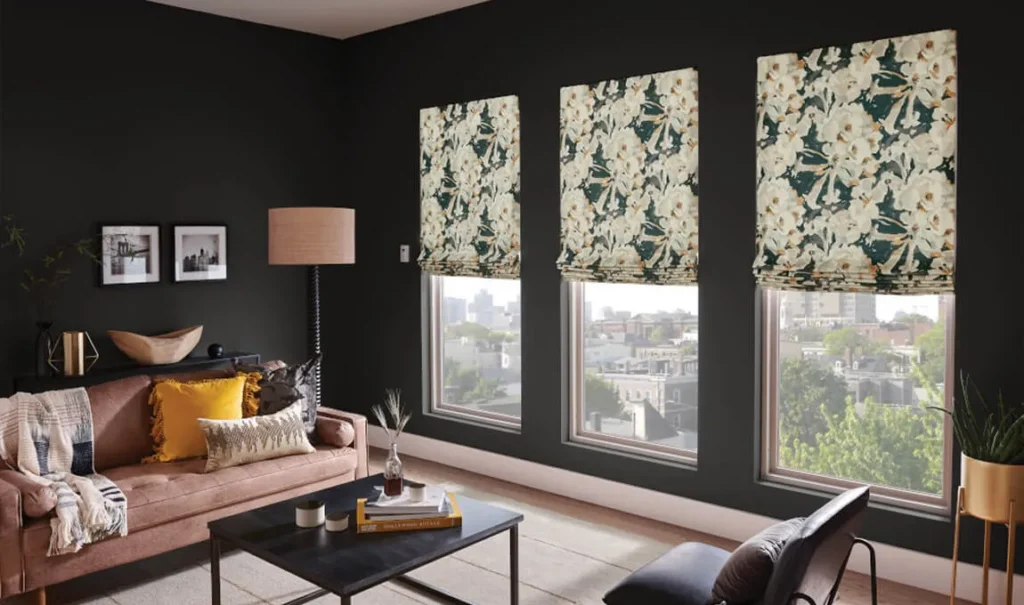
Roman shades raise into fabric folds rather than winding onto a tube. Flat styles create a tailored appearance, while softer folds introduce more dimension. Liners can increase privacy or room darkening, allowing Roman shades to combine decorative fabric with practical coverage in bedrooms, dining rooms, and living areas.
The fabric, lining, battens, and folds add weight and stack depth. Natural textiles may wrinkle or respond to humidity, and wide Roman shades require careful leveling so the folds rise evenly. Their construction can also collect more dust than a smooth roller shade.
Natural Woven Shades
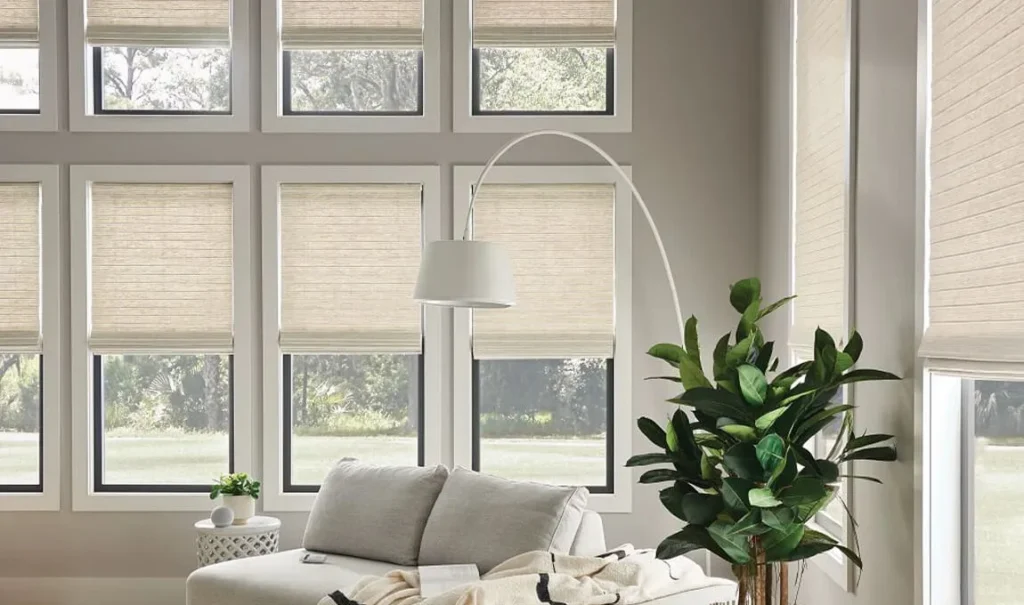
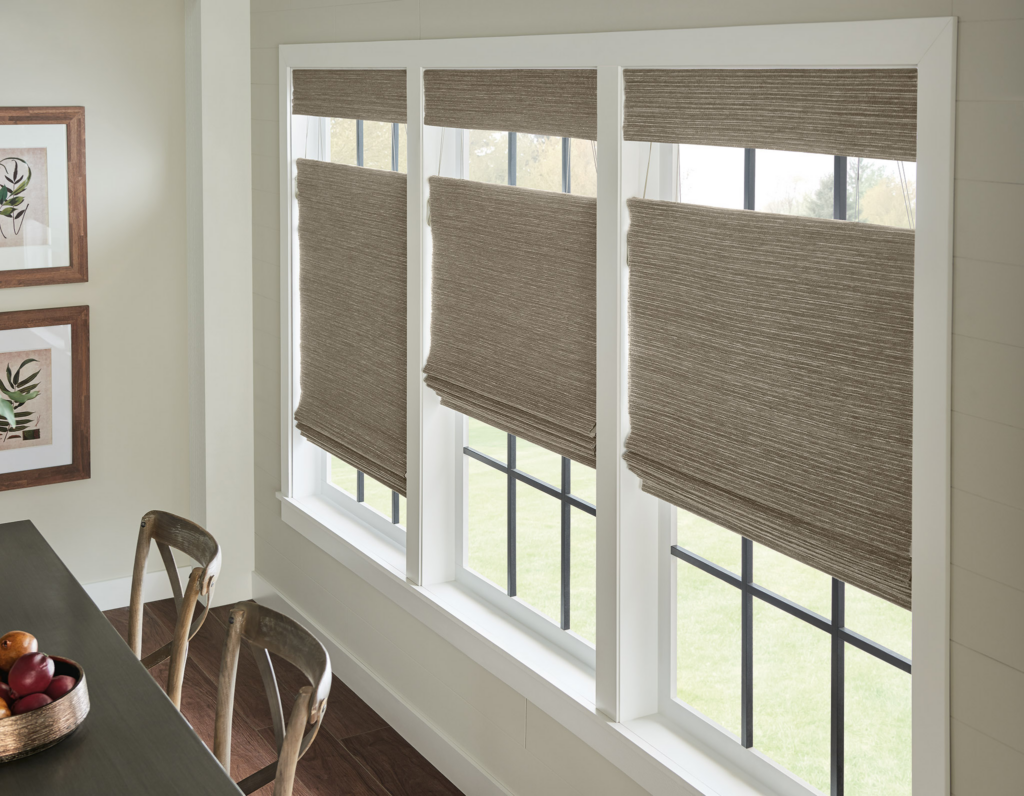
Natural woven shades use bamboo, jute, grasses, reeds, and related woven materials to bring visible grain and organic texture to a window. Because spacing in the weave can admit light and create sightlines, an unlined woven shade should not be assumed to deliver complete privacy. Privacy and blackout liners can strengthen coverage but change the shade’s glow, weight, and stack.
Natural fibers can react to prolonged moisture, humidity, and strong sun through dimensional changes or fading. They are better suited to comparatively dry rooms than splash-prone locations, and their textured surfaces require careful dust removal.
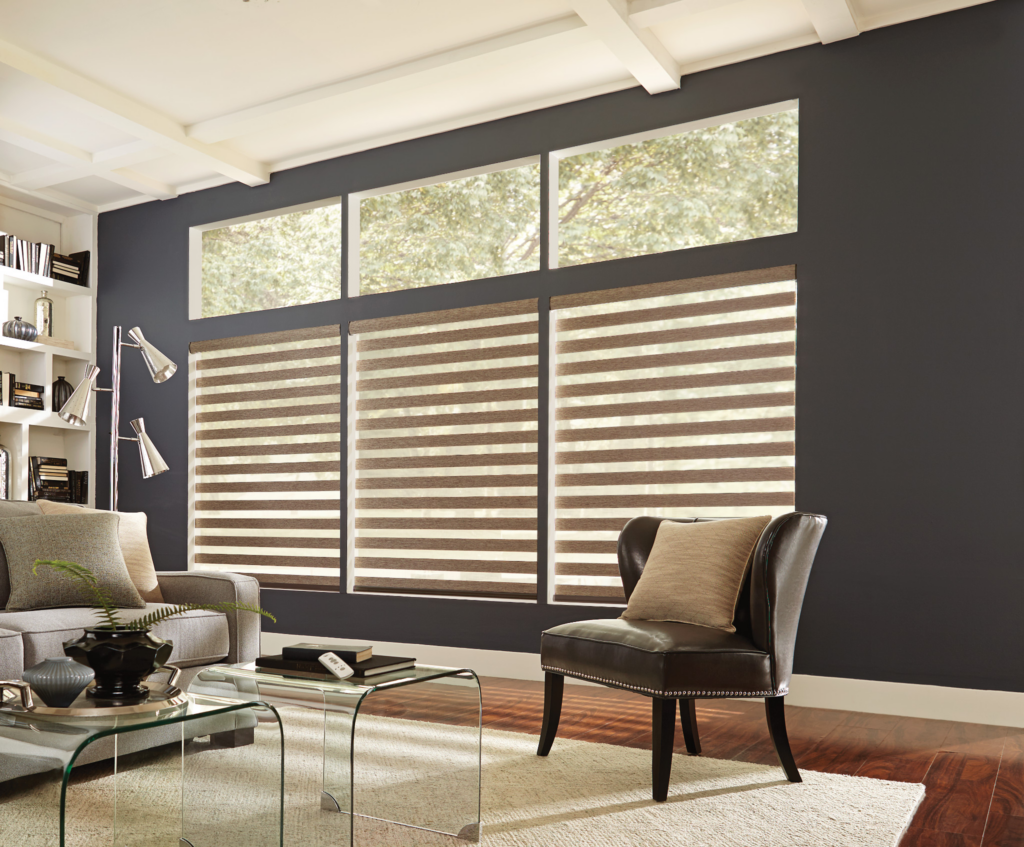
Banded Shades
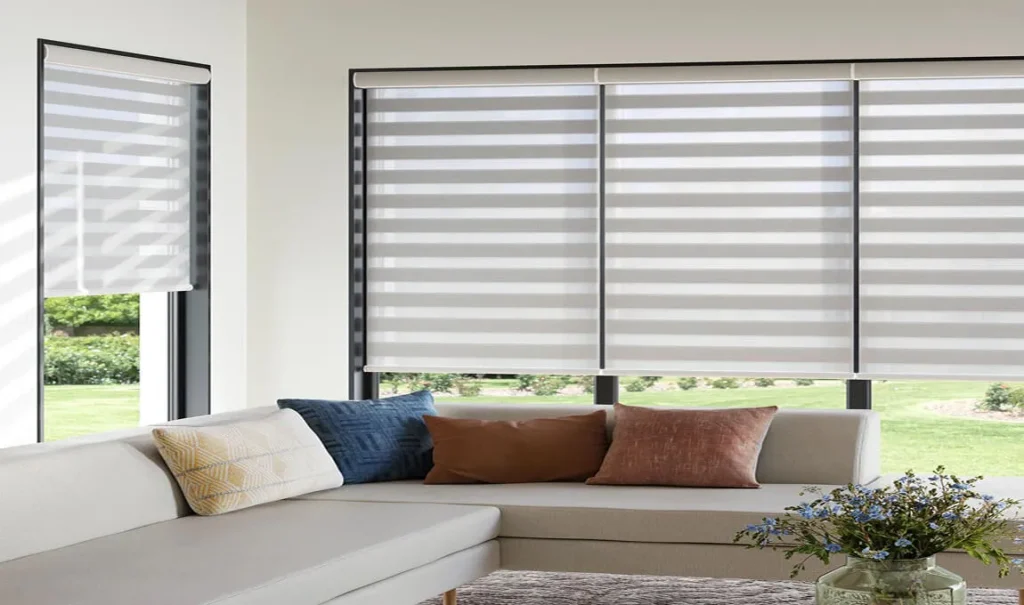
Banded shades, sometimes called layered or zebra shades, use alternating sheer and opaque horizontal bands. Moving the layered fabric aligns the sheer sections for filtered light and partial views or overlaps the solid sections for greater privacy and light reduction. They work well where occupants want frequent adjustment without fully raising the shade.
Because the bands and fabric layers create small openings, banded shades are not equivalent to a sealed blackout system. Their multiple surfaces can also hold more dust than a single-panel roller shade.
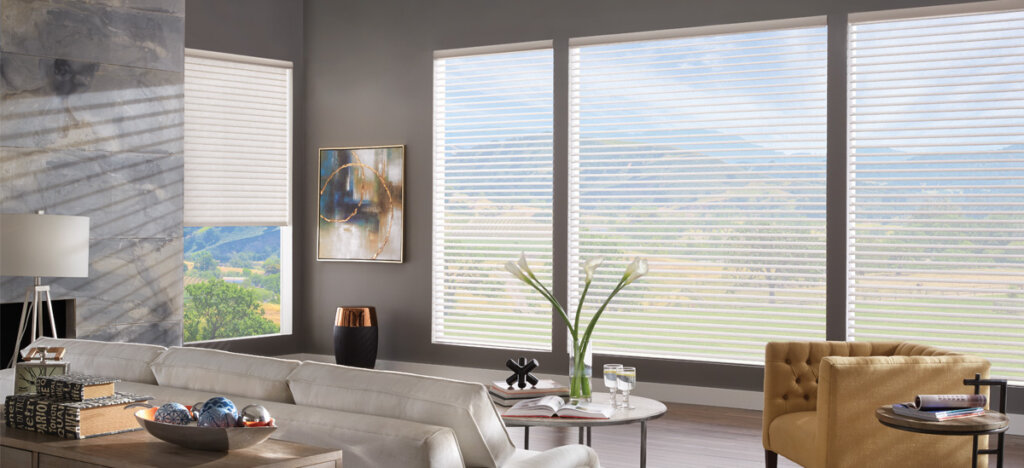
Sheer Shades
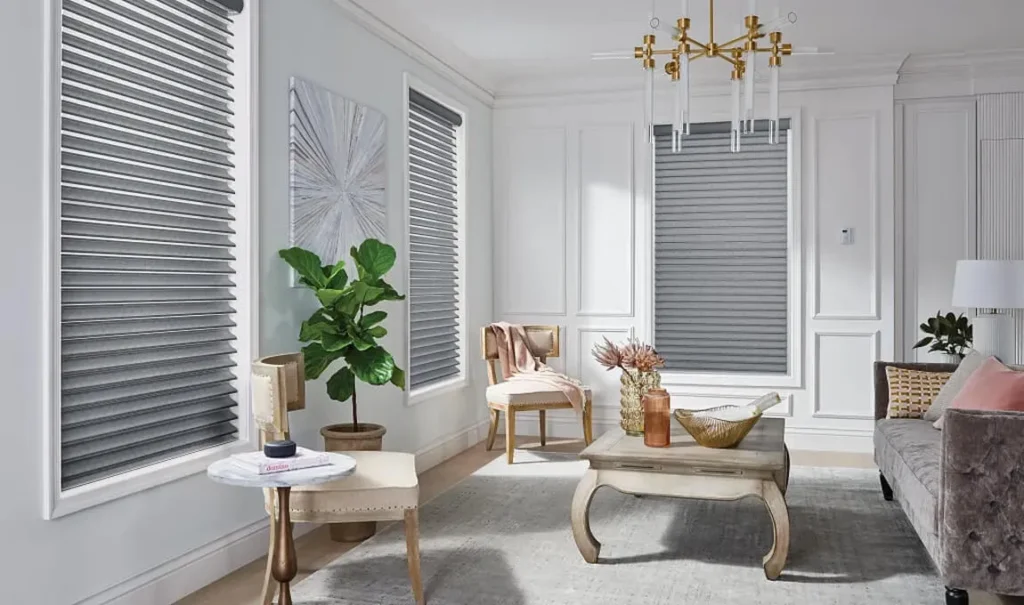
Sheer shades combine translucent fabric layers with adjustable vanes or bands. Open positions diffuse harsh daylight and preserve more of the outward view; closing the vanes increases privacy and light control. Their soft glow and refined construction suit living rooms, dining areas, and open spaces where daylight remains important.
Sheer material offers limited nighttime privacy unless its vanes close opaquely or another privacy layer is added. It is also more delicate than a basic roller fabric and does not provide the same darkness as a dedicated blackout shade.
Motorized Shades
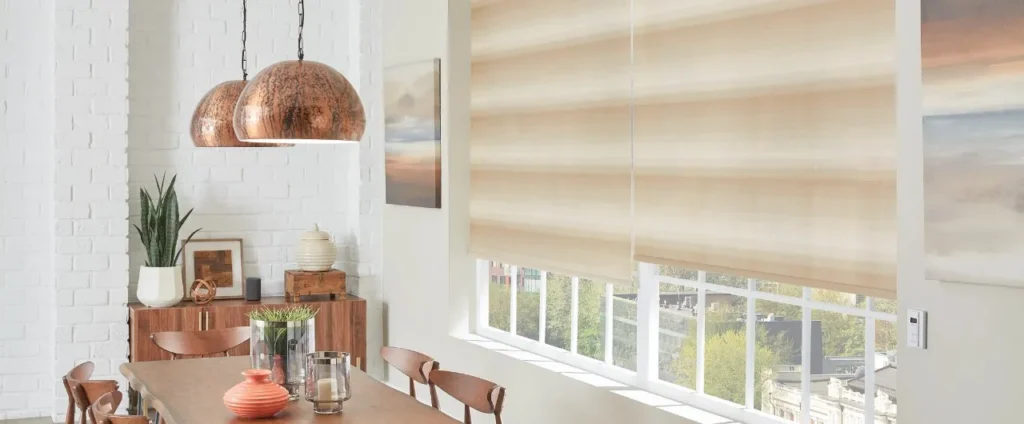
Motorized shades use a powered drive instead of requiring the user to lift or roll the treatment by hand. Roller, cellular, Roman, woven, sheer, banded, solar, and blackout configurations may be available with motorization, subject to the specific product’s size, weight, and control limits. Motorization is especially useful for tall, obstructed, grouped, or frequently adjusted windows.
Power may come from replaceable or rechargeable batteries, plug-in equipment, or hardwired infrastructure. Battery systems need periodic attention, while wired systems call for advance electrical planning. Motors, controls, and shade dimensions must be compatible; motorization is not automatically available for every fabric or opening.
Balance Light Control, Privacy and Comfort
Light-filtering fabrics diffuse daylight and reduce harsh contrast while keeping a room relatively bright. Room-darkening fabrics suppress substantially more light but are not intended to eliminate it. Blackout describes material designed to block nearly all light through the fabric itself; it does not guarantee a completely dark room.
Installed darkness also depends on side, top, and bottom gaps, the mounting method, window geometry, and light entering through other openings. Outside mounting, greater overlap, cassettes, side channels, or layered treatments can reduce perimeter glow, but the appropriate approach depends on the window and shade system.
Privacy also changes with lighting. Sheer and solar materials may obscure inward views during the day, when the exterior is brighter, yet become revealing at night when room lights are on. Opaque fabrics provide stronger visual separation, but they also remove the view and reduce daylight. Banded, sheer, dual-layer, and top-down/bottom-up designs provide adjustable compromises rather than maximum privacy and view at the same time.
Solar and light-filtering fabrics can reduce screen glare and limit repeated direct-light exposure to flooring, furniture, rugs, artwork, and other finishes. The result varies by fabric openness, color, coverage, and how consistently the shade is used. Cellular construction can add insulation, while solar screens focus more on managing incoming sun and glare.
Fabrics, Textures and Finishing Details
Shade materials range from smooth polyester and technical screen fabrics to linen-like textiles and woven bamboo, grasses, reeds, or jute. Flat, neutral roller fabrics tend to recede visually. Roman folds and natural weaves create more texture, while sheer material produces the softest daylight diffusion.
Opacity, backing, and liners matter more than color alone. A pale fabric with an opaque backing may darken a room more effectively than a dark-colored sheer. Roman and woven shades can use privacy or blackout liners, but the added layer increases weight and changes how the material hangs or stacks.
White, cream, and other neutrals are frequently requested by local customers because they can coordinate with molding, wall paint, and flooring. Samples should still be reviewed at the intended window: surrounding finishes, direct sun, reflected light, and nighttime illumination can alter how color, texture, and transparency appear.
Room conditions should guide material selection. Natural woven fibers and absorbent textiles need caution around persistent humidity, condensation, grease, or splashes. Smooth synthetic roller and solar materials are generally easier to dust or wipe, but product-specific care directions still apply. Window-facing backing may also be visible from outside, so its appearance can be part of the design decision.
Choose a Practical Operating System
Manual shades may use cordless lift, spring assistance, a clutch or continuous loop, or another product-specific mechanism. Cordless operation removes dangling lift cords and offers a cleaner appearance, but the user must still reach the shade and lift it evenly. Large or heavy coverings may require more force than smaller shades.
Motorized operation reduces physical effort and can be particularly useful for high windows, wide spans, furniture-obstructed openings, and households that adjust several shades together. Depending on the selected system, controls may include a remote, wall control, app, voice command, schedules, or grouped operation. Compatibility must be confirmed for the exact shade, motor, power source, and control platform rather than assumed.
Battery and rechargeable systems can simplify installation in an existing home but require access for charging or replacement. Plug-in systems need a practical outlet location. Hardwired systems can avoid recurring battery tasks, though they require electrical planning and are easier to incorporate before walls and finishes are complete.
Cordless and motorized options remove exposed operating cords, which is an important consideration in homes with children or pets. Accessibility is individual: control reach, button size, grip strength, furniture placement, and comfort with technology all affect whether a manual or powered shade is easiest to use.
Match Shades to Rooms and Window Conditions
Bedrooms typically prioritize sleep, privacy, and edge-light control. Blackout roller or cellular fabrics can provide strong material-level darkening, while the mount and perimeter details determine how much light remains in the room. Living rooms and dining spaces often call for a softer balance of filtered daylight, views, and evening privacy.
In a home office, locate glare in relation to the monitor and the time it appears. Solar or light-filtering rollers can reduce harsh brightness without automatically making the room dark. Sunrooms and other heavily glazed spaces may benefit from solar shades for glare and view retention or cellular shades where insulation is the stronger priority.
Kitchens and bathrooms require attention to moisture, grease, splashes, and cleaning. Smooth, moisture-tolerant synthetic materials are generally more practical than untreated natural fibers near sinks, showers, or cooking activity. No shade should obstruct appliance clearances, active window hardware, or ventilation.
Window width, height, recess depth, shape, and access determine what can be installed and operated effectively. Roller and single-cell cellular shades can suit shallow openings, while Roman, dual-shade, cassette, and motorized assemblies may need more depth. Cranks, locks, sensors, trim, and uneven or warped sills can alter the mounting plan.
For sliding doors and broad glass openings, side-to-side panel systems or vertical cellular shades may be more usable than lifting one very large shade. Purpose-built outdoor roller shades can manage sun before it reaches the glass, but exterior products require appropriate mounting, weather-rated materials, and retraction when conditions exceed their intended use.
Build Your Shade Plan Step by Step
- Define the main need. Decide whether the priority is daytime glare, nighttime privacy, sleep, insulation, view preservation, easier operation, or design. One shade rarely maximizes every attribute at once.
- Choose the construction. Compare the compact profile of rollers, insulating cells, Roman folds, natural texture, adjustable bands or vanes, and solar-screen view-through.
- Select opacity and privacy. Evaluate light-filtering, room-darkening, blackout, liner, and openness options under both daytime and nighttime conditions.
- Choose controls. Consider reach, shade weight, frequency of adjustment, children and pets, power access, charging access, and whether grouped or scheduled movement would be useful.
- Confirm mounting and fit. Review recess depth, window squareness, trim, handles, the mounting substrate, desired overlap, and acceptable edge gaps before ordering.
- Set the budget around priorities. Allocate spending to the features that solve the actual problem rather than assuming every window needs the same fabric, control, or upgrade.
Common mistakes include expecting blackout fabric to eliminate all room light, assuming solar mesh remains private at night, selecting from color alone, and measuring only the glass. Samples and actual-window evaluation help reveal how a material behaves at full scale.
From Consultation Through Final Setup
- Discuss the room. The consultation should establish privacy, light, view, design, control, and budget priorities for each opening.
- Review samples. Compare fabric color, texture, opacity, openness, liners, and hardware against the room’s molding, paint, flooring, and changing daylight.
- Measure the finished openings. Width, height, depth, squareness, trim, handles, locks, and mounting surfaces must be checked at the intended bracket locations.
- Confirm the specification. Select the shade style, fabric, operating system, inside or outside mount, and any light-gap or power details before the custom order is placed.
- Install and align. Brackets must be level, securely attached to a suitable substrate, and positioned to keep the shade clear of window hardware and nearby furnishings.
- Test operation. The completed shade should travel through its full range without rubbing, skewing, or obstruction. Motorized products also need power, controls, and travel limits checked.
Shallow frames, warped sills, uneven molding, plaster, masonry, hollow walls, and limited structural support can complicate mounting. Wide rollers, Roman shades, cellular systems, dual shades, and motorized treatments are particularly sensitive to alignment. An outside mount may be more practical when a recess lacks sufficient depth or is significantly irregular.
Advice from Your Shade Team
Our team often starts with roller shades because their fabric can either visually recede into the window or contribute color and texture to the room. Their flat surface is also relatively straightforward to maintain. Solar, room-darkening, or blackout materials can then be selected according to the problem rather than treating every roller shade as the same product.
For a coordinated home, think of the base shade like the foundation of an outfit: keep the most repeated element restrained, then introduce more individual character through selected textures, colors, liners, or decorative layers in each room. This approach can preserve visual continuity without forcing every opening to be identical.
Local consultations commonly involve a tradeoff between design aspirations and budget. Sharing a realistic range helps the team identify which features matter most—such as fabric quality, motorization, dual rollers, stronger darkening, or a decorative sheer—without turning every available upgrade into a requirement.
Light leakage and privacy are recurring concerns, so they should be discussed before fabric selection is finalized. The best result comes from matching expectations to the complete installed system, including the material, mount, edge gaps, controls, and nighttime lighting conditions.
Understand What Shapes the Project Cost
Custom shade pricing varies with finished dimensions, number of openings, material, liner, operating system, and hardware. Wider or taller shades may need stronger tubes, additional supports, multiple units, or higher-capacity motors. Natural weaves, decorative Roman fabrics, dual rollers, blackout components, and motorization add construction beyond a basic manual shade. To get a better Idea of what your project may cost please review our pricing estimator tool Window Treatment Cost in Montclair, NJ.
Installation conditions also affect project complexity. Shallow or irregular openings, difficult mounting surfaces, specialty shapes, hard-to-reach windows, electrical work, and layered treatments can require additional planning. An outside-mounted shade may also be larger than the glass because it must overlap the opening.
Budget discussions are most useful when tied to priorities. Motorization may provide substantial value on tall, grouped, or frequently operated windows but less benefit on one easy-to-reach opening. Likewise, premium blackout detailing is most relevant where darkness is genuinely important. A written selection based on measured openings is more meaningful than a universal per-window assumption.
Keep Shades Clean and Operating Smoothly
Begin with regular light dusting. A microfiber cloth, soft duster, or low-suction vacuum with a brush attachment is suitable for many shade materials. Work gently so cells, folds, sheer vanes, woven fibers, and edge bindings are not crushed or snagged.
Follow the manufacturer’s directions before spot-cleaning. Avoid assuming every fabric can tolerate water, steam, detergent, immersion, or aggressive scrubbing. Excess moisture can distort natural fibers, cellular material, liners, and adhesives, while harsh chemicals can damage coatings and finishes.
Operate shades using the intended handle, control, remote, or wall switch. Do not force a shade that binds, pull a cordless rail from one edge, or manually move a motorized treatment. Keep its path clear of window cranks, furniture, plants, and décor.
For powered shades, monitor charging or battery status and note changes in speed, noise, alignment, or stopping position. A nonresponsive shade may have a power, pairing, remote, or limit-setting issue rather than a failed motor. Internal mechanisms, wiring, or persistent alignment problems should be evaluated by qualified service support.
Common Questions About Custom Shades
Will blackout shades make a bedroom completely dark?
Blackout fabric blocks nearly all light through the material, but ordinary mounting clearances can leave edge glow. Greater overlap, outside mounting, cassettes, side channels, or an additional opaque layer may improve darkness. Other untreated windows and doors can still introduce light.
Can solar shades provide privacy at night?
They should not be relied upon for consistent nighttime privacy. Solar fabrics often work best when the exterior is brighter than the room. After dark, indoor lighting can reverse the effect and make silhouettes or interior details visible from outside.
Which shade offers the strongest insulation?
Cellular shades provide the strongest-supported insulation because their honeycomb pockets trap air. Double-cell construction generally improves thermal performance over single-cell designs, and close perimeter coverage helps limit air movement around the shade.
Are motorized shades useful beyond convenience?
Yes. They can reduce physical effort, make high or obstructed windows usable, remove dangling operating cords, and help occupants adjust grouped shades consistently. Their practical value depends on window access, use frequency, product compatibility, power planning, and maintenance preferences.
Can one shade preserve the view and provide complete privacy?
Not under every condition. More transparent solar and sheer materials preserve views but provide less privacy, especially at night. Opaque treatments provide stronger privacy but remove the view. Dual shades, adjustable sheer or banded products, and top-down/bottom-up configurations offer flexible compromises.
Are shades suitable for sliding glass doors?
Some are, but movement and access matter. Vertical cellular shades and panel-style systems travel side to side and can be practical across wide door openings. Large horizontal rollers may require multiple sections or motorization and must be positioned so they do not obstruct normal door operation.
Should shades be mounted inside or outside the frame?
An inside mount offers a recessed appearance but needs adequate depth, a sufficiently square opening, and clearance from locks or cranks. An outside mount can cover irregular trim, bypass shallow depth, and provide more overlap for privacy or light reduction, though it occupies more wall or molding area.
Which shades are easiest to clean?
Flat roller and solar shades made from compatible synthetic materials generally have fewer folds and dust-catching surfaces than Roman, woven, sheer, or banded constructions. Care still depends on the exact fabric and finish, so manufacturer instructions should guide cleaning.
Plan Shades Around Your Windows
Bumble Bee Blinds of Montclair can help you compare fabrics, opacity, privacy, controls, fit, and design details for your home.