Custom Cellular Shades in Montclair, NJ
A room can feel noticeably different depending on the windows surrounding it. During colder months, you might notice certain rooms feeling less comfortable near the glass. When temperatures rise, direct sunlight can make those same spaces harder to keep cool. Cellular shades are designed with these everyday challenges in mind.
Also known as honeycomb shades, cellular shades feature a distinctive internal structure that creates small pockets of air within the fabric. This construction helps reduce heat transfer through the window, making them a practical option for homeowners who want to improve indoor comfort while maintaining control over natural light and privacy.
For homeowners in Montclair, where seasonal temperatures can shift considerably throughout the year, cellular shades offer a functional alternative to traditional window coverings. At Bumble Bee Blinds of Montclair, we help you compare cellular designs, fabric opacities, and operating options to find a solution that fits your windows and the way you use each room.
How Cellular Shades Work: Understanding the Honeycomb Design
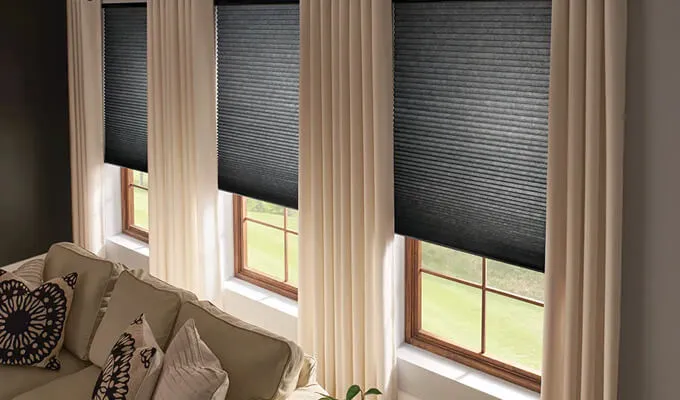
The defining feature of cellular shades is their honeycomb construction. Rather than using one flat piece of fabric, these shades are formed with connected fabric cells that create air pockets when viewed from the side.
Those pockets act as an insulating layer between the window and the room. By slowing the movement of heat through the window covering, cellular shades can help reduce heat transfer and support more consistent indoor temperatures.
This can be especially helpful during colder New Jersey months when windows may be a source of heat loss. During warmer weather, the insulating structure can also help limit some of the heat entering through the covered window.
The number and arrangement of cells influence the construction and insulating characteristics of the shade. Cellular shades are available in different configurations, including single-cell and double-cell designs in select collections.
It’s important to remember that cellular shades are not a replacement for properly functioning windows, insulation, or weather sealing. Their performance depends on the shade selected, how closely it fits the window, the installation, and the conditions of the room.
Single-Cell vs. Double-Cell Cellular Shades
One of the decisions you’ll encounter when exploring cellular shades is whether a single-cell or double-cell construction is the better fit.
Both use the same honeycomb principle, but they differ in the number of fabric layers and air pockets.
Single-Cell Cellular Shades
Single-cell shades feature one layer of connected honeycomb-shaped cells.
Their relatively lightweight construction makes them a versatile option for many rooms. They offer the insulating characteristics of cellular construction while maintaining a streamlined appearance at the window.
They’re worth considering for living rooms, kitchens, bedrooms, and other spaces where you want a combination of light control and added insulation.
Double-Cell Cellular Shades
Double-cell shades feature two layers of honeycomb cells, creating additional air pockets within the shade.
This construction provides another layer of insulation and can be a consideration for rooms where temperature management is a higher priority.
For example, if a bedroom has large windows and tends to feel colder during winter, a double-cell option may be worth comparing with a single-cell design.
The best choice depends on the window, your comfort priorities, and the products available within the selected collection. We’ll help you understand the differences rather than assuming that more cells are automatically necessary for every room.
Cellular Shades for New Jersey’s Changing Seasons
Window coverings can play a role in how comfortable a room feels throughout the year. This is one of the reasons cellular shades are worth considering in homes throughout Montclair and the surrounding communities.
During Colder Months
Windows can be a significant source of heat transfer, particularly when they are older or less efficient.
Cellular shades add an insulating layer at the window that can help slow heat movement between the interior and exterior. When properly fitted and lowered, they may help make rooms feel more comfortable near the glass.
Bedrooms, home offices, and living spaces with substantial window exposure are all worth evaluating.
During Warmer Months
Direct sunlight can contribute to unwanted heat inside the home, particularly when it enters through windows for extended periods.
Cellular shades can help reduce some of that heat transfer, depending on the fabric, opacity, window orientation, and how the shade is used.
If direct sunlight and glare are the primary concerns, we’ll also help you compare other options, such as solar roller shades, which are specifically designed for managing sunlight while maintaining varying degrees of outside visibility.
Throughout the Year
One of the advantages of cellular shades is that their insulating construction remains useful beyond a single season.
Instead of choosing a window covering based solely on how a room feels in winter or summer, you can select a shade designed to support year-round comfort while providing the privacy and light control you want.
Choosing the Right Cellular Shade for Each Room
Cellular shades are versatile, but the right fabric and operating style can differ considerably from one room to another.
Bedrooms
Bedrooms are often a strong application for cellular shades because they combine insulation with flexible light-control options.
If your bedroom receives early morning sunlight or you prefer a darker sleeping environment, room-darkening and blackout fabric options may be worth considering.
Cellular construction can also be helpful when you’re looking to create a more comfortable space near windows during colder weather.
Home Offices
A comfortable working environment involves more than having the right desk and chair.
If sunlight creates glare on your computer screen or the temperature near your windows changes throughout the day, cellular shades can help address both considerations.
Depending on the selected fabric, you can filter incoming daylight while adding an insulating layer at the window.
Living Rooms and Family Rooms
For shared spaces, many homeowners want to retain natural light without leaving windows completely uncovered.
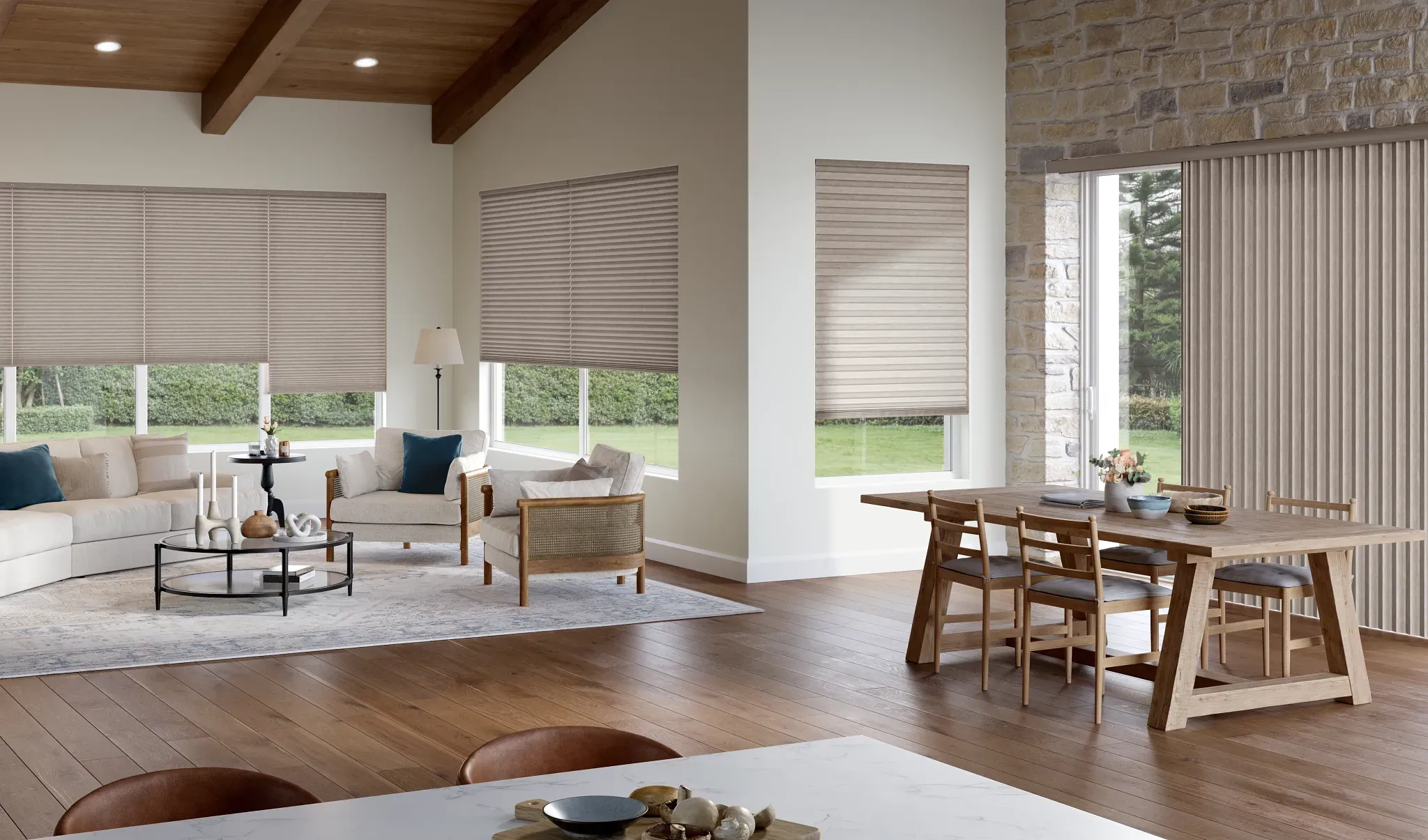
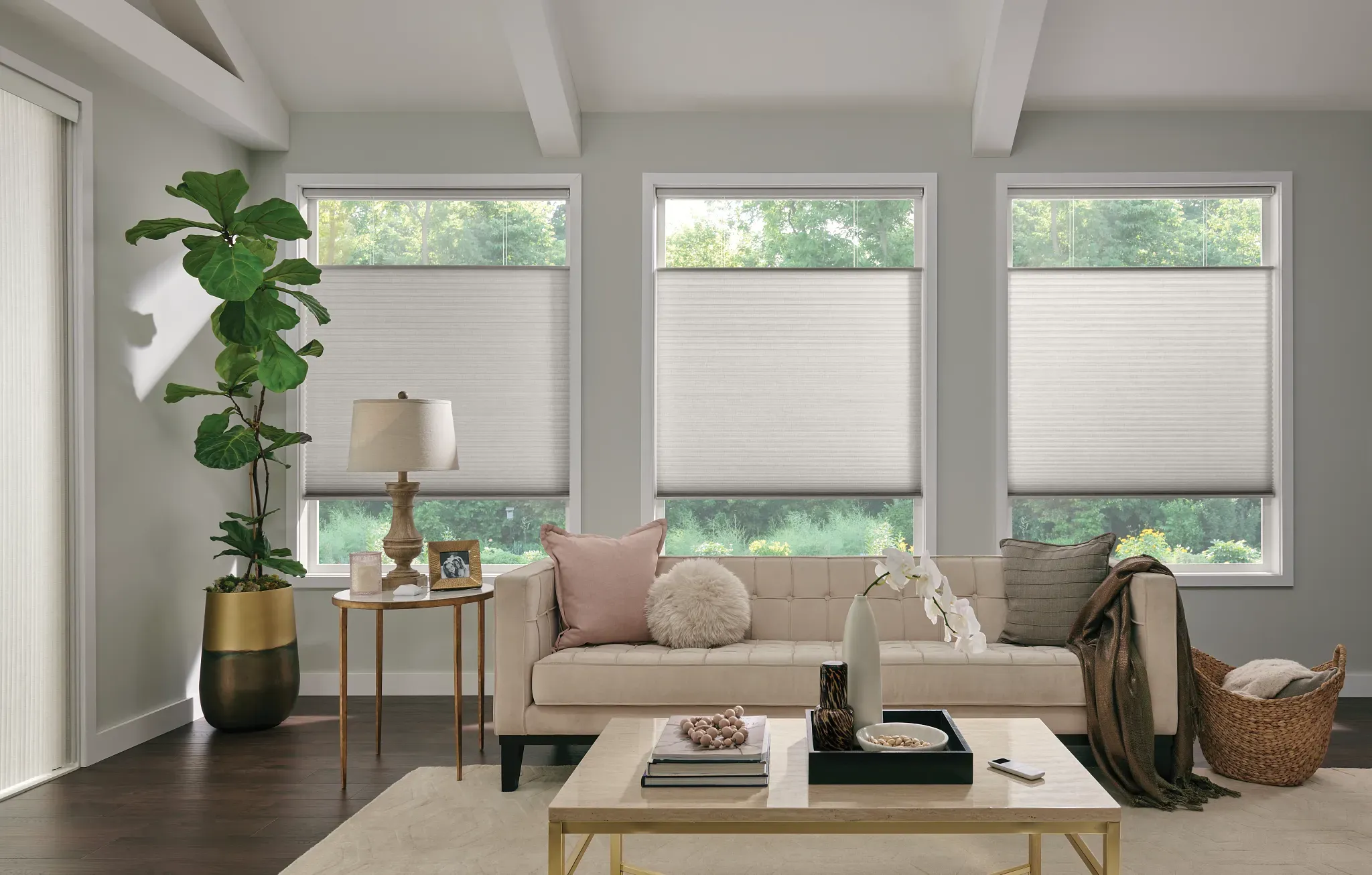
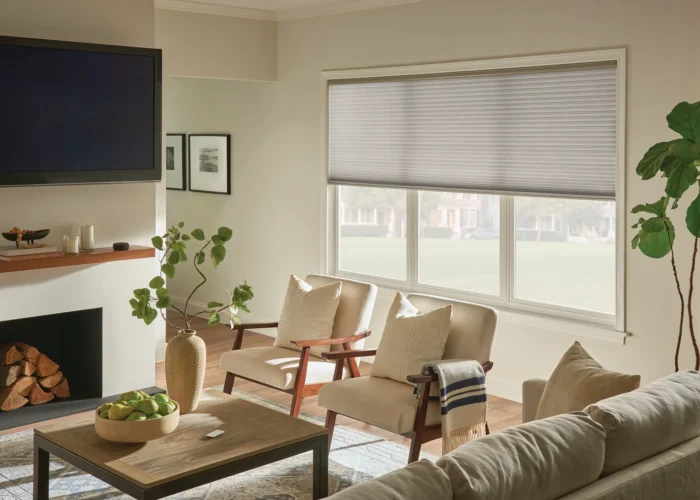
Light-filtering cellular shades allow varying levels of daylight to enter while providing coverage and privacy. They can also be coordinated across multiple windows for a consistent appearance.
Nurseries and Children’s Rooms
Cellular shades offer practical light-control options for rooms where maintaining a comfortable environment is important.
Cordless and compatible motorized operating systems may also be available, providing alternatives to traditional hanging cords.
We’ll help you review the operating options and select an appropriate configuration for the room.
Rooms With Large or Tall Windows
Some windows are simply more challenging to cover than others.
Cellular shades may be available in different configurations and operating systems depending on the product collection and window dimensions. For taller or difficult-to-reach openings, motorization may be worth considering.
During your consultation, we’ll evaluate the window size, accessibility, and available mounting space to determine which options are appropriate.
Light Control and Privacy: More Than Just Insulation
Although cellular shades are known for their honeycomb construction, the fabric you select is just as important.
Depending on the product collection, cellular shades can offer different opacity levels, including:
Light-Filtering Fabrics
These allow natural light to pass through the material while softening the brightness entering the room. They’re useful when you want daylight without leaving the window completely exposed.
Room-Darkening Fabrics
These reduce incoming light and help create a more subdued environment. They’re worth considering for bedrooms, nurseries, and media spaces.
Blackout Fabrics
Blackout cellular fabrics are designed to block light through the fabric itself. They’re a useful choice when minimizing incoming light is a priority.
As with other shade types, blackout fabric does not necessarily mean a completely dark room. Light may still enter around the edges depending on the mounting configuration.
Privacy is another important consideration. Different fabrics provide different levels of visibility, and some light-filtering materials may not offer complete privacy after dark when interior lights are on.
We’ll help you compare these differences so the fabric you choose matches how the room is used.
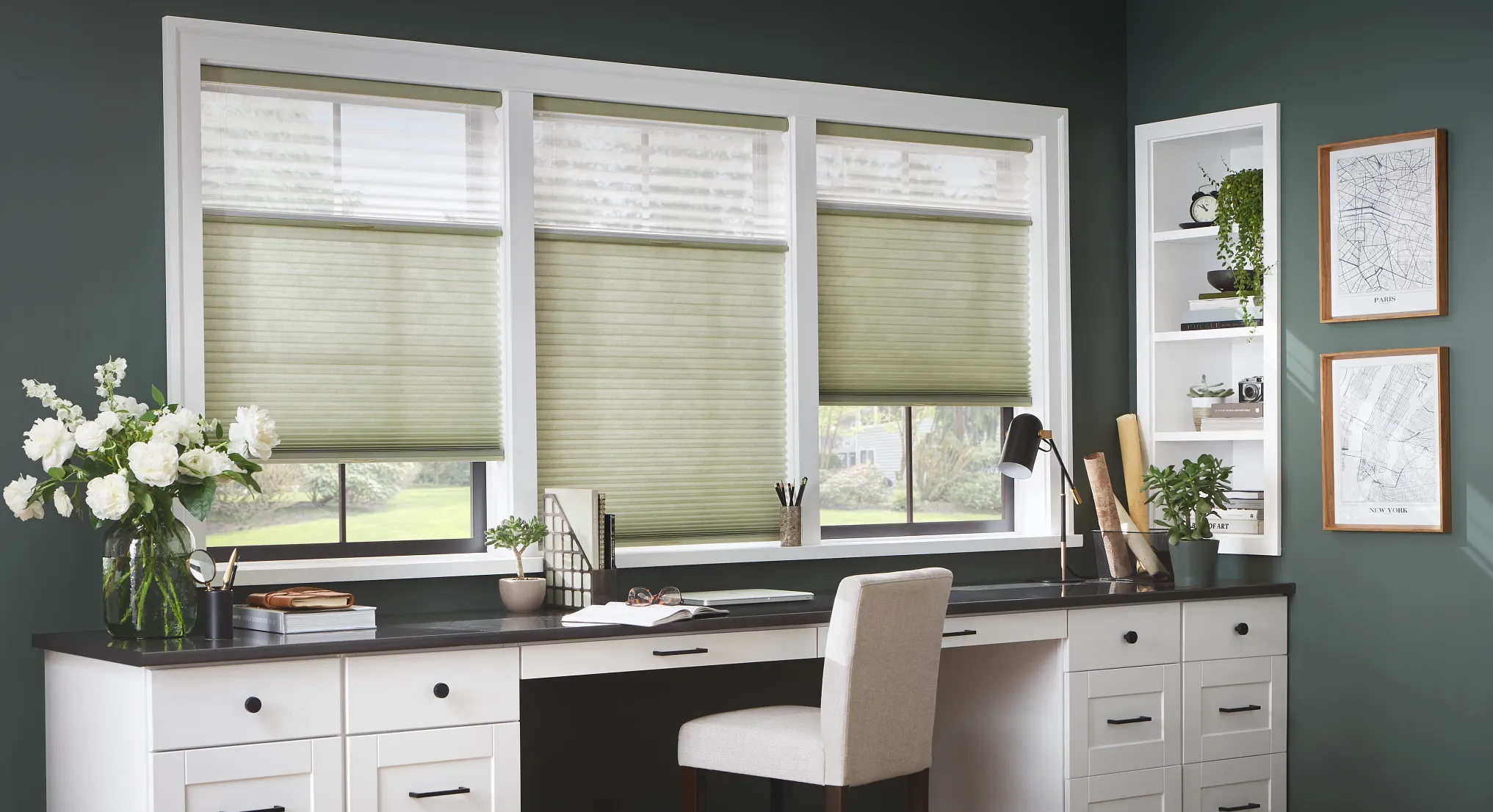
Top-Down Bottom-Up Cellular Shades
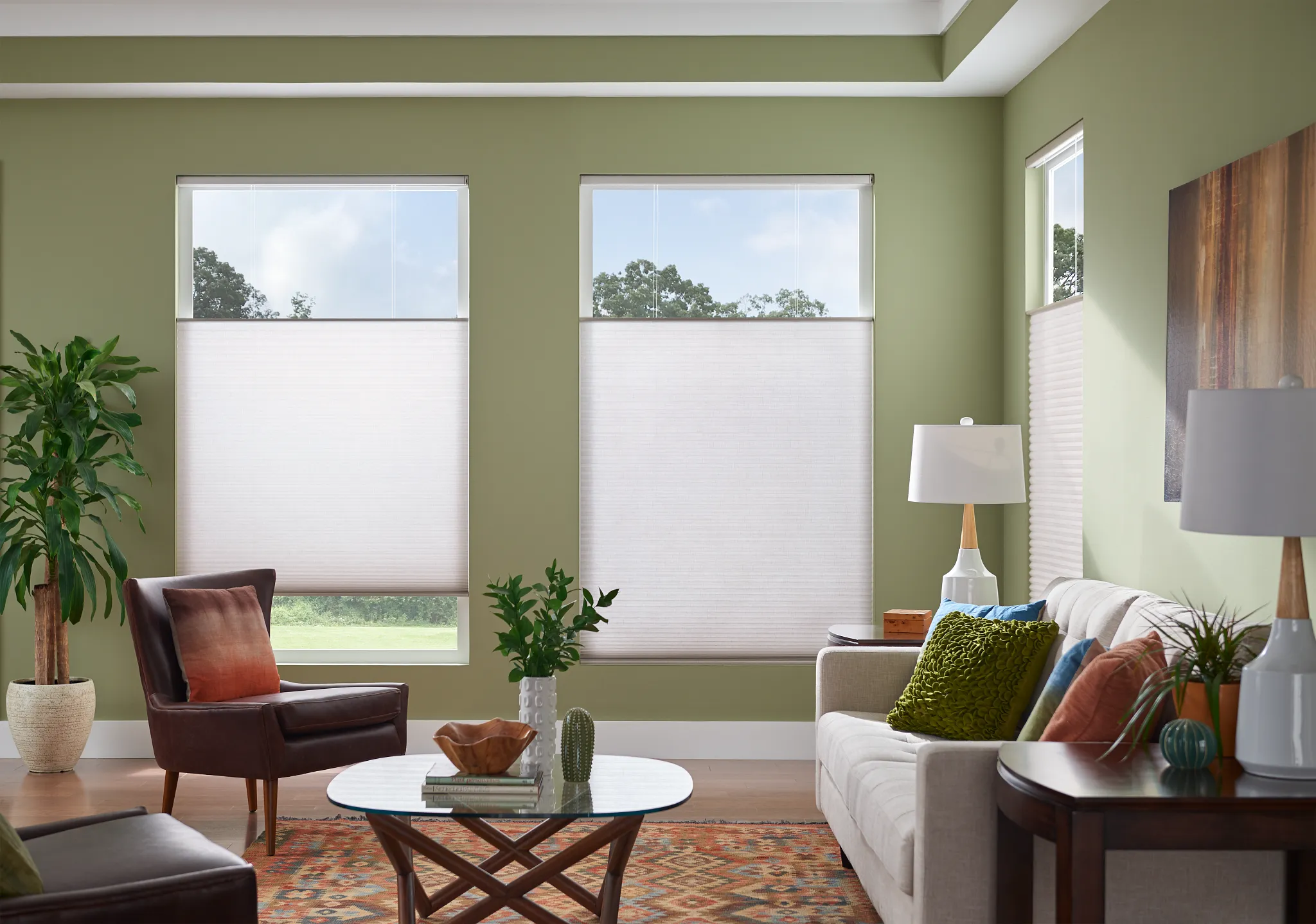
One of the more distinctive operating options available with cellular shades is top-down bottom-up functionality.
Instead of having to raise the shade entirely from the bottom, this design allows you to lower the top portion of the shade while keeping the bottom covered.
This can be particularly useful for rooms where you want natural light without exposing the entire window.
For example, a street-facing bedroom may benefit from daylight entering through the upper portion of the glass while the lower portion remains covered for privacy.
The same approach can work in a living room or home office where neighboring properties, walkways, or nearby windows influence how much coverage you prefer.
It’s a useful option for homeowners who don’t want to choose between a bright room and a covered window.
Availability depends on the selected cellular shade collection and operating system.
Cellular Shades for Montclair’s Variety of Window Styles
Montclair’s residential architecture includes many generations of homes, and the Township’s historic preservation guidelines document a variety of window types, including double-hung, casement, awning, and fixed windows.
That variety matters when selecting cellular shades.
The shape and operation of the window, the depth of the frame, and the existing trim can all influence how a shade should be mounted.
For homeowners with traditional wood window frames, an inside-mounted cellular shade can offer a relatively understated appearance when the opening has sufficient depth. This approach allows the existing trim to remain visible while keeping the shade within the window opening.
Other windows may require an outside mount because of limited clearance, hardware, or the way the window operates.
The goal is to select a shade that fits the opening properly without interfering with normal window operation or overlooking important details around the frame.
At Bumble Bee Blinds of Montclair, we consider these details during the measuring and design process rather than relying on standard assumptions about window dimensions.
Why Choose Bumble Bee Blinds for Honeycomb Shades in Montclair, NJ?
Cellular shades are a product where the details behind the fabric matter.
The cell construction, fabric opacity, operating system, and fit all influence how the shade performs once installed. Selecting the right configuration requires more than choosing a color that coordinates with your room.
At Bumble Bee Blinds of Montclair, we help homeowners understand these differences and make selections based on the actual conditions of their windows.
Compare Cellular Constructions
We’ll help you understand the differences between available single-cell and double-cell designs, so you can decide whether additional insulation is a priority for a particular room.
Select the Right Light and Privacy Level
From light-filtering fabrics to room-darkening and blackout options, we’ll help you evaluate how different materials affect incoming light and privacy.
Account for Window Dimensions and Mounting
Our professional measuring process considers frame depth, window operation, trim, and mounting requirements. These details are especially important when selecting cellular shades for older or uniquely configured windows.
Coordinate Your Shades Throughout the Home
Not every room needs the same opacity or operating style. We can help you select different cellular configurations where appropriate while maintaining a coordinated appearance throughout your home.
Full-Service Design and Installation
From your in-home design consultation and product selection through professional measuring and installation, we help manage the process so you’re not left trying to coordinate separate providers or figure out the installation yourself.
We’re proudly locally owned and operated, serving Montclair and surrounding communities with personalized window treatment guidance.
Explore Custom Cellular Shades in Montclair, NJ for Your Home
If temperature fluctuations, window exposure, or finding the right balance of light and privacy are influencing your window treatment decisions, cellular shades are worth exploring.
The honeycomb design offers a functional advantage that goes beyond appearance, and the available configurations make it possible to tailor the shade to the needs of different rooms.
Whether you’re considering cellular shades for one bedroom or evaluating options throughout your home, we’ll help you compare the products, understand the differences, and determine which configurations make the most sense.
Visit our [window treatment pricing estimator] for an initial look at project costs, or schedule an in-home design consultation to review samples and receive recommendations based on your windows.
Frequently Asked Questions About Cellular Shades
Do cellular shades really help insulate windows?
Yes. The honeycomb construction creates air pockets within the shade that help slow heat transfer through the window. This can support indoor comfort during both colder and warmer months. Actual results depend on the window, shade construction, fit, installation, and other factors. Cellular shades do not replace proper window insulation or weather sealing.
Are double-cell cellular shades better than single-cell shades?
Double-cell shades have two layers of honeycomb cells, providing additional air pockets compared with single-cell designs. They may be worth considering when insulation is a higher priority. However, the best option depends on the specific window and room. A single-cell shade may be entirely appropriate for other applications.
Are cellular shades a good choice for older homes in Montclair?
They can be. Their relatively compact profile can work well with a variety of window styles, including traditional window openings. The important consideration is whether the selected shade can be mounted properly without interfering with existing trim, hardware, or window operation. Professional measuring helps determine the right configuration.
Can cellular shades help reduce outside noise?
The honeycomb construction may help absorb some sound and soften certain noise within a room. However, cellular shades are not soundproofing products and should not be expected to eliminate outside noise. Their primary benefit is managing heat transfer, with sound absorption being a secondary consideration.
Do cellular shades come in blackout options?
Yes. Depending on the selected collection, cellular shades can be available in blackout fabrics. These are designed to block light through the shade material, making them useful for bedrooms and other spaces where limiting sunlight is important. Some light may still enter around the edges of the installation.
What are top-down bottom-up cellular shades?
Top-down bottom-up cellular shades allow you to lower the top of the shade while keeping the bottom portion covered. This lets natural light enter through the upper window while maintaining coverage below. They’re particularly useful for street-facing rooms or spaces where privacy and daylight are both priorities.
Are cellular shades suitable for large windows?
They may be, depending on the window dimensions and the specifications of the selected product. Cellular shades have manufacturer-defined size limitations, so wider or taller openings need to be evaluated individually. Available operating systems and configurations can also influence the selection.
Are cellular shades available with cordless or motorized operation?
Yes. Depending on the collection, cordless and motorized operating systems may be available. These options eliminate traditional hanging cords and can make adjusting hard-to-reach windows more convenient.
How do I clean cellular shades?
Cellular shades generally require gentle maintenance, such as light dusting or careful vacuuming with an appropriate attachment, depending on the manufacturer’s instructions. Because the honeycomb cells have an internal structure, it’s important to follow the recommended care guidelines rather than using excessive moisture or aggressive cleaning methods.
How much do custom cellular shades cost in Montclair, NJ?
Pricing depends on the window dimensions, fabric, cell construction, operating system, and number of shades. Bumble Bee Blinds of Montclair offers a window treatment pricing estimator to help homeowners explore an initial project range before scheduling a consultation.
Schedule Your Cellular Shade Consultation
Comfort starts with understanding what your windows need. If you’re considering cellular shades, let’s take a closer look at the construction, fabrics, and operating options that can make a difference in your home.
Proudly locally owned and operated, Bumble Bee Blinds of Montclair helps homeowners throughout Montclair and surrounding communities find custom window coverings that balance everyday function with thoughtful design.
Schedule your free in-home design consultation today. We’ll bring the samples, assess your windows, and help you explore cellular shades that suit your home and priorities.
Call (973) 240-9072 or schedule your design consultation online.