


There’s a specific kind of frustration that comes with a home that never quite feels cool enough, no matter how low you set the thermostat. You check the AC unit. You wonder if it needs servicing. You call someone out to inspect it, and they tell you it’s running exactly the way it’s supposed to. And yet the living room still feels warmer than it should by mid-afternoon, and the electric bill keeps climbing right along with it.
In a lot of Palm Beach homes, the AC isn’t the problem at all. The windows are.
Your AC Isn’t Broken — It’s Fighting a Losing Battle
Air conditioning systems are designed to remove a certain amount of heat from a space, based on assumptions about how much heat that space is actually gaining. When a home has large or poorly treated windows, especially ones facing east, west, or getting direct sun for a big chunk of the day, the actual heat gain can significantly exceed what the system was ever designed to comfortably offset.
The AC isn’t malfunctioning in this scenario — it’s working exactly as intended, just against a bigger problem than it was built to solve efficiently. That’s why servicing the unit doesn’t fix anything: there was never anything wrong with the equipment to begin with.
Glass Is a Terrible Insulator, and Most Homeowners Underestimate by How Much
It’s easy to think of a window as just another part of the wall, differing mainly in that you can see through it. In reality, glass performs dramatically worse than an insulated wall at blocking heat transfer. Depending on the type of glass and how much direct sun a window receives, a poorly treated window can let in a genuinely significant amount of solar heat gain, turning what looks like a small design detail into one of the biggest sources of unwanted heat in the entire home.
This matters more in Palm Beach than almost anywhere else in the country, given how much direct, high-intensity sun most homes get for most of the year. A window treatment decision that might be purely aesthetic in a milder climate becomes a genuine functional decision here.
Why This Problem Hides in Plain Sight
Heat gain through windows doesn’t usually announce itself the way a broken AC unit does. There’s no error code, no unusual noise, no obvious sign pointing you toward the actual cause. Instead, it shows up as a vague, chronic discomfort — a room that’s “just always a little warm,” an AC bill that’s “always been kind of high,” a general sense that the cooling system isn’t quite keeping up, without any specific reason why.
Because there’s no obvious trigger, homeowners tend to treat it as background noise rather than a solvable problem. It becomes something you just live with, the same way you might get used to a slightly uneven floor or a door that sticks — an accepted quirk of the house rather than something actually worth fixing.
The Rooms Where This Shows Up Most
West-facing rooms in the afternoon. These take the brunt of the day’s most intense sun, right as outdoor temperatures are also peaking, creating a compounding effect that makes late afternoon the hardest stretch of the day to keep comfortable.
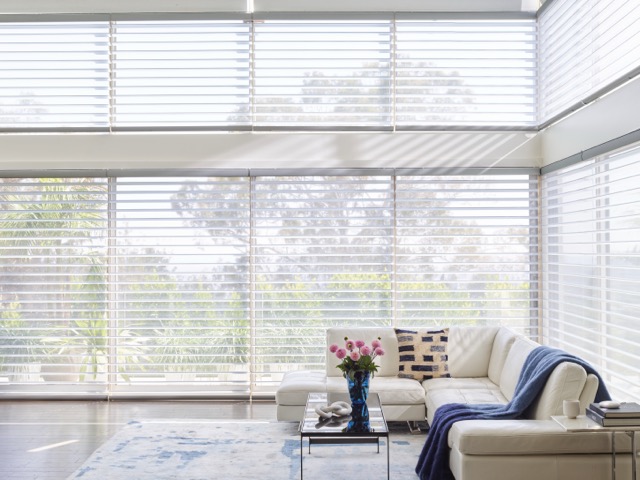
Rooms with large or floor-to-ceiling windows. More glass surface area means more opportunity for heat transfer, regardless of orientation. A room with an oversized window facing any direction is working with a bigger heat-gain problem than a room with a standard-sized opening.
Rooms with minimal or no window treatment at all. An uncovered window offers essentially no resistance to solar heat gain, which is why rooms with bare glass — a sunroom, a stairwell, a window left uncovered “because it lets in nice light” — are often the most consistently overheated spaces in a home.
Second-story rooms. Heat rises, and upper-floor rooms combine that natural tendency with often having more direct roofline sun exposure, making them frequent hot spots even when the AC is running at full capacity.
Why Cranking the Thermostat Doesn’t Actually Solve It
Turning the AC down further treats the symptom, not the source. It might bring the room’s temperature down somewhat, but it does so by making the system work harder and longer to fight a heat gain problem that’s still happening at the same rate. That’s the direct cause of the higher electric bill — you’re not making the room more efficient, you’re just spending more energy compensating for inefficiency that’s still there.
This is also why some homeowners feel like their AC bill keeps climbing even though their actual usage habits haven’t changed. If the underlying heat gain through the windows gets worse over time — through aging or degraded glass, or simply because a previously shaded window loses tree cover — the AC has to work incrementally harder just to maintain the same result, even with no change in behavior.
What Actually Addresses the Root Cause
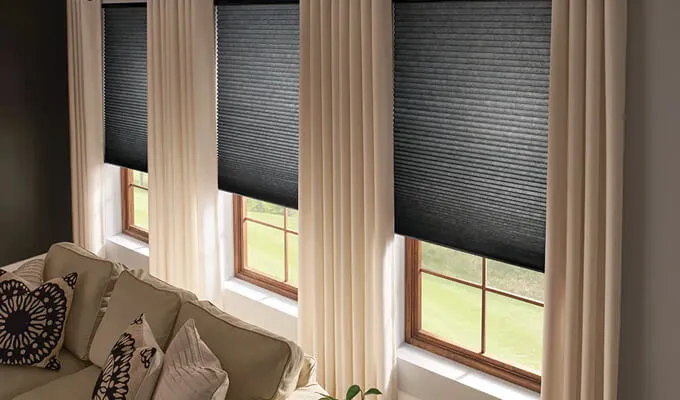
Cellular shades in high-heat-gain rooms. The insulating air pockets in cellular shades are specifically effective at slowing heat transfer through glass, making them one of the more direct fixes for a room where windows are the clear source of the problem.
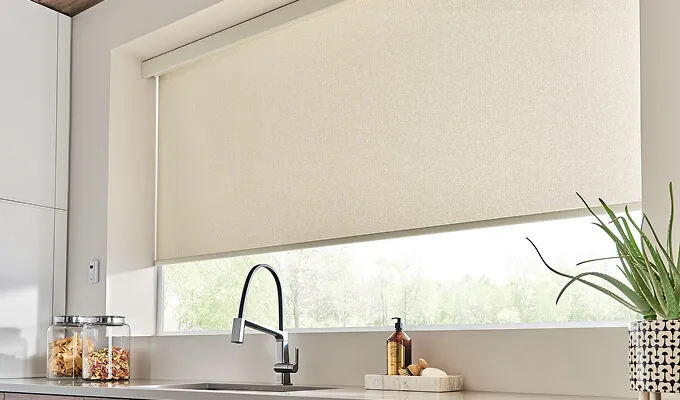
Light-blocking or reflective window treatments for the worst offenders. For west-facing rooms or spaces with the most intense direct sun, a treatment designed specifically to block solar heat, rather than just filter visible light, addresses the actual mechanism causing the discomfort.
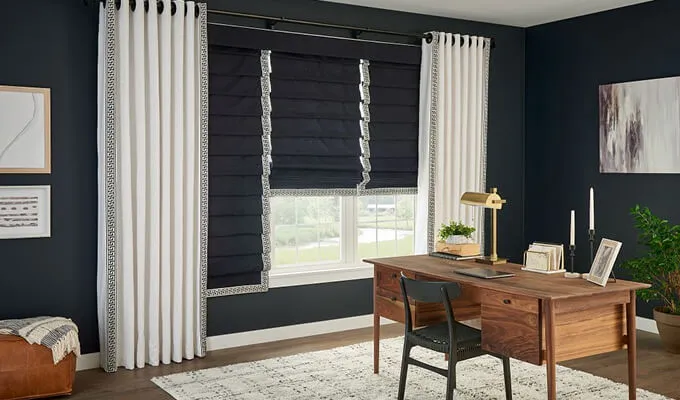
Covering windows that have been left bare. If a room has an uncovered window “because the light is nice,” it’s worth weighing that against the compounding heat and cooling cost it’s likely contributing, especially if that room is a known hot spot in the home.
Treating the specific rooms with the specific problem, rather than the whole house uniformly. Not every room has equal heat gain, so a solution that focuses resources on the rooms actually suffering from it tends to be both more effective and more cost-efficient than a blanket approach applied evenly across a home.
It’s Worth Diagnosing Before You Assume It’s the AC
If a room in your home has felt persistently warmer than it should, and your AC has already checked out as functioning normally, it’s worth seriously considering whether the windows in that room are the actual source of the problem. It’s an easy thing to overlook precisely because it doesn’t look like a problem — it just looks like a window.
Frequently Asked Questions
How do I know if it’s my windows and not actually an AC issue?
If your AC has been inspected and is functioning properly, but a specific room still runs noticeably warmer than the rest of the house — especially a west-facing room, a room with large windows, or a room with no window treatment at all — heat gain through the glass is a likely culprit worth investigating.
Can window treatments really make a noticeable difference, or is this mostly marginal?
For rooms with significant direct sun exposure or large window surface area, window treatments designed to reduce solar heat gain can make a meaningful difference in comfort and cooling load, particularly compared to a bare or minimally treated window.
Do all window treatments help with heat, or just certain types?
Not equally. Treatments specifically designed with insulating or heat-blocking properties, like cellular shades, tend to perform better on this specific problem than treatments chosen primarily for light filtering or aesthetics alone.
Is this really more of an issue in Palm Beach than elsewhere?
The combination of intense, consistent direct sun for most of the year and heavy reliance on air conditioning makes window-related heat gain a more persistent and costly issue here than in climates with milder sun exposure or shorter cooling seasons.
If I fix this in one room, will it help the rest of the house too?
It can, particularly if the room in question is contributing to how hard the overall AC system has to work. Addressing the specific rooms with the worst heat gain often improves comfort in adjacent spaces and can ease the load on the whole system, even if the fix itself is localized.