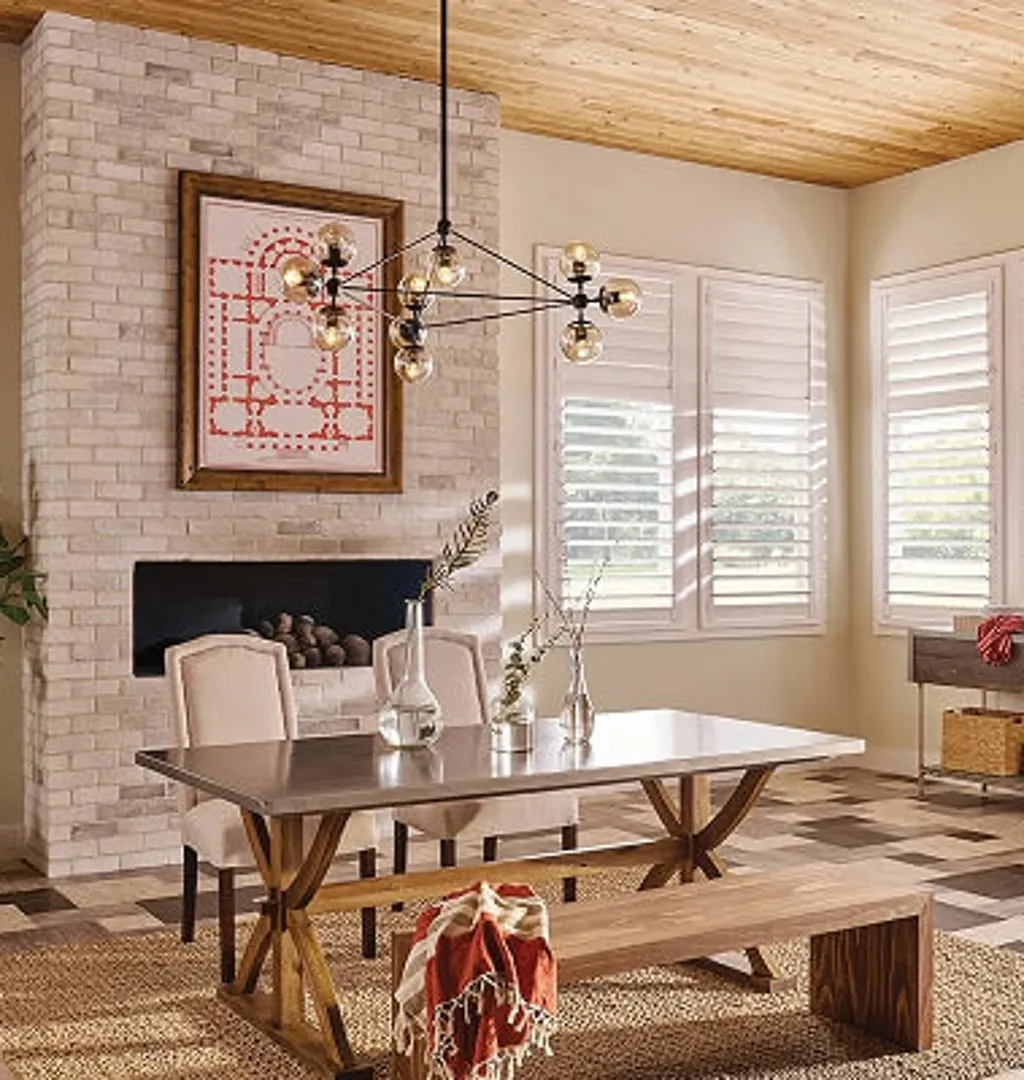
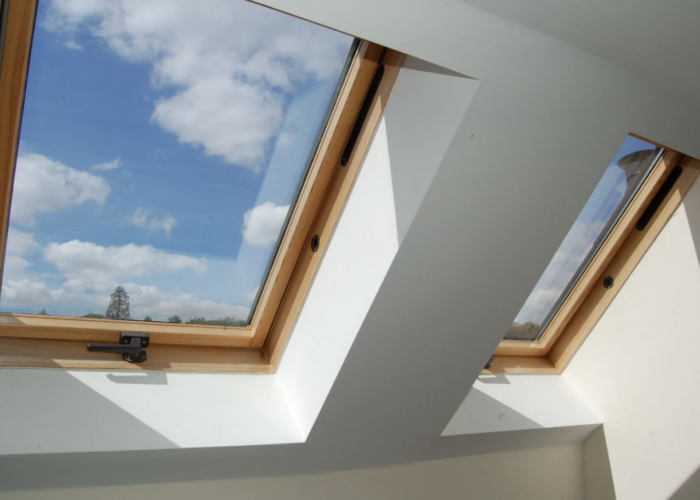
Palm Beach homes are known for dramatic architecture — soaring great rooms, clerestory windows tucked high above the main living space, transom windows over french doors, and skylights that flood a kitchen or stairwell with natural light. These features are part of what makes South Florida homes feel so open and bright. They’re also, quite often, a genuine headache when it comes to light control, heat management, and privacy, simply because you can’t reach them.
We hear this question constantly from homeowners: “I love the skylight, but by 1 p.m. the room is unbearable, and there’s no way I’m getting a ladder up there every day.” If that sounds familiar, you’re not alone, and thankfully, there are real solutions — not just for skylights, but for any window that’s too high, too wide, or too awkwardly placed to manage by hand.
Why Are Skylights and High Windows Such a Challenge in Florida Homes?
Skylights and elevated windows let in beautiful natural light, but they also let in an enormous amount of direct solar heat, especially in a climate where the sun sits high overhead for much of the year. Without any kind of covering, a skylight can turn a room into a greenhouse by early afternoon, driving up your cooling costs and making the space uncomfortable to use during peak sun hours.
The obvious follow-up problem is access. Skylights are often positioned 10, 15, or even 20 feet above the floor, well beyond the reach of a standard extension pole, let alone your arm. Clerestory windows — the narrow, high windows often placed above eye level to bring in light while preserving wall space below — present the same issue on a smaller scale. Manually operating a shade on one of these windows usually means dragging out a ladder, which most homeowners simply stop doing after the first few attempts, leaving the window uncovered indefinitely.
Beyond heat and access, there’s also a UV exposure issue. Uncovered skylights and high windows expose flooring, rugs, artwork, and furniture below to sustained, direct sunlight, which accelerates fading and sun damage far more than a standard vertical window would, since the light often hits the room at a more direct angle for a longer portion of the day.
What Are the Best Coverage Options for Skylights?
Motorized cellular shades designed specifically for skylight applications are the most common and effective solution we recommend. These shades are installed on a track system that allows them to operate on an angled or even fully horizontal plane, following the pitch of the roofline, and they’re controlled entirely by remote or app — no manual pole or cord required.
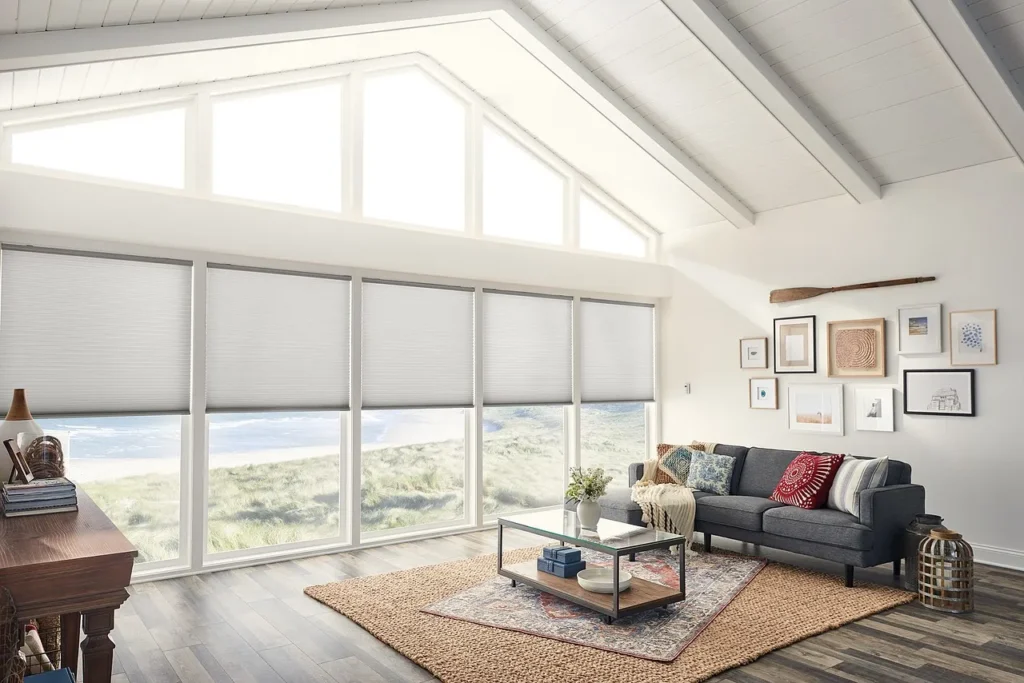
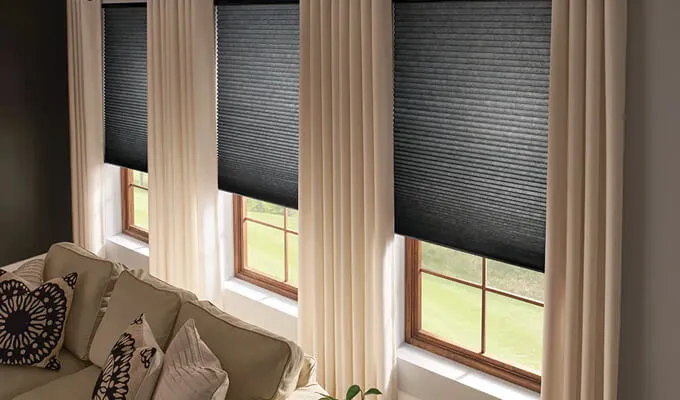
For skylights, cellular or honeycomb shades are particularly effective because their insulating design blocks a significant amount of solar heat gain before it ever reaches the room below, while still allowing you to bring in soft, diffused light rather than leaving the space feeling dark and closed off.
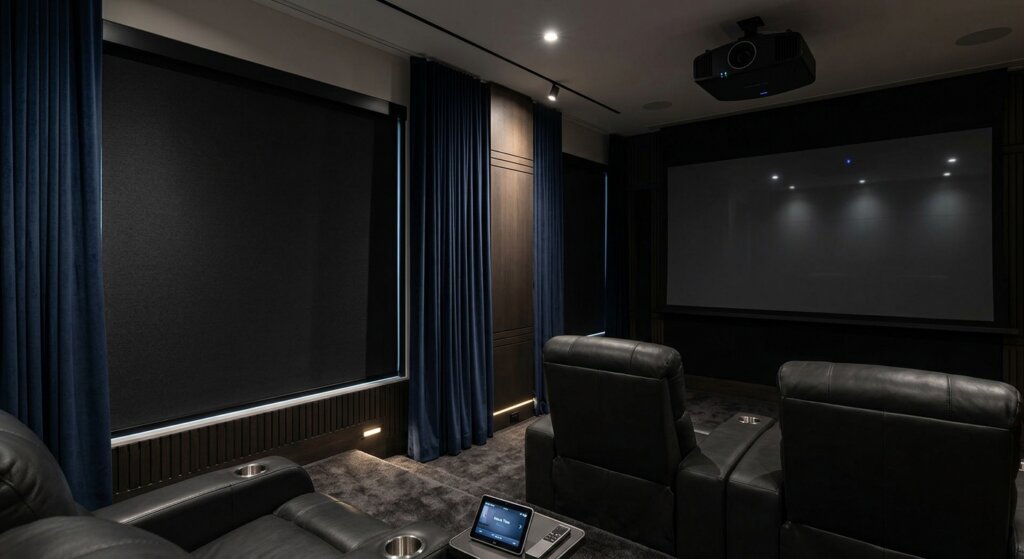
Some homeowners opt for a light-filtering fabric that softens harsh midday sun while maintaining brightness, while others — particularly in media rooms, primary suites, or spaces used for early risers who want to sleep in — choose blackout fabric for full light control on demand.
How Do You Handle Clerestory and Other Hard-to-Reach Wall Windows?
Clerestory windows, transoms above french doors, and any window positioned above standard reach benefit from the same core solution: motorization. A motorized shade or blind on these windows can be grouped into a single remote or smart-home scene, so a whole wall of high windows can be raised, lowered, or tilted with a single tap, rather than being managed one at a time with a pole.
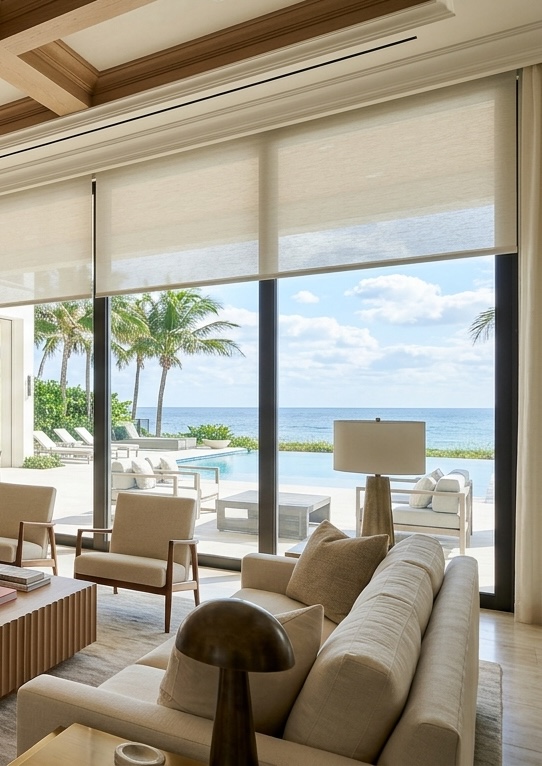
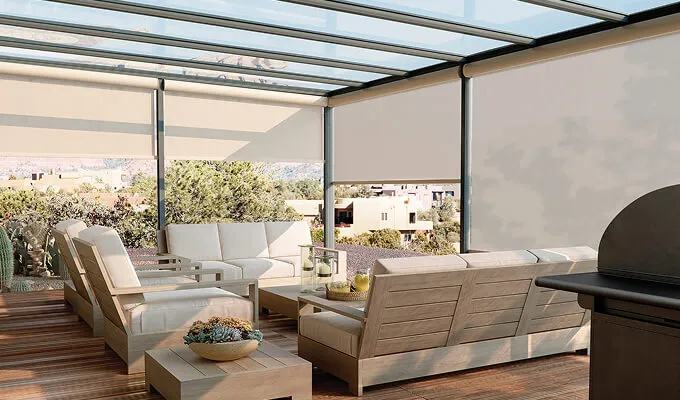
For clerestory windows specifically, solar shades are a popular choice, since they cut glare and block a significant portion of UV rays while still allowing you to see the sky and preserve that open, airy feel that makes these windows a desirable architectural feature in the first place.
In cases where full motorization isn’t in the budget right away, a semi-permanent solution like fixed decorative panels or tinted film can offer some relief from heat and UV exposure, though these options don’t give you the flexibility to adjust light levels throughout the day the way a motorized shade does.
What Should You Consider Before Choosing a Motorized System?
Not every motorized system is designed the same way, and the right setup depends heavily on the specific window. Battery-powered motorized shades are a common choice for skylights and hard-to-reach windows because they don’t require running new electrical wiring, which can be costly and disruptive in an already-finished ceiling or wall. These battery systems typically last a long time between charges and are recharged easily with a small solar panel or a simple USB connection.
For homeowners doing new construction or a significant renovation, hardwired motorized systems are worth considering, since they eliminate any need to think about battery levels at all and can be more seamlessly integrated into a whole-home automation setup from the start.
It’s also important to think about how the shade will be controlled day to day. Most systems today offer a remote, a smartphone app, and voice control through platforms like Alexa, Google Assistant, or Apple HomeKit. For skylights and hard-to-reach windows in particular, scheduling features are especially valuable — you can set the shade to automatically lower during peak sun hours in the early afternoon and rise again as the sun moves lower in the sky, without ever having to think about it.
Why Work With a Local Team for This Kind of Installation?
Skylights and high or awkwardly placed windows require more than a standard measure-and-install visit. The pitch of a skylight, the depth of a wall recess around a clerestory window, and the specific track and mounting hardware needed for each application all vary significantly from one home to the next, especially across the range of architectural styles found throughout Palm Beach, from historic estates to newer contemporary builds.
At Bumble Bee Blinds of Palm Beach, our team has experience measuring and installing motorized shades on some of the most challenging window configurations in the area, including soaring great room skylights, high clerestory banks, and oversized transom windows above sliding glass doors. We’ll evaluate your specific window, recommend the right shade type and control system for your needs and budget, and handle the full installation so you’re not left guessing whether a product will actually fit or perform the way you expect.
If you’ve been living with an unshaded skylight or a stretch of high windows you’ve simply learned to ignore, it doesn’t have to stay that way. A properly fitted motorized shade can transform how usable and comfortable that space feels, without ever requiring a ladder again.
Frequently Asked Questions
Do I need an electrician to install motorized shades on my skylight?
Not necessarily. Many motorized skylight shades run on rechargeable battery systems that don’t require new wiring. Hardwired systems are an option for new construction or major renovations, but they’re not required to get full motorized functionality.
How much heat can a skylight shade actually block?
Cellular shades designed for skylights can block a substantial percentage of solar heat gain before it enters the room, since their insulating honeycomb structure is built specifically to reduce thermal transfer, not just filter light.
Can motorized shades be grouped together for multiple high windows?
Yes. Motorized shades on clerestory windows or multiple skylights can be grouped into a single remote control or smart-home scene, allowing you to adjust an entire wall or ceiling of windows with one command.
Will a shade block my skylight’s view of the sky completely?
Not if you don’t want it to. Light-filtering and solar fabrics allow you to reduce heat and glare while still maintaining visibility and a connection to the sky, and most motorized systems let you stop the shade at any partial position.