Every fall, clocks fall back an hour, and most people experience it as nothing more than an extra hour of sleep and a slightly disorienting week of adjusting their schedule. But there’s a second, quieter shift happening at the same time — one that plays out inside your home rather than on your phone’s lock screen. The angle and timing of sunlight through your windows changes noticeably, and in a lot of Palm Beach homes, that shift shows up as glare, heat, or privacy issues that seemingly appeared out of nowhere.
If a room in your home suddenly feels harder to sit in around 4 or 5 in the afternoon, or your evenings have gotten unexpectedly bright and exposed, the culprit probably isn’t your imagination. It’s the sun’s changed relationship with your windows.
It’s Not Just the Clock — the Sun Actually Moves
The end of daylight saving time doesn’t just relabel the hours of your day; it coincides with the sun sitting lower in the sky as fall moves toward winter. Even in South Florida, where seasonal light changes are far more subtle than they are up north, the sun’s angle drops enough to change how light enters your home.
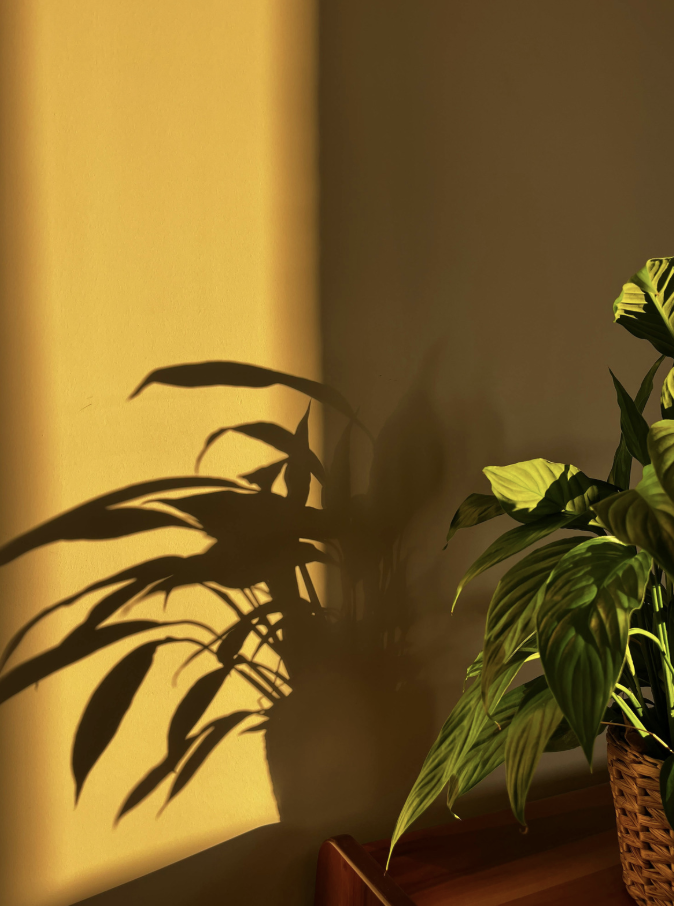
A window that got high, relatively mild afternoon light in September can start receiving direct, low-angle sun by November — the kind that cuts straight across a room instead of glancing off the ceiling. That’s a meaningfully different lighting experience, even if the calendar says it’s only been a couple of months.
Why This Catches So Many Homeowners Off Guard
Most people don’t think about their windows in terms of sun angle — they think about them in terms of “this room is fine” or “this room is a problem,” full stop. So when a previously comfortable room suddenly starts getting hit with harsh late-day light, it tends to register as random or confusing rather than as a predictable seasonal pattern.
It’s also easy to miss because the change happens gradually and then all at once. The days get shorter by a few minutes at a time for weeks, and then the clock change compresses that seasonal shift into a single jarring weekend. One Friday your evening routine happens in soft light; the following Monday, sunset is an hour earlier and the sun is coming through the living room window at a completely different angle than it was.
There’s also a habit factor at play. Most of us build our daily routines — where we sit, when we turn on lamps, which direction we face the couch — around how a room behaves most of the year. When the light shifts suddenly, that routine doesn’t automatically update with it. You keep sitting in the same chair, at the same time, facing the same direction, and only notice something’s changed when the glare becomes impossible to ignore rather than gradually adjusting as it built up.
The Rooms Most Likely to Be Affected
West-facing rooms. These get hit hardest, since the setting sun moves lower and more directly into these windows as the season progresses. Living rooms, primary bedrooms, and kitchens on the west side of a home often go from comfortable to uncomfortably bright in a matter of weeks.
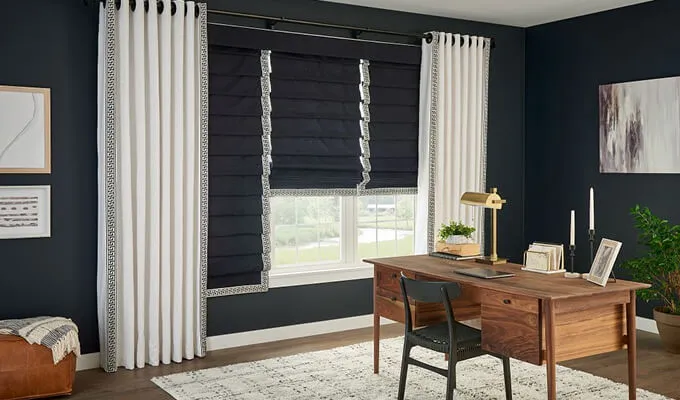
Home offices. If your desk faces a window that gets late-day sun, the shift can turn a functional workspace into one plagued by screen glare right in the middle of your workday — often during exactly the hours when video calls and focused work are happening.
Media and living rooms with TVs. A TV that was perfectly watchable at 6 p.m. in September can become washed out by direct glare at the same hour in November, simply because the sun is now hitting the screen at a different angle.
Street-facing windows. As sunset gets earlier, interior lights come on while there’s still enough ambient light outside to make it easy for passersby to see in — a privacy issue that often doesn’t exist during the brighter parts of the year when interior lights aren’t needed as early. This is especially noticeable during the dinner hour, when a household is likely to be gathered in a visible room with the lights on well before it’s fully dark outside — creating a window of exposure that simply didn’t exist a few months earlier when the sun was still up at that hour.
Why “Just Deal With It” Isn’t a Great Long-Term Plan
A lot of homeowners respond to this seasonal shift by adjusting their behavior instead of their windows — closing curtains a little earlier, moving a desk chair a few feet over, squinting through it until the next daylight saving time change flips things back. That works as a short-term patch, but it means re-solving the same problem twice a year, every year, instead of addressing it once.
It also tends to be a problem that quietly gets worse before anyone does anything about it. A little extra glare in early November becomes a full-blown “I can’t use this room after 4 p.m.” situation by December, simply because nothing was adjusted along the way. By the time most homeowners get frustrated enough to look for a real fix, they’ve usually been living with a preventable annoyance for weeks longer than necessary.
What Actually Solves the Problem
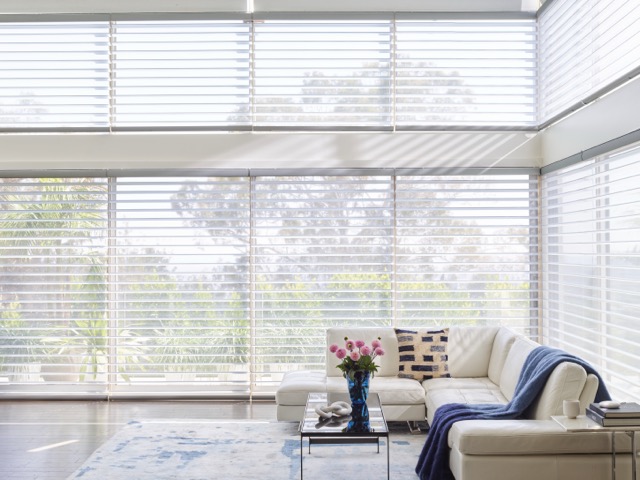
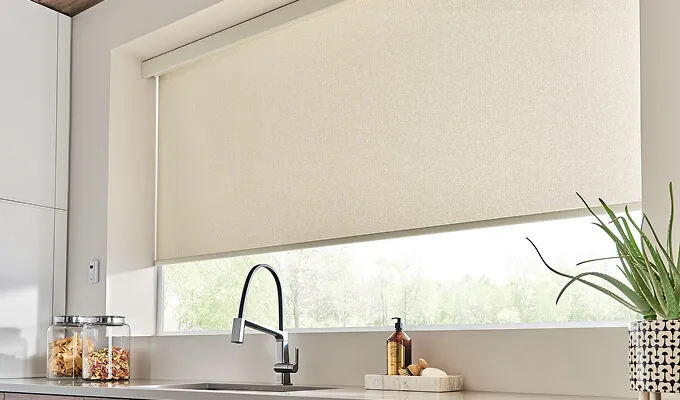
Motorized shades on a schedule. This is one of the more elegant fixes for this exact issue. Motorized shades can be programmed to adjust automatically based on sunset time, which shifts throughout fall and winter — meaning the shade responds to the sun’s actual position rather than a fixed time you set once and forget about. As sunset creeps earlier through November and December, the shade’s schedule can shift right along with it.
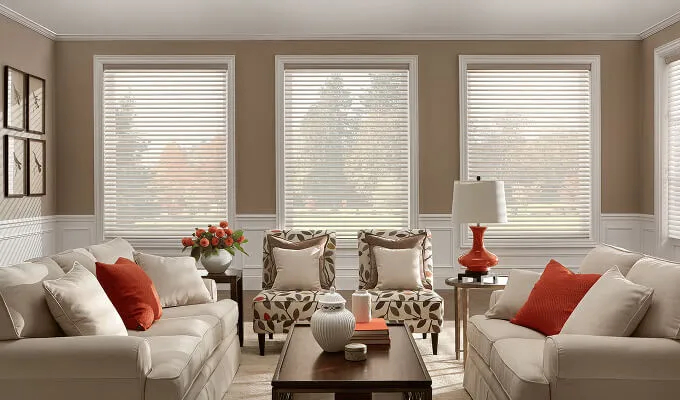
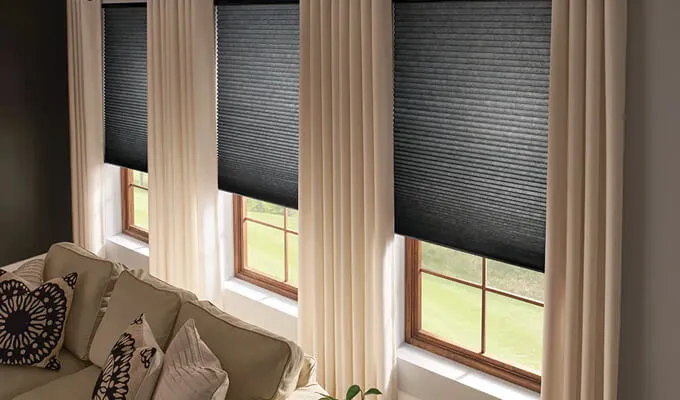
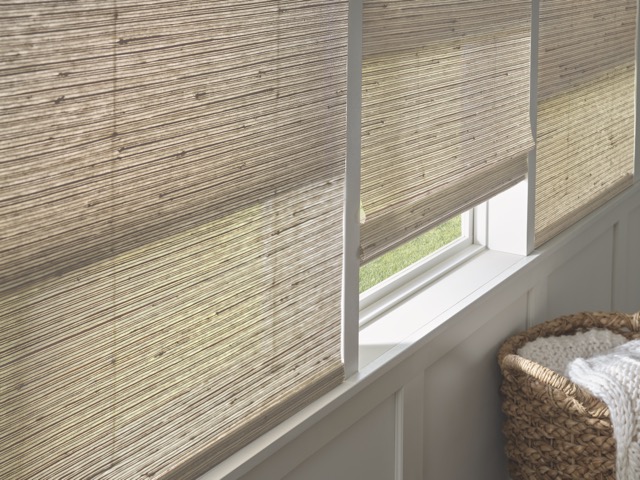
Cellular or light-filtering shades for glare-prone rooms. For rooms where direct light is the main issue rather than privacy, light-filtering fabrics can cut glare and heat without leaving the room dark, which is often exactly the balance needed in a home office or media room.
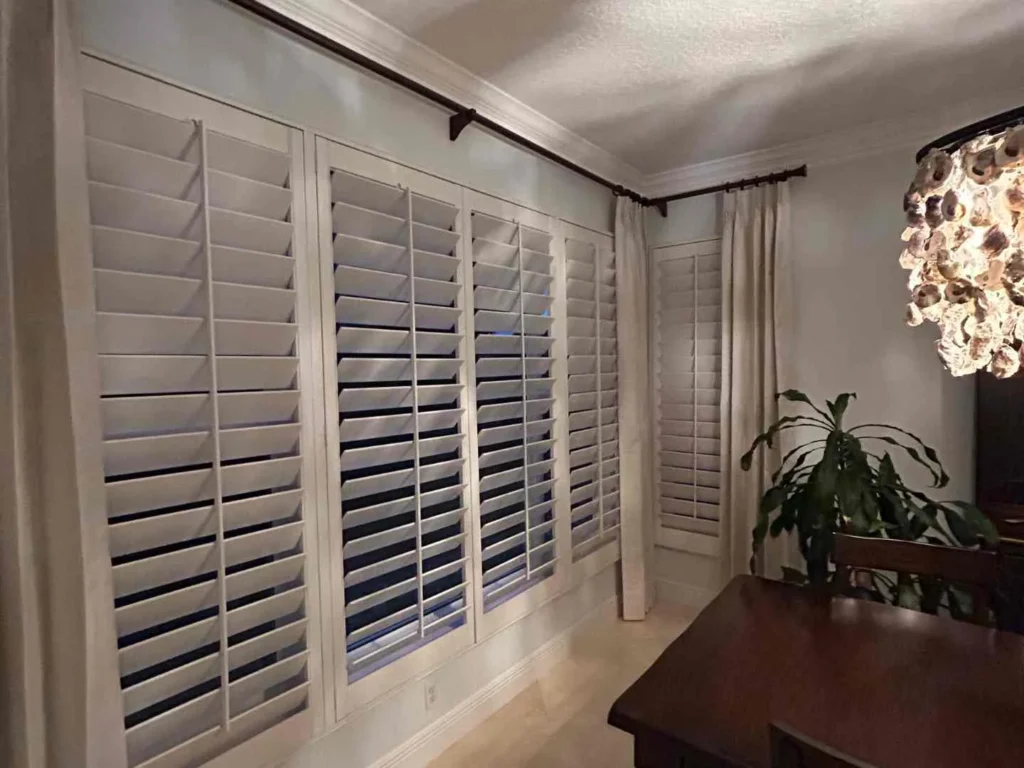
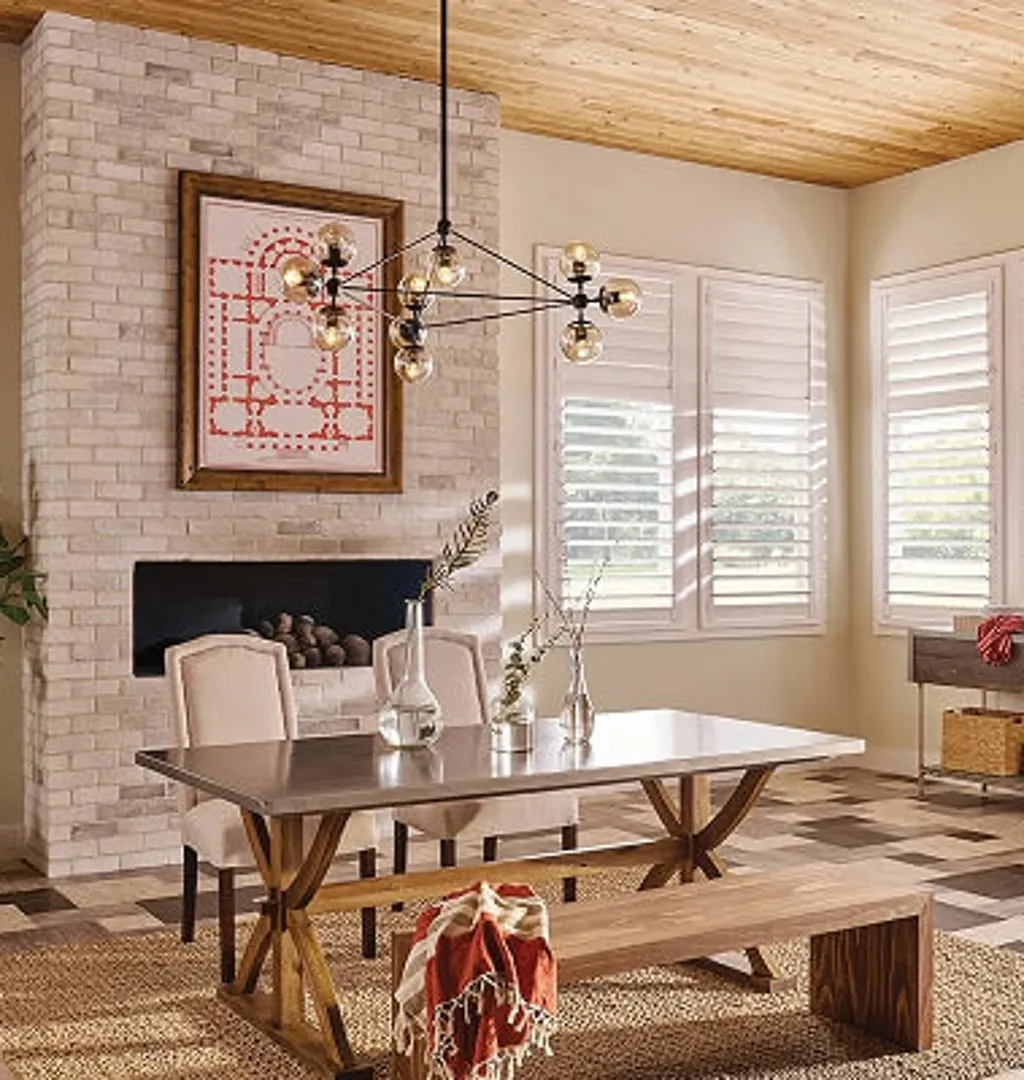
Adjustable louvers for west-facing rooms. Plantation shutters give you granular control over the angle of light entering a room, which is particularly useful for west-facing spaces that need some light blocked in the late afternoon but not total darkness.
A second look at rooms you assumed were “solved.” If a room’s window treatment was chosen based on how it performed during a different season, it’s worth revisiting once the light shifts. A treatment that worked fine for summer or spring light isn’t necessarily doing the job once the sun angle drops in fall and winter.
Frequently Asked Questions
Why does the sun’s angle change if South Florida doesn’t have real seasons? Even in South Florida, the sun’s position in the sky shifts throughout the year due to the Earth’s tilt — it’s just less dramatic than the shift seen in northern climates. The change is still enough to noticeably affect how light enters west-facing and street-facing windows, especially combined with earlier sunsets after the clock change.
Is this really related to daylight saving time, or just the season changing? Both. The sun’s angle shifts gradually through fall regardless of the clock, but the transition off daylight saving time compresses that shift into a sudden, noticeable jump, since sunset moves an hour earlier all at once rather than gradually.
Can motorized shades really adjust their schedule automatically as sunset time changes? Yes. Many motorized shade systems can be set to follow sunset or sunrise rather than a fixed clock time, so the schedule adjusts on its own as the actual sunset time shifts through the season, without needing to be reprogrammed.
What if only one or two rooms are affected — do I need to redo my whole home’s window treatments? Not at all. This is a common reason homeowners start with a single problem room, usually a west-facing living room or a home office, rather than a whole-house project. It’s a completely reasonable way to approach the issue.
Will darker or heavier fabric always solve a glare problem? Not necessarily, and it can create a new problem if the room loses too much natural light as a result. The better approach is usually matching the fabric opacity and shutter louver angle to how much light control the specific room actually needs, rather than defaulting to the darkest option available.
See the Difference for Yourself
If a room in your Palm Beach home has suddenly become harder to enjoy since the clocks changed, it’s not something you have to just live with until spring. Bumble Bee Blinds of Palm Beach offers free in-home consultations to assess exactly what’s happening with the light in your space and recommend a solution built around it — not a generic fix.
Ready to solve the glare for good? Schedule your free consultation with Bumble Bee Blinds of Palm Beach today.