


What Are Soft Shadings?
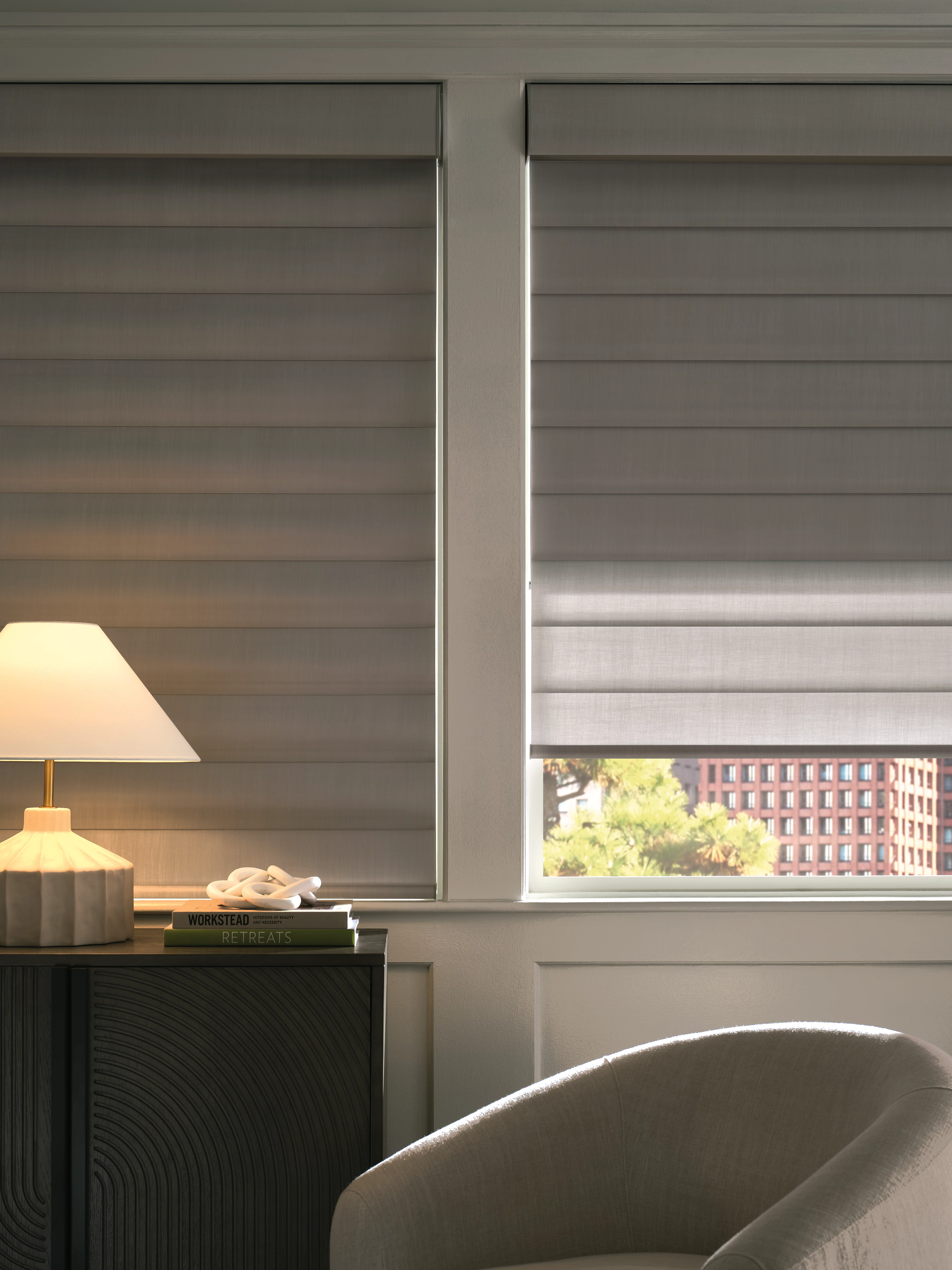
Soft shadings—often called sheer shades or layered sheers—combine the look of a sheer fabric with the function of a blind. Our sheer shades feature fabric vanes suspended between sheer layers, so you can tilt for privacy or open them to enjoy filtered natural light.
They’re ideal if you want a polished, almost “drapery-like” softness on the window without committing to full drapery panels. In modern Austin interiors, they read as clean, minimal, and quietly luxurious.
How They Compare to Traditional Shades and Blinds
Traditional shades and blinds cover a wide spectrum—including roller shades, cellular shades, faux wood blinds, and wood blinds. These give you strong light blocking, simple operation, and a wide range of price points and styles.
If you need room darkening in a bedroom or media space, a traditional roller or cellular shade will outperform soft shadings. For high-traffic and family spaces, durable blinds often win on practicality. Soft shadings, on the other hand, shine in main living areas where light quality and aesthetics are the priority.
Light Control, Privacy, and Glare Performance
Soft shadings are designed to soften light first and provide privacy second. When vanes are open, they filter direct sun into a gentle glow and blur the view in from outside—perfect for living rooms and kitchens where you want daytime privacy without losing brightness.
Traditional shades give you stronger on/off control. Solar options like solar roller shades are excellent for glare control on west-facing windows, while cellular shades improve insulation and room darkening. Blinds allow you to tilt slats to direct light—but don’t diffuse it as softly as sheers.
Style and How Each Option Complements Modern Austin Homes
If your home leans modern, transitional, or warm minimalist, soft shadings often feel more in step with the design. They pair beautifully with simple furnishings, clean-lined cabinetry, and open floor plans, adding texture without heaviness.
Traditional shades and blinds still play a major role in a layered design plan. Natural textures like woven woods bring warmth and organic interest, while classic custom blinds work well in offices, secondary bedrooms, and spaces that need straightforward function first.
Where Soft Shadings Make Sense—and Where Traditional Wins
Soft shadings are typically the best choice for:
• Main living rooms and great rooms
• Dining areas and breakfast nooks
• Street-facing spaces where you want filtered daylight and softer views
Traditional shades or blinds are often the better fit for:
• Bedrooms requiring blackout or near-blackout control
• Media rooms and home theaters
• High-wear family rooms or rental spaces where durability is key
• Utility areas where simple, budget-conscious coverage is enough
Many Austin homeowners end up combining both—soft shadings in the main social spaces, and traditional shades or blinds where privacy and light blocking need to be more robust.
Why Austin homeowners love this mix: In sun-forward neighborhoods like 78704, 78703, and 78739, clients often choose soft shadings for the front of the home and main living areas, then rely on cellular or roller shades in bedrooms. The result is a whole-home plan that balances style, comfort, and function room by room.

Service Areas
We proudly serve Austin, Dripping Springs, Cedar Park, Round Rock, Steiner Ranch, West Lake Hills, and surrounding Central Texas communities. Explore more photos and reviews on our Google Business Profile.