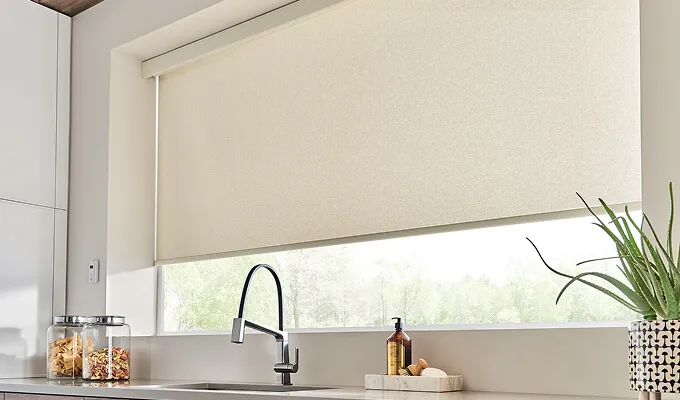
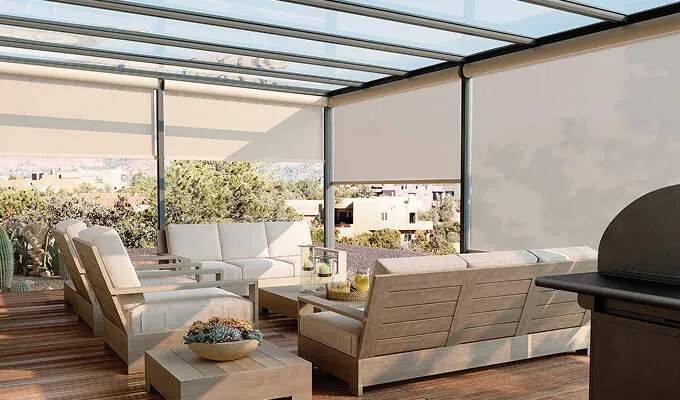
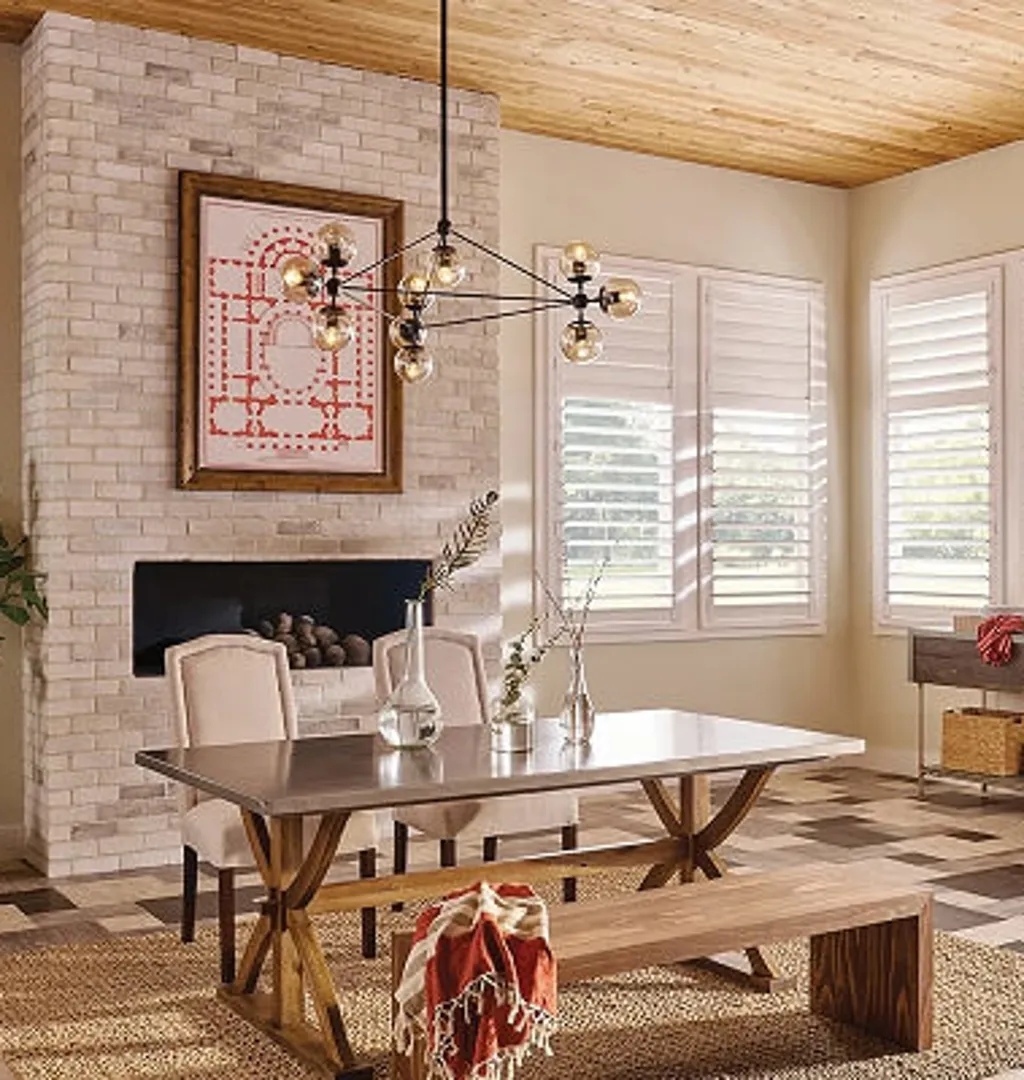
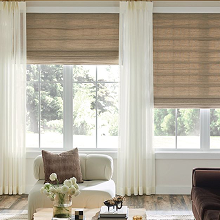
Clean lines, natural light, and expansive windows are common features in many modern Austin homes. The right window treatments should complement that design while also solving practical issues such as glare, privacy, heat, and UV exposure.
Solar shades and roller shades are both streamlined options with a minimal profile. They may look similar at first glance, but they serve different purposes.
Solar shades are typically the better choice when homeowners want to filter harsh sunlight while preserving an outdoor view. Roller shades are usually the stronger option when privacy, room-darkening, or broader fabric choices are the priority.
For many Austin homes, the best solution is not choosing one product for every window. It is selecting the right shade for each room while maintaining a cohesive look throughout the home.
What Is the Difference Between Solar Shades and Roller Shades?
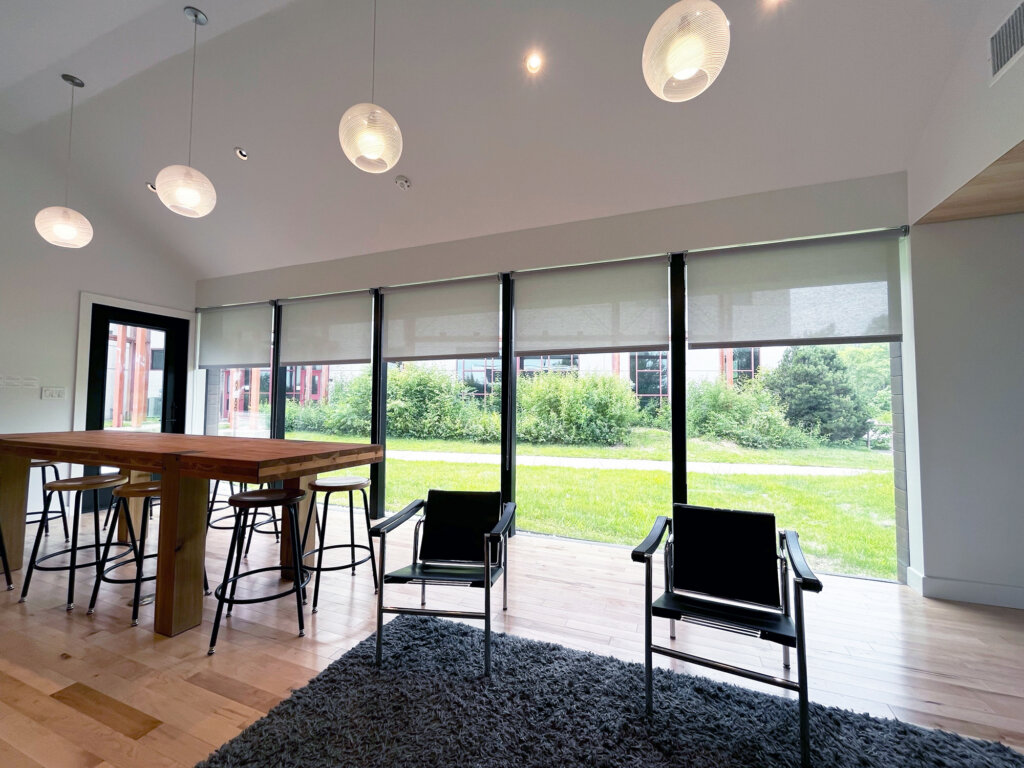
Solar shades are made with performance fabrics designed to filter sunlight. They can reduce glare, help limit solar heat gain, and protect interiors from UV exposure while maintaining daytime visibility to the outdoors.
Roller shades use a solid fabric that rolls neatly into a compact profile at the top of the window. They are available in a range of materials, colors, and opacity levels, including light-filtering and room-darkening options.
Here is the simplest distinction:
| Solar Shades | Roller Shades |
|---|---|
| Filter sunlight while preserving the view | Provide more coverage and privacy |
| Best for glare reduction and UV protection | Best for flexible light control |
| Ideal for living rooms, offices, and view-facing windows | Ideal for bedrooms, bathrooms, and media rooms |
| Designed primarily for daytime sun control | Available in light-filtering and room-darkening fabrics |
| May need to be layered for nighttime privacy | Can provide stronger privacy on their own |
Both options work well in modern homes because they have a clean, understated appearance.
When Should You Choose Solar Shades?
Solar shades are a strong choice when the view is part of the home’s design.
They work especially well in rooms with large windows, west-facing exposure, or direct afternoon sunlight. Instead of covering the window completely, the fabric softens harsh light and allows homeowners to maintain a connection to the outdoors.
Solar shades are often a good fit for:
- Living rooms with backyard or Hill Country views
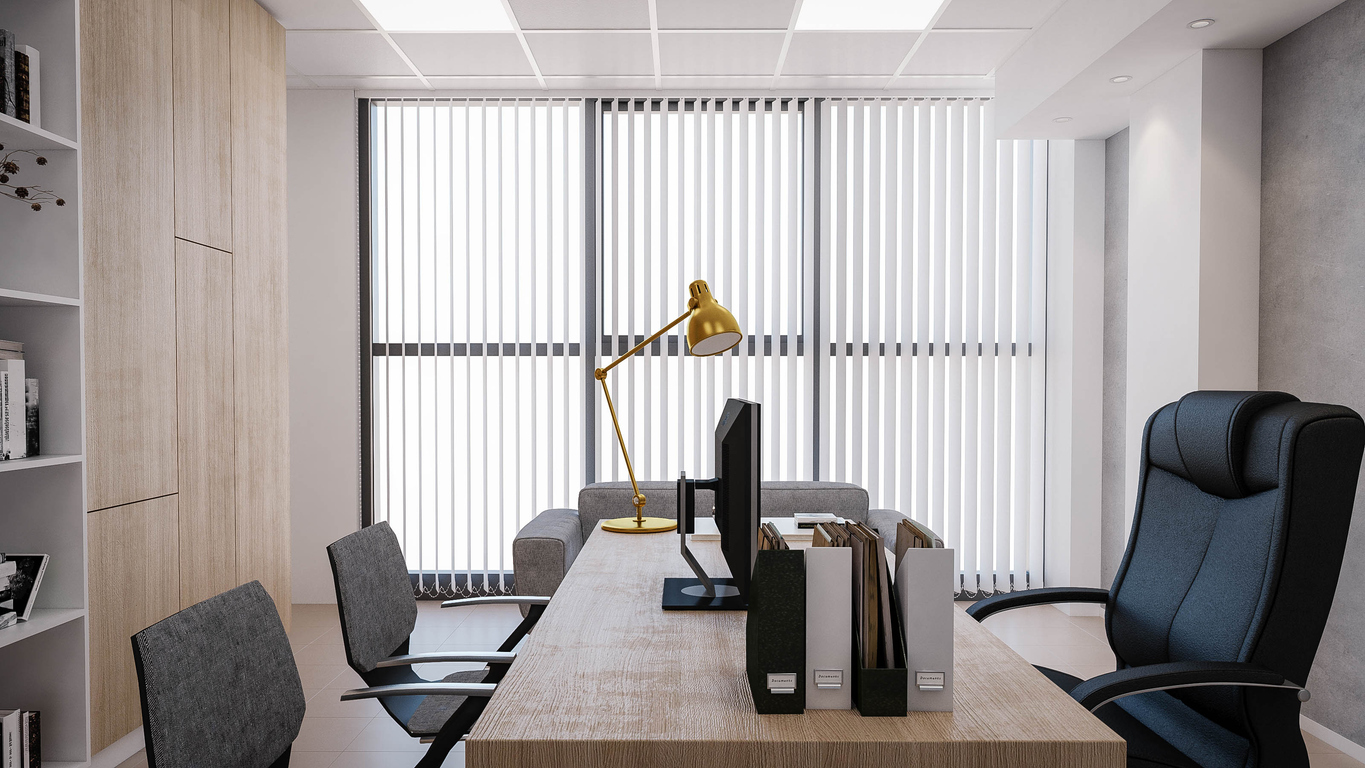
- Home offices with screen glare
- Dining rooms with large windows
- Open-concept living spaces
- Rooms with hardwood floors, rugs, artwork, or upholstered furniture
- Homes with west-facing or southwest-facing windows
Depending on the selected fabric, solar shades can block up to 99% of UV rays. This can help protect furniture, flooring, artwork, and other finishes from gradual fading.
Solar shades are also helpful when homeowners want a streamlined look without making the room feel dark during the day.
When Should You Choose Roller Shades?
Roller shades are usually the better option when privacy or stronger light control is more important than preserving the view.
Because they are available in a wide range of fabrics, roller shades can be customized for different rooms and different levels of coverage.
Light-filtering roller shades soften sunlight while maintaining a bright, comfortable interior. Room-darkening roller shades provide more coverage for spaces where homeowners want reduced light and greater privacy.
Roller shades are often a good fit for:
- Bedrooms
- Nurseries
- Bathrooms
- Media rooms
- Guest rooms
- Street-facing windows
- Rooms where nighttime privacy is a priority
They are also available in a broad selection of textures, patterns, and neutral tones, making them easy to incorporate into a modern interior.
Which Shade Looks Better in a Modern Austin Home?
Both solar shades and roller shades can work well in a modern home.
The better choice depends on whether the design priority is preserving the view or creating a more complete visual backdrop.
Solar shades tend to blend quietly into the architecture. Their performance fabrics create a subtle, minimal look that allows windows, views, and natural light to remain prominent.
Roller shades can play a larger design role. A carefully selected fabric can coordinate with paint colors, furniture, flooring, and other finishes. Neutral roller shades can create a polished, tailored look without overpowering the room.
For a cohesive whole-home design, homeowners can select solar shades and roller shades in complementary tones. This allows each room to have the right level of privacy and sun control while maintaining consistency throughout the home.
Consider the Room Before Choosing the Product
One of the most common mistakes homeowners make is selecting the same window treatment for every room without considering how the spaces function differently.
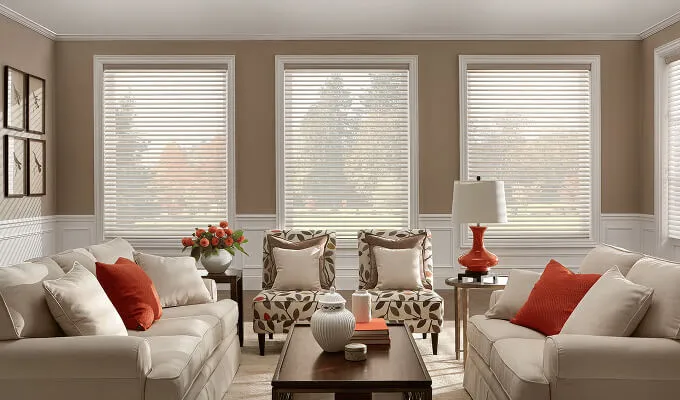
A living room with large west-facing windows may benefit from solar shades that reduce afternoon glare while preserving the view.
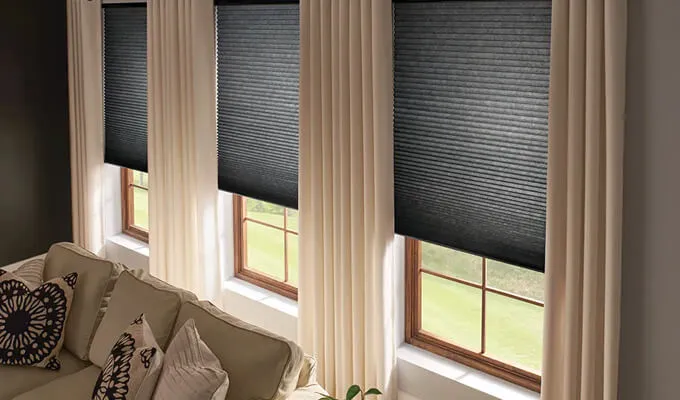
A primary bedroom may need room-darkening roller shades for greater privacy and light control.
A home office may benefit from solar shades to reduce screen glare without blocking natural light.
A street-facing bathroom may require a roller shade with stronger privacy coverage.
The right window-treatment plan should reflect how the home is actually used.
Can You Use Solar Shades and Roller Shades Together?
Yes. Layering solar shades and roller shades can give homeowners more flexibility.
A solar shade can filter sunlight and preserve the view during the day. A secondary roller shade can provide additional privacy or room-darkening coverage when needed.
This approach is especially useful in living rooms, media rooms, bedrooms with large windows, and spaces that transition from bright daytime use to more private evening use.
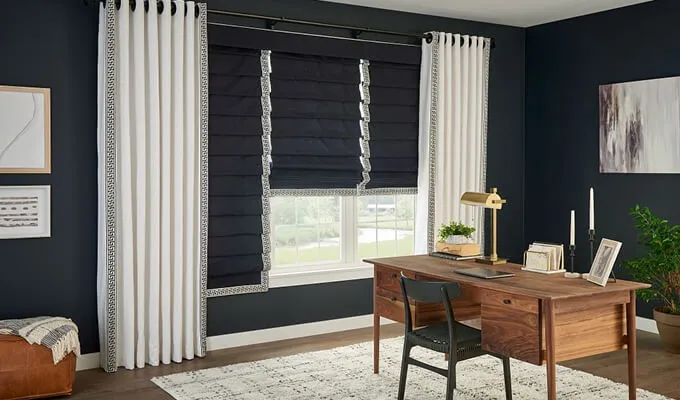
Drapery panels can also be paired with solar shades or roller shades when homeowners want a softer, more finished design.
Add Motorization for a Cleaner and More Convenient Solution
Motorization works well with both solar shades and roller shades.
It can be particularly helpful for:
- Tall windows
- Large walls of glass
- Hard-to-reach windows
- Whole-home projects
- Rooms where shades need to be adjusted throughout the day
- Homeowners who want a cleaner, more streamlined appearance
Motorized shades allow homeowners to manage sunlight and privacy more easily without manually adjusting several window treatments.
For a modern Austin home, motorization can make the shades feel like an intentional part of the design rather than an afterthought.
Frequently Asked Questions About Solar Shades and Roller Shades
Are solar shades or roller shades better for privacy?
Roller shades are generally better for privacy because they are available in light-filtering and room-darkening fabrics. Solar shades are designed primarily for daytime sun control and view preservation. They may not provide complete privacy after dark when interior lights are on.
Are solar shades or roller shades better for west-facing windows?
Solar shades are often the stronger choice for west-facing windows because they reduce afternoon glare, UV exposure, and solar heat gain while preserving the view. Roller shades may be a better option when greater coverage or privacy is needed.
Can solar shades help protect furniture and hardwood floors?
Yes. Solar shades can help reduce the UV exposure that contributes to fading. Depending on the selected fabric, they can block up to 99% of UV rays.
Do roller shades block all light?
Not necessarily. Roller shades are available in different opacity levels. Light-filtering roller shades soften sunlight, while room-darkening fabrics provide stronger coverage.
Can solar shades and roller shades be motorized?
Yes. Both solar shades and roller shades can be motorized. This is particularly useful for tall windows, large rooms, and whole-home projects.
Which shades are best for a modern home?
Both products work well in modern homes because they have a streamlined profile. Solar shades are best when the view is a priority. Roller shades are best when privacy, light control, and fabric selection are the main concerns.
Should every room in the home have the same window treatment?
Not necessarily. Different rooms have different needs. Homeowners can use solar shades in view-facing living spaces and roller shades in bedrooms or bathrooms while choosing complementary colors and materials for a cohesive design.
Find the Right Shades for Your Austin Home
The right window treatments should support the way your home looks and the way you use it every day.
At Bumble Bee Blinds of Austin, our design consultants can help you compare solar shades, roller shades, fabrics, motorization options, and layered treatments based on your windows, privacy needs, and design preferences.
Whether you are updating one room or planning window treatments for an entire home, we will help you create a solution that feels intentional from room to room.