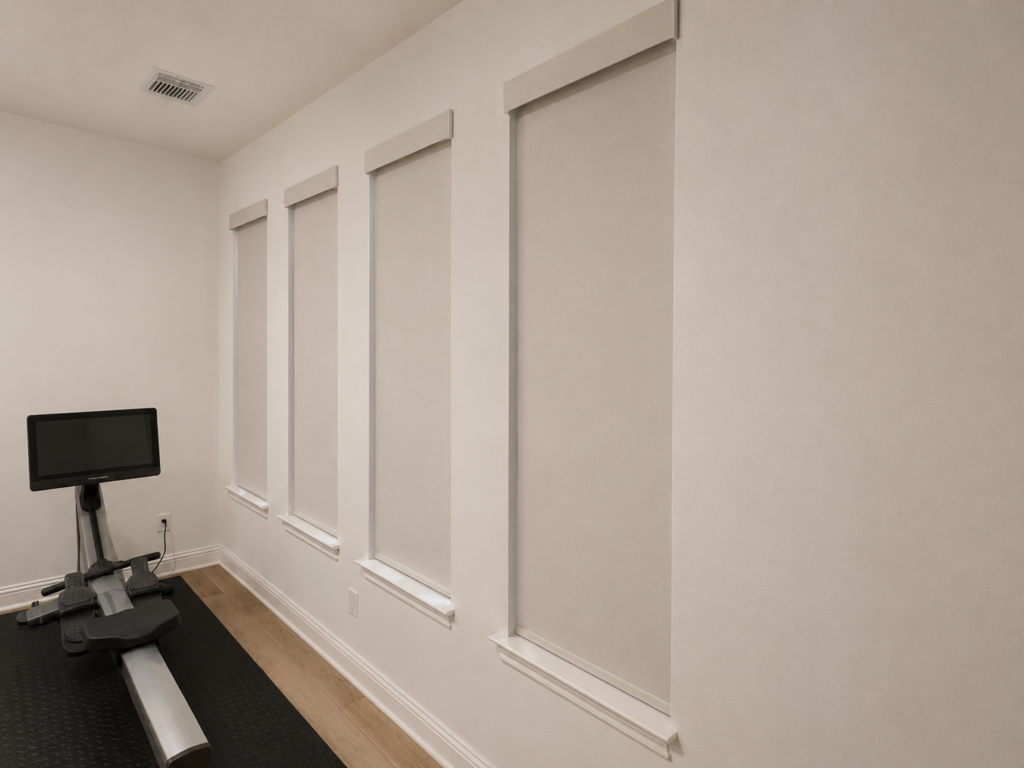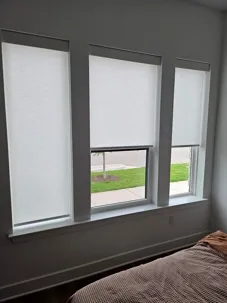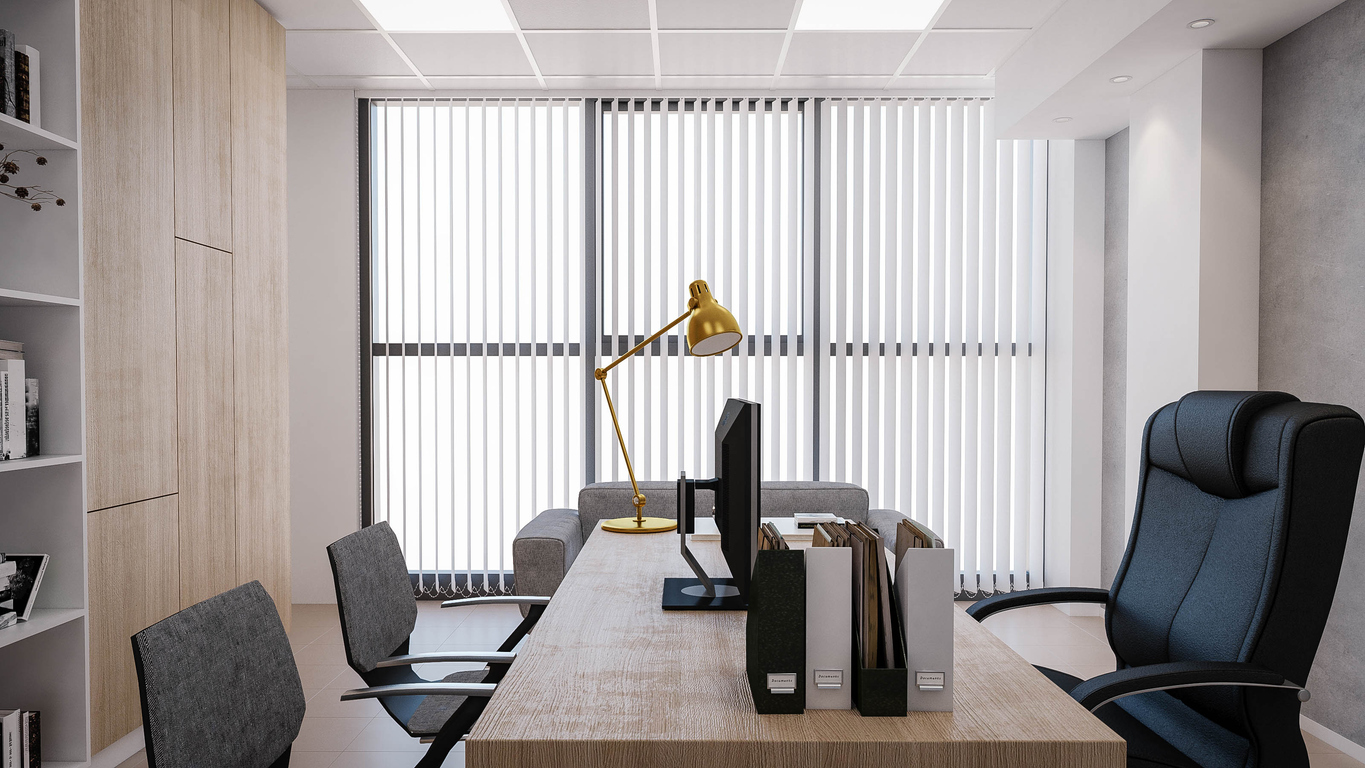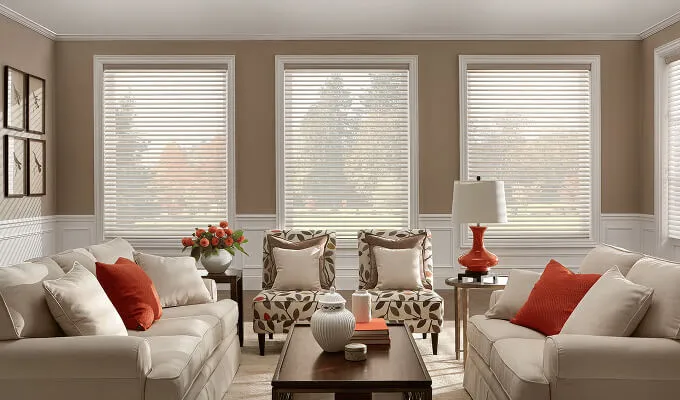
Privacy is one of the biggest reasons homeowners choose roller shades, but not every roller shade provides the same level of coverage.
A fabric that feels private during the day may behave very differently at night once the lights are on inside. Window location, fabric opacity, interior lighting, and whether the shade is light-filtering, room-darkening, or blackout all affect how much privacy you actually get.
For Austin homeowners, that distinction matters especially in street-facing rooms, bathrooms, bedrooms, first-floor living spaces, and homes built close to neighboring properties.
Here is how roller shade privacy works during the day and at night, and how to choose the right fabric for each room.
Do Roller Shades Provide Privacy?
Yes, roller shades can provide excellent privacy, but the level of privacy depends heavily on the fabric you choose.
Some roller shade fabrics are designed to soften sunlight while still allowing a degree of visibility through the material. Others are much more opaque and limit visibility from both inside and outside.
That means there is no single answer to whether roller shades are “private.”
The better question is: How much privacy do you need, and when do you need it most?
A second-floor living room overlooking a private backyard has very different needs from a first-floor bedroom facing the street.
What Is Daytime Privacy?
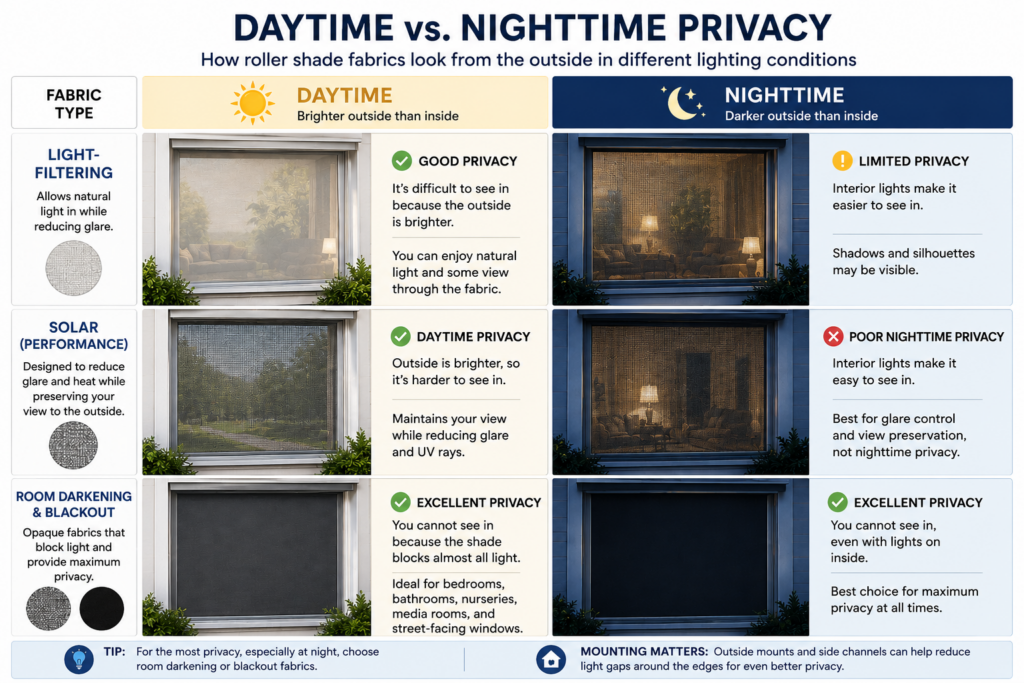
Daytime privacy refers to how much someone outside can see into your home while it is brighter outside than it is inside.
During the day, many roller shade fabrics provide a good level of privacy because the brighter exterior conditions make it harder to see into the home.
This is especially true with more opaque light-filtering fabrics.
However, some fabrics are intentionally designed to preserve more of the view. These may reduce glare and provide a level of daytime privacy without fully blocking visibility.
This is where homeowners can get into trouble if they assume that “light-filtering” automatically means “private.”
It does not always.
What Is Nighttime Privacy?
Nighttime privacy is different because the lighting conditions reverse.
Once it is dark outside and the lights are on inside your home, your interior becomes the brighter space.
This can make silhouettes, movement, and sometimes interior details more visible through certain fabrics.
A shade that felt completely private at noon may offer much less privacy at 9 p.m.
That is why nighttime privacy should be considered separately from daytime privacy when selecting roller shade fabric.
For bedrooms, bathrooms, and street-facing rooms, this distinction is especially important.
Can You See Through Light-Filtering Roller Shades at Night?
Sometimes.
The answer depends on how translucent the fabric is, how close someone is to the window, and how bright the room is inside.
Some light-filtering fabrics are quite opaque and provide strong privacy at night. Others allow more light to pass through and may reveal shadows or silhouettes.
If nighttime privacy is a major priority, do not choose a fabric based only on how it looks in daylight.
View actual samples with interior lights on whenever possible.
This is one of the biggest advantages of selecting custom shades during an in-home consultation rather than relying on a small online fabric swatch.
Are Blackout Roller Shades Better for Privacy?
Yes, blackout roller shades are generally the strongest option for privacy.
Blackout fabrics are designed to prevent light from passing directly through the shade material, which also makes it much more difficult to see through them.
They are often a good choice for:
- Bedrooms
- Bathrooms
- Nurseries
- First-floor rooms
- Street-facing windows
- Rooms close to neighboring homes
However, blackout fabric does not automatically mean complete visual coverage at the edges of the window.
What About Gaps Around Roller Shades?
Standard roller shades may have small gaps along the sides of the fabric, especially when installed inside the window opening.
Those gaps are often necessary for the hardware and shade to operate properly.
From a privacy standpoint, this usually matters more when someone is standing close to the window or when the room is brightly lit at night.
If maximum privacy is important, the mounting style should be considered along with the fabric.
An outside-mounted shade may provide more coverage because the fabric can extend beyond the edges of the window opening.
Depending on the application, other light-control or side-channel options may also be available.
Are Room-Darkening Roller Shades Good for Privacy?
Yes.
Room-darkening roller shades are often a strong middle ground between light-filtering and blackout fabrics.
They reduce incoming light more significantly than standard light-filtering materials while still offering a different look and feel from a true blackout fabric.
For homeowners who want strong privacy without making the room feel completely dark during the day, room-darkening fabrics can be worth considering.
They can work well in:
- Bedrooms
- Guest rooms
- Offices
- Living spaces
- Street-facing rooms
The exact privacy level still depends on the fabric itself, so samples should be evaluated in the actual room whenever possible.
Are Solar Shades Private at Night?
This is where homeowners are often surprised.
Solar shades are designed to reduce glare, manage solar exposure, and preserve outward visibility.
That makes them highly effective for certain applications, but they are generally not the best choice for nighttime privacy.
During the day, solar shades can provide a level of privacy because it is brighter outside than inside.
At night, that effect reverses.
If interior lights are on, people outside may be able to see into the room much more easily.
For that reason, solar shades are usually better suited for rooms where view preservation and glare control matter more than complete nighttime privacy.
What Are the Best Roller Shades for Bedrooms?
For bedrooms, privacy and light control are usually both important.
Blackout or room-darkening roller shades are often the strongest choices because they provide better privacy while also reducing exterior light.
They are especially helpful in bedrooms that face:
- Streets
- Sidewalks
- Neighboring homes
- Parking areas
- Exterior lighting
If you prefer a lighter appearance during the day, another option is to use a more opaque light-filtering fabric that still provides strong nighttime privacy.
The right choice depends on whether darkness or natural light is the bigger priority.
What Are the Best Roller Shades for Bathrooms?
Bathrooms usually require more privacy than most rooms.
For first-floor bathrooms or windows that face neighboring homes, the fabric should be selected primarily for privacy rather than view-through.
Opaque light-filtering, room-darkening, or blackout fabrics are generally better choices than more open materials.
An opaque light-filtering shade can be especially useful because it allows some natural light into the room without sacrificing privacy.
For bathroom windows near a shower or bathtub, the material and installation location should also be appropriate for the room’s humidity and conditions.
What Are the Best Roller Shades for Living Rooms?
Living rooms often require more balance.
You may want privacy, but you may also want to preserve natural light and avoid making the room feel closed off.
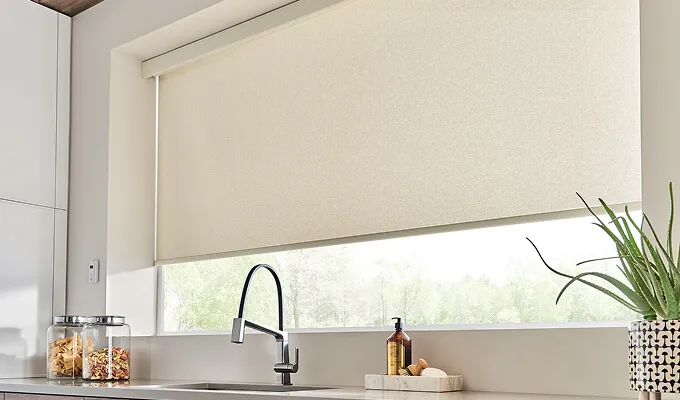
Opaque or semi-opaque light-filtering roller shades can work well because they soften sunlight while still giving the room a bright appearance.
If the living room faces a busy street or neighboring home, a more privacy-focused fabric may be a better choice.
If the room faces a private backyard, you may have more flexibility to choose a fabric with greater view-through.
What Are the Best Roller Shades for Street-Facing Windows?
Street-facing windows typically need stronger privacy.
This is especially true for first-floor windows where pedestrians, cars, or neighbors are closer to the glass.
For these areas, prioritize:
- More opaque fabrics
- Room-darkening fabrics
- Blackout fabrics
- Outside mounts when additional coverage is needed
The right solution depends on how close the window is to the street and whether the room needs natural light during the day.
For example, a street-facing living room may benefit from an opaque light-filtering fabric, while a street-facing bedroom may be better suited for blackout.
What About Privacy in Homes Close to Neighbors?
This is common in many Austin neighborhoods where homes are built relatively close together.
A side window may technically face a yard, but it may also line up directly with a neighbor’s kitchen, bedroom, or patio.
In those cases, privacy should be evaluated based on the actual sightline rather than simply the room type.
A living room window facing a neighbor’s wall may need more privacy than a bathroom window facing a completely private backyard.
During an in-home consultation, looking at each window from both inside and outside can help identify where stronger coverage is needed.
Does Fabric Color Affect Privacy?
It can.
The construction and opacity of the fabric matter more than the color, but color can affect how much light passes through the shade and how visible shadows appear.
Lighter fabrics often create a softer appearance and may brighten the room more.
Darker fabrics can create stronger contrast and may appear more opaque in certain lighting conditions.
However, two fabrics in the same color can provide very different levels of privacy depending on how they are woven and constructed.
Opacity should always be evaluated separately from color.
Can You Get Privacy Without Making the Room Dark?
Yes.
This is one of the biggest advantages of choosing the right light-filtering fabric.
Opaque light-filtering roller shades can provide substantial privacy while still allowing diffused natural light into the room.
That makes them a strong option for:
- Kitchens
- Living rooms
- Bathrooms
- Home offices
- Dining rooms
The key is choosing a fabric that filters light without being overly transparent.
If privacy is your primary concern, avoid relying only on terms like “light-filtering.” Look at the actual material and test how it behaves with different lighting conditions.
Can You Use Different Privacy Levels Throughout the House?
Yes, and in most homes, that is the better approach.
You may choose:
- Blackout roller shades in bedrooms
- Opaque light-filtering shades in living areas
- Room-darkening shades in guest rooms
- Privacy-focused shades in bathrooms
- Solar shades in rooms where glare and view preservation matter most
You do not need the exact same opacity in every room to create a cohesive whole-home design.
Many roller shade collections offer coordinating colors and textures across different fabric types, which makes it possible to maintain a consistent appearance while giving each room the privacy level it needs.
Should Privacy Roller Shades Be Motorized?
They can be.
Motorization does not change the privacy level of the fabric itself, but it can make it easier to use your shades consistently.
For example, motorized shades can be useful for:
- Large windows
- Multiple windows in one room
- Hard-to-reach windows
- Bedrooms
- Street-facing living spaces
- Whole-home projects
Depending on the system, shades can be operated together or scheduled to lower in the evening.
That can be especially convenient in rooms where privacy becomes more important after dark.
How Do You Choose the Right Roller Shade for Privacy?
Start by thinking about the room, not just the fabric.
Ask:
- Is the window on the first or second floor?
- Does it face a street, sidewalk, or neighbor?
- Do you need privacy during the day, at night, or both?
- Do you still want natural light?
- Do you want to preserve the view?
- Is the room a bedroom, bathroom, living room, or office?
- Will interior lights be on at night?
- Would an inside or outside mount provide better coverage?
The answers to those questions help narrow down the right fabric much more effectively than simply choosing between “light-filtering” and “blackout.”
What Are the Best Roller Shades for Privacy?
If maximum privacy is the goal, blackout roller shades are generally the strongest option.
If you want privacy while still allowing natural light into the room, an opaque light-filtering roller shade may be a better fit.
Room-darkening shades can provide a useful middle ground.
The most important thing is to consider both daytime and nighttime conditions before choosing a fabric.
At Bumble Bee Blinds of Austin, our complimentary in-home consultations allow you to compare roller shade fabrics directly in your own space. We can evaluate privacy, natural light, window orientation, mounting options, and nighttime visibility before you make a selection.
Because we work with multiple manufacturers, we can compare different fabrics, opacity levels, and operating systems rather than limiting your project to a single product line.
Schedule a complimentary in-home consultation to find the right roller shades for privacy, light control, and your home’s design.