
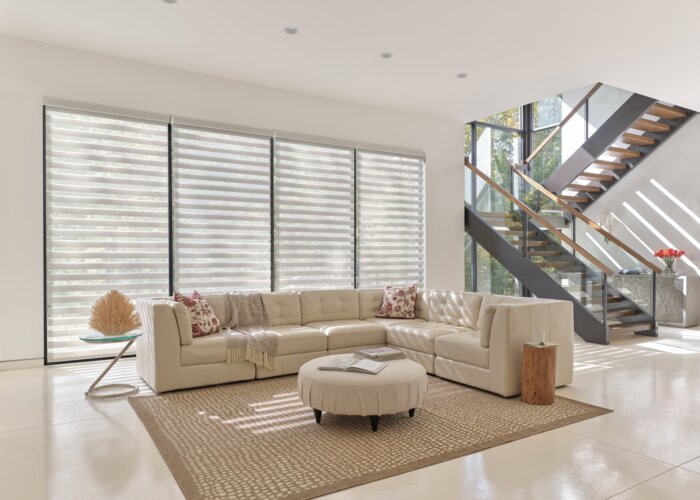
If you've been researching modern window treatments, you've probably come across banded shades. They're one of the fastest-growing shade styles because they solve a problem many homeowners run into: wanting natural light and privacy at the same time.
Traditional blinds can feel busy and outdated. Roller shades often force you to choose between having the shade fully open or fully closed. Banded shades offer something in between.
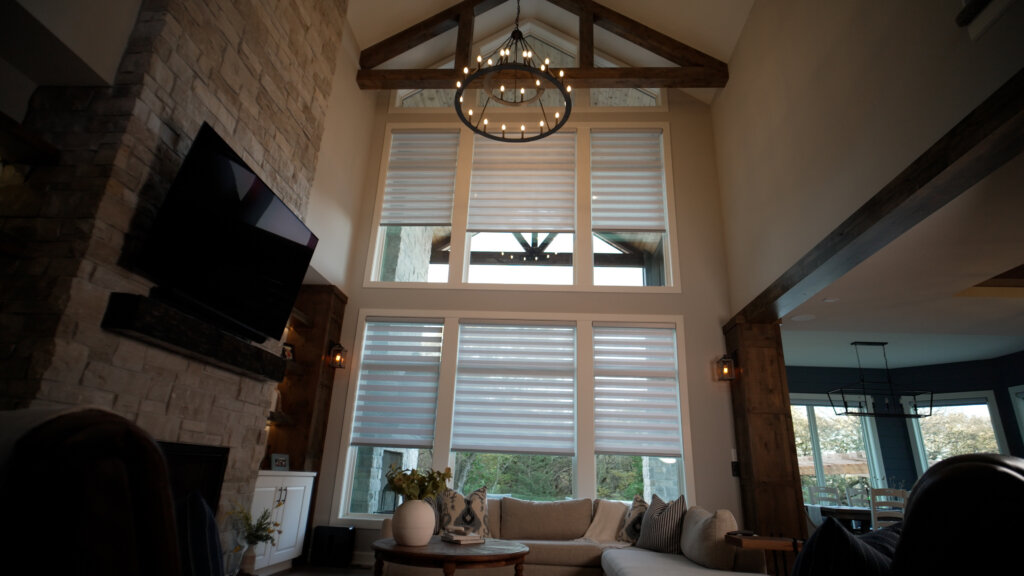
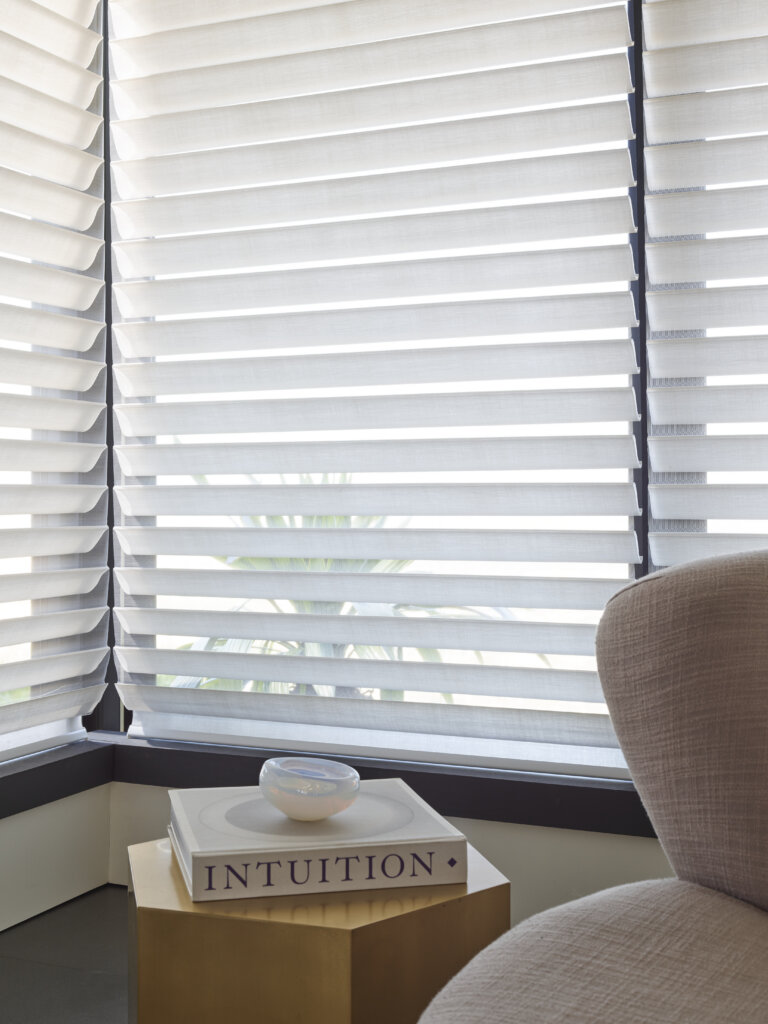
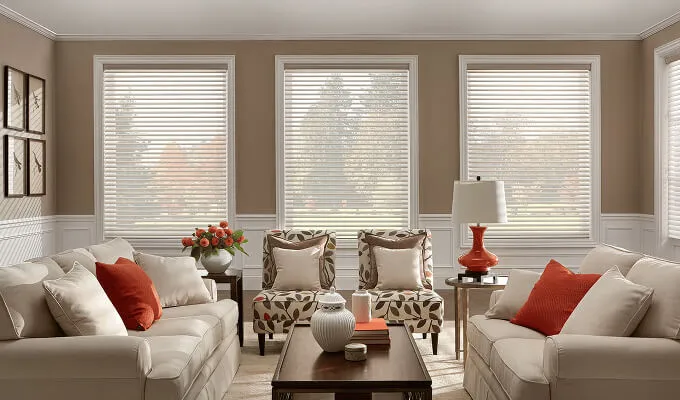
Using alternating sheer and solid fabric bands, they allow you to adjust the amount of light entering a room without completely raising the shade. The result is a clean, modern look with a surprising amount of flexibility.
For homeowners throughout Northwest San Antonio, Alamo Ranch, Castroville, Hondo, Mico, and Rio Medina, banded shades have become a popular option for living rooms, bedrooms, home offices, and anywhere sunlight changes throughout the day.

Why Homeowners Are Choosing Banded Shades
Most people don't walk into a consultation asking for banded shades.
Instead, they describe a problem.
Maybe the afternoon sun turns the living room into a glare-filled oven. Maybe they love their view but don't want neighbors looking inside after dark. Maybe they're tired of adjusting blind slats every few hours.
Banded shades address all of those concerns while maintaining a sleek appearance that works in both modern and traditional homes.
One of the biggest reasons homeowners like them is that they don't have to choose between daylight and privacy. By adjusting the position of the fabric bands, you can fine-tune how much light enters the room without completely blocking the window.
That's something many traditional window treatments struggle to do well.
Are Banded Shades a Good Choice for Texas Homes?
In many cases, yes.
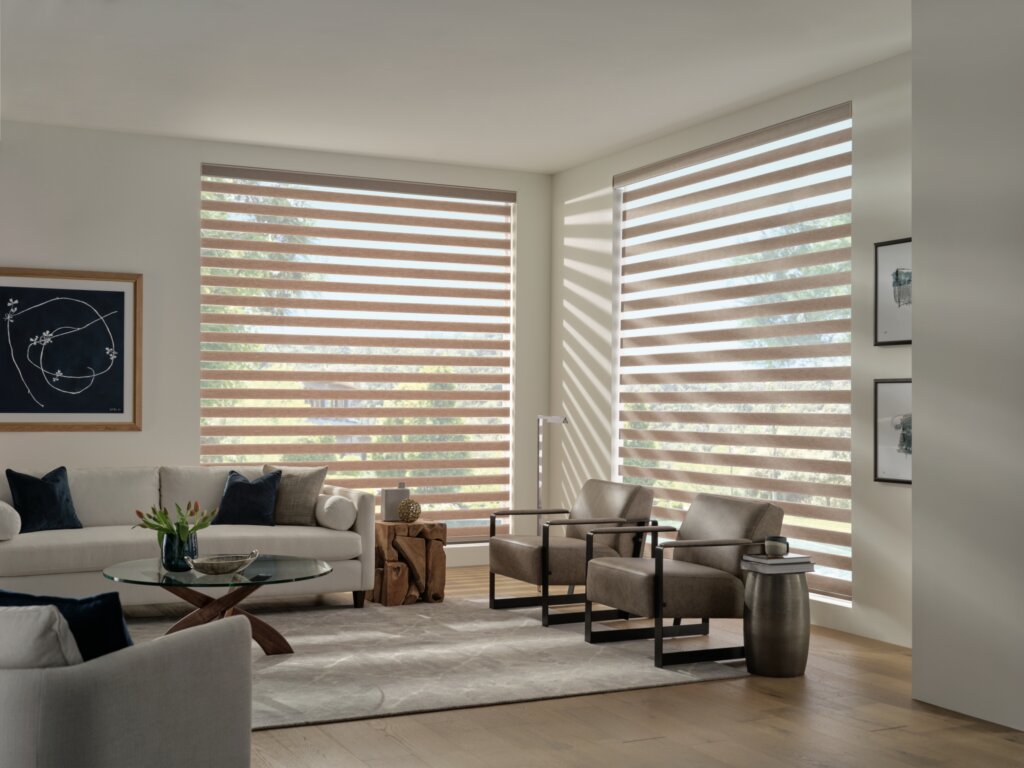
Homes throughout South Texas often feature large windows designed to bring in natural light. That's great until the afternoon sun starts creating glare on televisions, computer screens, and furniture.
Banded shades help soften direct sunlight while keeping rooms bright and comfortable.
They're particularly useful on west-facing windows, where intense afternoon sun can make a room feel warmer and less enjoyable to use. While they aren't as insulating as cellular shades, they can help reduce glare and create a more comfortable environment throughout the day.
For many homeowners, that balance between light control and maintaining an open feel is exactly what they're looking for.
Hunter Douglas vs. Alta Banded Shades
One of the more common questions homeowners ask is whether Hunter Douglas or Alta makes the better banded shade.
The truth is that both manufacturers offer high-quality products, and both have earned strong reputations in the window treatment industry. The better choice usually depends on what features matter most to you.
Hunter Douglas Designer Banded Shades are often selected by homeowners looking for premium fabrics, exclusive design options, and a refined finished appearance. Hunter Douglas also offers PowerView® Automation, one of the most well-known smart shade systems on the market. PowerView allows homeowners to control shades using a remote, smartphone app, voice assistant, or automated schedule. Many homeowners appreciate being able to have shades adjust automatically throughout the day as sunlight conditions change.
Alta Banded Shades appeal to homeowners who want a wide range of fabrics, colors, and operating systems while maintaining a similar modern aesthetic. Alta offers several operation choices, including cordless lift systems, PowerWand™, BLISS™ Automation, and Somfy® motorization. This flexibility can make it easier to match the shade to both your budget and your preferred level of convenience.
In everyday use, both brands provide the same core benefits that make banded shades popular: adjustable privacy, filtered natural light, and a clean, contemporary appearance.
For many homeowners, the final decision comes down to fabrics, colors, operating systems, and which product feels right after seeing samples in their own home.
Banded Shades vs. Roller Shades
At first glance, these two products can look somewhat similar.
The difference becomes obvious once you start using them.
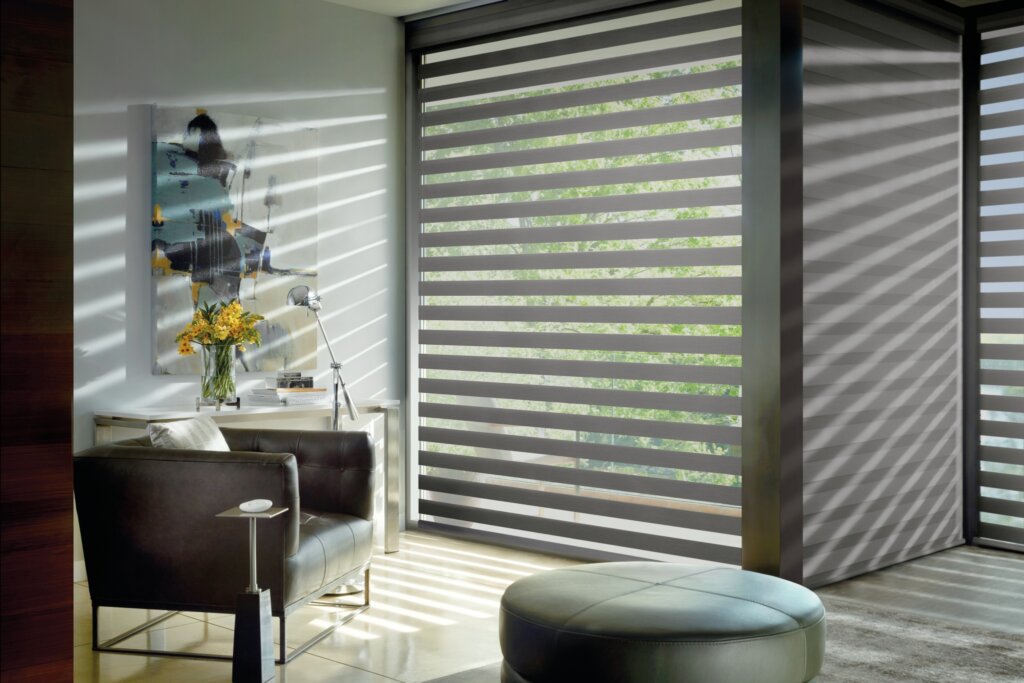
A roller shade is either covering the window or rolled up. If you want more light or a better view, you typically need to raise the shade.
Banded shades allow you to adjust privacy and light without fully opening the window treatment.
For homeowners who like having more control throughout the day, that flexibility is often the deciding factor.
Roller shades still make sense in many situations, especially when simplicity is the goal, but banded shades generally offer more versatility.
Banded Shades vs. Solar Shades
This is another comparison homeowners frequently ask about.
Solar shades are designed primarily to preserve views while reducing glare and UV exposure. They're excellent when maintaining visibility to the outdoors is the top priority.
Banded shades focus more on balancing privacy, light control, and aesthetics.
If your main goal is reducing glare while keeping a view of the Hill Country, a solar shade may be the better fit. If you're looking for a window treatment that combines privacy, light filtering, and decorative appeal, banded shades often come out ahead.
The right choice depends on how you use the room and what problem you're trying to solve.
Why Motorization Is More Popular Than Ever
When homeowners first start shopping for shades, motorization is often viewed as a luxury feature.
After installation, many see it differently.
Large living room windows, patio doors, stairway windows, and hard-to-reach openings can quickly become frustrating when they're adjusted multiple times a day. A motorized shade makes those adjustments effortless.
Beyond convenience, automation can help shades work more effectively. Many homeowners schedule shades to lower during peak afternoon sun and raise again later in the day. Others connect their shades to smart home systems so they can control multiple windows with a single command.
This is especially useful in Texas homes where sunlight conditions can change dramatically throughout the day.
For homeowners investing in new window treatments, motorization is one of the upgrades that tends to provide value long after the installation is complete.
Where Banded Shades Work Best
Banded shades are incredibly versatile, but they tend to be especially popular in:
- Living rooms
- Home offices
- Bedrooms
- Dining rooms
- Large picture windows
- Patio door openings
- Contemporary and transitional homes
Any room where you want both natural light and privacy is typically a strong candidate.
Frequently Asked Questions
Can neighbors see through banded shades after dark?
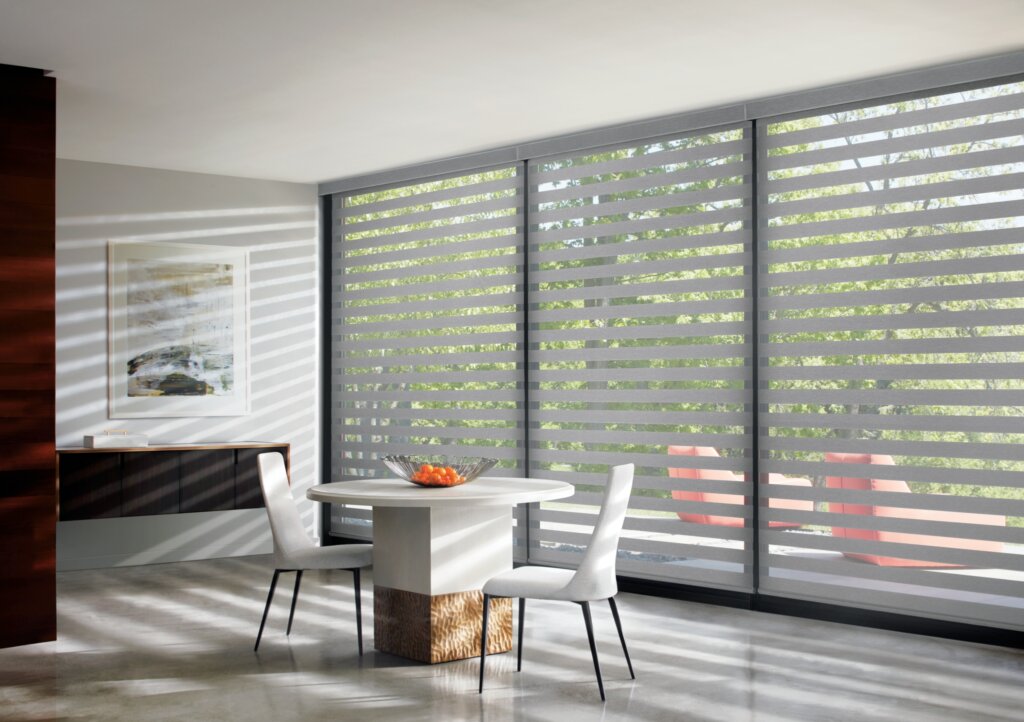
At night, privacy depends on the combination of fabric type and how much light is inside the room compared to outside. When interior lights are on and it’s dark outdoors, most window treatments become more transparent than they appear during the day—and banded shades are no exception.
With light-filtering fabrics, it’s more likely that people outside could see silhouettes, movement, or general shapes inside the home, especially if the room is brightly lit or the window is close to a street or neighboring house.
Room-darkening fabrics offer better nighttime privacy because they reduce the amount of light coming through the shade. In many everyday situations, they provide comfortable privacy for living spaces and bedrooms. However, like most fabric-based window treatments, they are not completely opaque in the same way as a blackout shade or closed hard treatment.
In practical terms:
- Living areas: Usually plenty of privacy with either fabric, depending on lighting
- Bedrooms near neighbors or street-facing windows: Room-darkening fabrics are the safer choice
- Brightly lit rooms at night: Expect some silhouette visibility regardless of fabric type
One thing homeowners don’t always realize is that nighttime privacy is often more about how bright the inside of the home is than the shade itself. Even higher-opacity fabrics can’t fully block visibility if there’s a strong light source right behind them.
For situations where complete nighttime privacy is a priority, many homeowners choose to layer banded shades with drapery or consider a more opaque window treatment.
Can banded shades give you true blackout?
Banded shades can darken a room significantly, but they don’t create true blackout conditions in the same way a blackout roller shade or blackout cellular shade can.
Because of the alternating sheer and solid fabric design, there are always small light gaps where the layers meet. Even with room-darkening fabrics and the solid bands fully aligned, most homeowners will still notice a soft glow or “halo effect,” especially in bright Texas sunlight or during the afternoon hours.
In practical terms, banded shades are designed to reduce light and glare—not eliminate it completely.
That’s why many homeowners find them more than sufficient for everyday use. Bedrooms, living rooms, and media spaces often feel comfortably dimmed, even if the room is not completely dark.
Banded shades typically come in two levels of light control:
- Light-filtering fabrics: Soften sunlight and reduce glare while keeping the room bright and open
- Room-darkening fabrics: Block more light for stronger dimming, better sleep conditions, and improved TV viewing
Where they work especially well is in spaces where you want flexibility—being able to soften morning light, reduce afternoon glare, and create privacy without fully committing to a blackout environment.
If your main goal is true blackout darkness, such as for a nursery, home theater, or shift-worker bedroom, better-performing options include:
- Blackout roller shades with side channels
- Blackout cellular shades
- Layered treatments (banded shades combined with drapery for full coverage)
In short, banded shades are excellent for controlled dimming and everyday comfort, but they are not designed to achieve complete, pitch-black room conditions.
Do banded shades help reduce heat from the Texas sun?
Banded shades can help make a room feel more comfortable by cutting down on direct sunlight and reducing glare. In Texas homes, especially with large west- and south-facing windows, that can make a noticeable difference during peak afternoon hours.
What they do well is soften sunlight before it fully enters the room. That helps reduce that harsh “hot spot” feeling on floors, furniture, and screens, which is often what makes a space feel uncomfortable—not just the temperature itself.
That said, banded shades are not designed as a high-performance insulation product. Because they are fabric-based and not sealed against the window frame, they won’t block heat transfer as effectively as more insulating options.
Homeowners who are primarily trying to improve energy efficiency or reduce cooling costs usually compare them with:
- Cellular (honeycomb) shades, which trap air and insulate better
- Solar shades, which are specifically designed to reduce heat gain while preserving views
- Layered window treatments for added protection on extreme sun-exposure windows
When is motorization worth the added investment?
Motorization is often worth considering for large windows, tall windows, hard-to-reach areas, or homes with multiple shades in the same room. Many homeowners find themselves using their shades more often when operation is as simple as pressing a button.
What are the disadvantages of banded shades?
No window treatment is perfect. Banded shades generally don't provide the same insulation as cellular shades, and they typically cost more than basic roller shades. They also rely on proper alignment of the fabric bands to achieve the desired balance of light and privacy.
Which is better: Hunter Douglas or Alta banded shades?
Both Hunter Douglas and Alta offer high-quality banded shades, so the better choice often comes down to what matters most to you as a homeowner.
Hunter Douglas Designer Banded Shades are frequently chosen by homeowners looking for premium fabrics, exclusive design options, and advanced automation features. The Hunter Douglas PowerView® Automation system is one of the most recognized smart shade platforms available and can be controlled through a smartphone app, voice assistants, remote controls, or automated schedules. Homeowners who prioritize a luxury experience and extensive smart home integration often gravitate toward Hunter Douglas.
Alta Banded Shades appeal to homeowners who want a wide range of fabric choices, band sizes, operating systems, and customization options. Alta offers solutions ranging from cordless operation to PowerWand™, BLISS™ Automation, and Somfy® motorization. Many homeowners appreciate the flexibility to choose the features that fit both their lifestyle and budget.
In terms of everyday performance, both brands provide excellent light control, privacy, and ease of operation. Most homeowners won't notice a dramatic difference in how the shades function day to day. Instead, the decision usually comes down to factors such as:
- Fabric and color preferences
- Smart home and automation goals
- Desired operating system
- Budget and overall project scope
- Design details and finish options
For many homeowners, the easiest way to decide is to compare fabric samples and operating systems in person. A shade that looks perfect online can feel very different once it's installed in your home and viewed in your actual lighting conditions.