Austin homes get plenty of natural light, but that sunlight can also make rooms feel warmer and less comfortable during the hottest parts of the day. If you want a window treatment that offers a clean look, added privacy, and better insulation, cellular shades may be a strong fit.
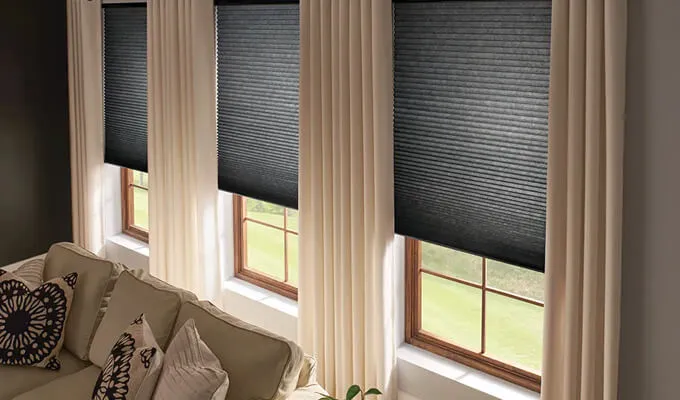
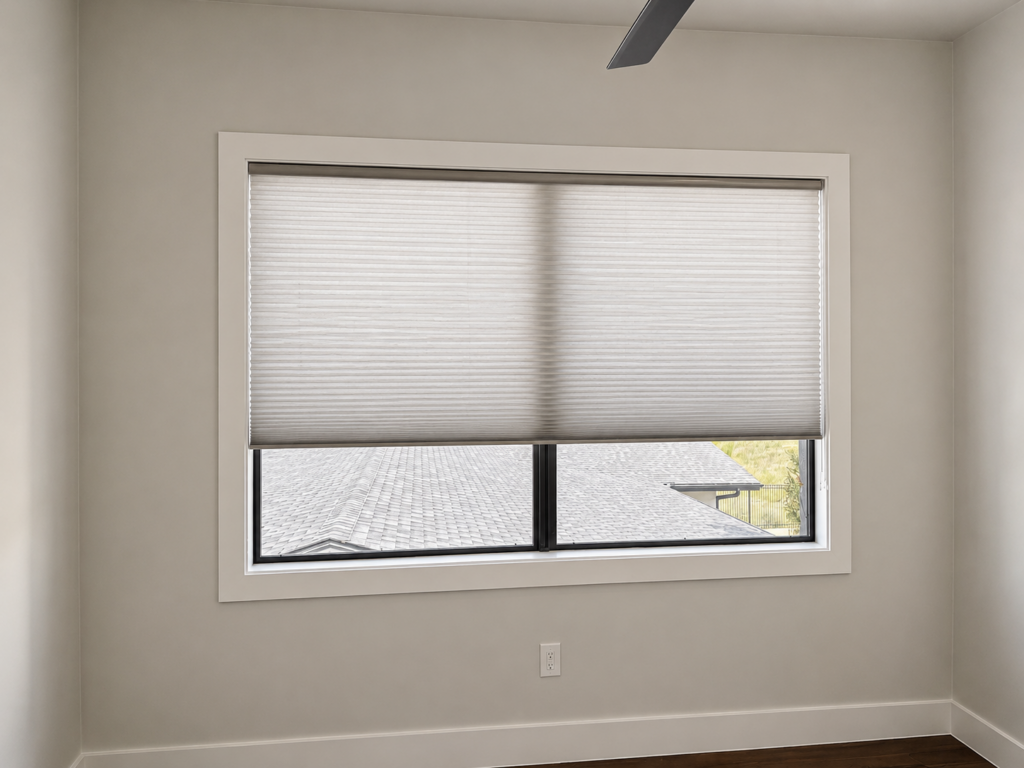
Also known as honeycomb shades, cellular shades for Austin homes are designed with pockets that trap air near the window. This added layer can help slow heat transfer while giving you more control over light and privacy.
The best cellular shades are not necessarily the same for every room. Your ideal option depends on your windows, the direction your home faces, and how you use each space.
Why Choose Cellular Shades for Austin Homes?
Cellular shades are a versatile option for homeowners who want a softer, more streamlined alternative to traditional blinds.
Their honeycomb-style construction creates pockets of air between the window and the room. This makes them particularly helpful in spaces where temperature control matters, such as bedrooms, upstairs rooms, and areas with direct sunlight.
The U.S. Department of Energy notes that tightly installed cellular shades can help reduce unwanted solar heat through windows during cooling seasons. You can learn more in the Department of Energy’s guide to energy-efficient window coverings.
Cellular shades also offer a clean appearance. When raised, they stack neatly at the top of the window. When lowered, they create a soft, finished look without adding visual bulk.
Light-Filtering Cellular Shades for Living Spaces
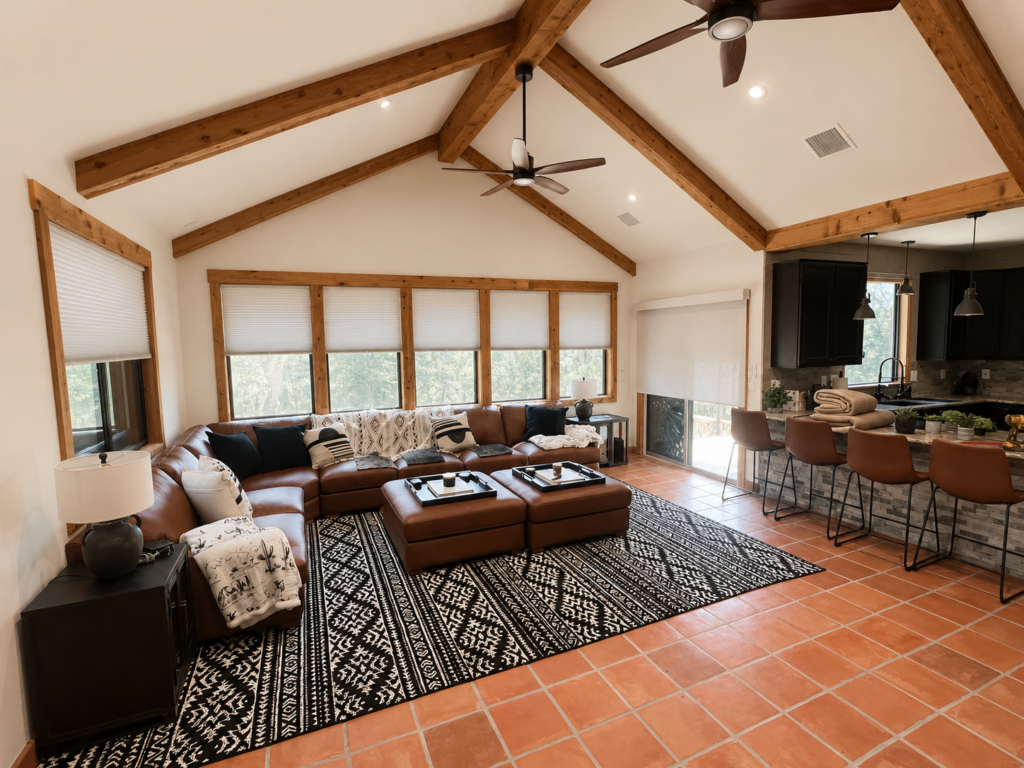
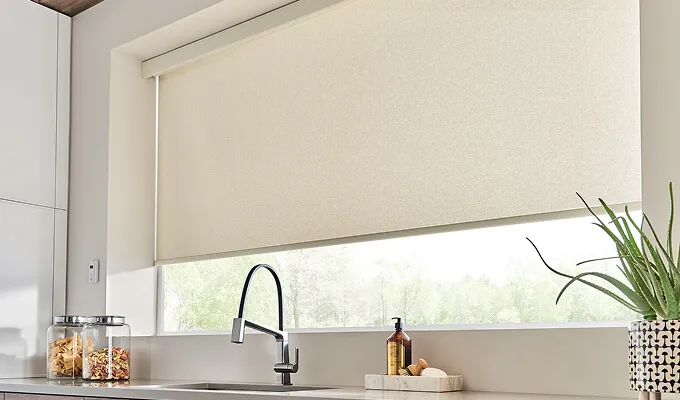
Light-filtering cellular shades soften incoming sunlight without making a room feel dark. They are a great option for living rooms, dining rooms, kitchens, and home offices where you still want natural light during the day.
These shades can help:
- Reduce harsh brightness
- Add daytime privacy
- Soften the appearance of direct sunlight
- Create a more comfortable atmosphere
- Maintain a bright, open feel
For a living room or shared family space, a light-filtering fabric is often the most practical choice.
Blackout Cellular Shades for Bedrooms
Blackout cellular shades are designed for rooms where stronger light control is the priority. They are especially useful for bedrooms, nurseries, media rooms, and other spaces where outside light can interfere with sleep or relaxation.
For Austin homeowners, the direction of the window matters. East-facing bedrooms may become bright early in the morning, while west-facing bedrooms can receive strong afternoon sunlight before bedtime.
Blackout cellular shades can help create a darker, more comfortable environment while also adding privacy.
Keep in mind that small amounts of light may still enter around the edges of a shade. The final result depends on the window frame, mounting style, and fit.
Single-Cell vs. Double-Cell Cellular Shades
When choosing cellular shades for Austin homes, you may see both single-cell and double-cell options.
Single-Cell Cellular Shades
Single-cell shades feature one layer of honeycomb pockets. They offer a clean, streamlined look and may provide enough insulation for many rooms.
They can work well for:
- Living rooms
- Dining rooms
- Home offices
- Guest rooms
- Windows without intense direct sunlight
Double-Cell Cellular Shades
Double-cell shades feature an additional layer of pockets. They may be worth considering in rooms where added insulation is a priority.
They can be helpful for:
- West-facing windows
- Upstairs bedrooms
- Older homes
- Rooms that feel noticeably warmer in the afternoon
- Windows with significant heat transfer
You do not need to choose the same cellular shade for every window. A light-filtering single-cell shade may be a good fit in your living room, while a blackout double-cell shade may make more sense in a west-facing bedroom.
Best Cellular Shades for West-Facing Windows
West-facing windows can be challenging in Austin because they receive strong sunlight during the hottest part of the afternoon.
If your main priority is insulation and privacy, cellular shades can be a strong option. Double-cell fabrics may offer an added layer of protection for rooms that tend to heat up later in the day.
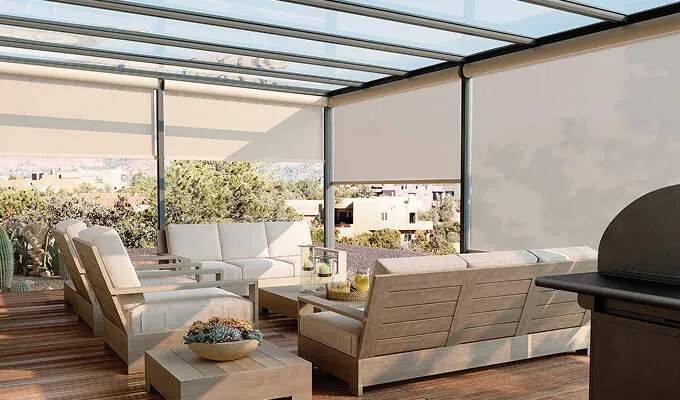
However, cellular shades are not the only option. If your primary goal is reducing glare without losing your view, solar shades may be a better fit. Solar shades filter sunlight while maintaining more visibility outside.
The best choice depends on what matters most to you:
- Choose cellular shades for insulation, privacy, and a softer look.
- Choose solar shades for glare control and preserving your view.
- Consider layered window treatments if you want more flexibility throughout the day.
Cordless Cellular Shades for a Clean Look
Cordless cellular shades are popular with homeowners who want a simple, streamlined design. Instead of using a hanging cord, you raise or lower the shade by adjusting the bottom rail.
Cordless shades are a practical option for many living rooms, bedrooms, nurseries, and home offices. They also create a cleaner appearance around the window.
Top-Down, Bottom-Up Cellular Shades for Flexible Privacy
Some cellular shades are available with a top-down, bottom-up feature. This allows you to lower the shade from the top, raise it from the bottom, or adjust both sections.
This option can be especially useful for:
- Street-facing windows
- Bathrooms
- Bedrooms
- Home offices
- Homes built close to neighboring properties
You can maintain privacy at eye level while still allowing natural light into the room from above.
Motorized Cellular Shades for Added Convenience
Motorized cellular shades make it easier to adjust your window treatments with a remote, app, wall switch, or compatible smart-home system.
Motorization may be especially useful for:
- Tall windows
- Hard-to-reach windows
- Primary bedrooms
- Two-story living rooms
- Homes with several shades
- Homeowners who want scheduled adjustments
For example, you may choose to schedule your shades to lower during the brightest part of the afternoon and open again later in the day.
If you are building a new home or completing a major renovation, it is worth discussing motorization early. You may have more flexibility to plan hardwired options before the walls are finished.
Best Cellular Shades for Each Room
A whole-home window treatment plan should feel cohesive, but each room can still have a different solution based on its function.
Bedrooms
Blackout cellular shades are often the best choice for bedrooms because they provide privacy and stronger light control.
Living Rooms
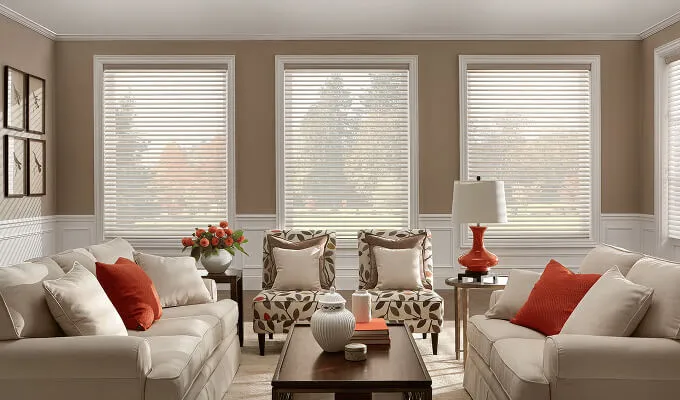
Light-filtering cellular shades soften sunlight while keeping shared spaces bright and welcoming.
Home Offices
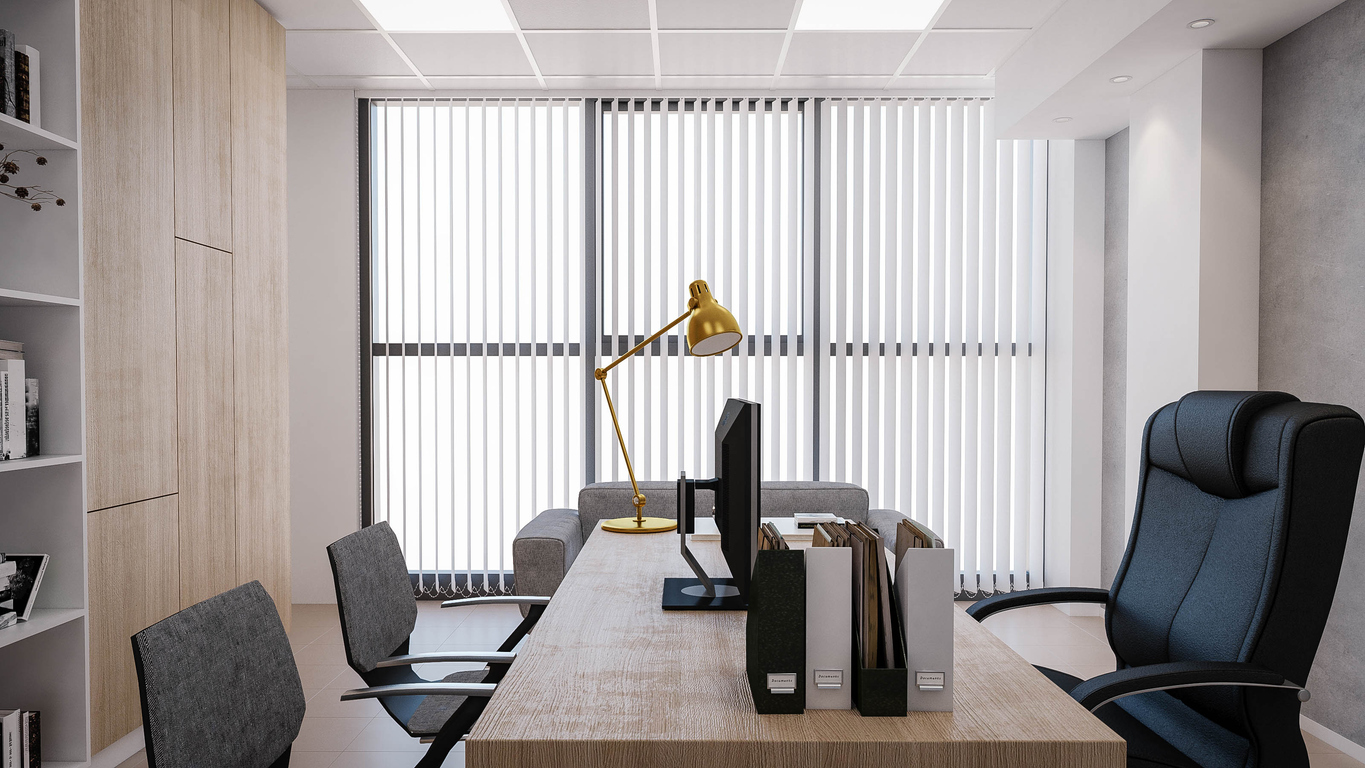
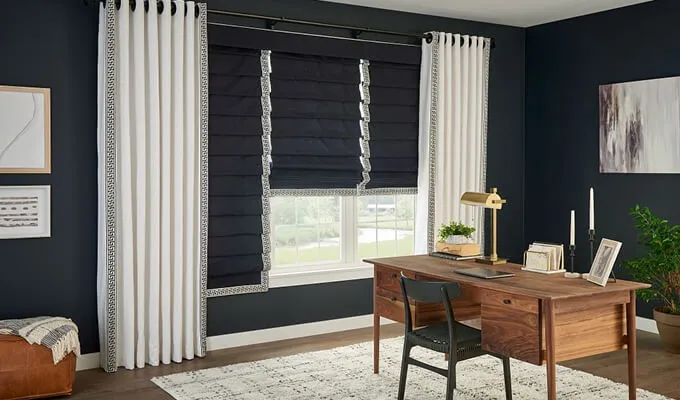
Light-filtering cellular shades can help reduce distracting brightness without making your workspace feel too dark.
Bathrooms
Cellular shades can provide privacy while still allowing natural light into the room. A top-down, bottom-up option may be especially helpful.
Media Rooms
Blackout cellular shades can reduce outside light and create a better environment for watching movies or TV.
Upstairs Rooms
Rooms on the second floor often feel warmer, especially when they receive direct sunlight. Cellular shades may help improve comfort by adding an insulating layer at the window.
Are Cellular Shades Worth It for Austin Homes?
For many homeowners, yes. Cellular shades offer a useful combination of insulation, privacy, light control, and style.
They can be customized with different fabrics, colors, opacity levels, and lift systems, making them suitable for a range of rooms and design preferences.
The best option depends on your priorities:
- Choose light-filtering fabrics for softer natural light.
- Choose blackout fabrics for bedrooms and media rooms.
- Consider double-cell shades for rooms where added insulation matters.
- Choose cordless shades for a clean, simple look.
- Consider motorization for convenience and hard-to-reach windows.
- Explore top-down, bottom-up options when you need privacy without sacrificing daylight.
Frequently Asked Questions About Cellular Shades for Austin Homes
Are cellular shades good for Austin heat?
Cellular shades can be a helpful option for Austin homes because their honeycomb-style construction creates an insulating layer near the window. A tight fit and the right fabric selection can make a difference in overall performance.
Are cellular shades the same as honeycomb shades?
Yes. Cellular shades and honeycomb shades are two names for the same general style of window treatment.
Do cellular shades block all sunlight?
It depends on the fabric. Light-filtering cellular shades soften sunlight while keeping the room bright. Blackout cellular shades provide stronger room-darkening performance.
Are double-cell shades better than single-cell shades?
Double-cell shades may provide additional insulation, but they are not necessary for every room. The best choice depends on the window, sun exposure, and your priorities.
Can cellular shades be motorized?
Yes. Motorized cellular shades are available and can be a convenient option for bedrooms, smart homes, tall windows, and hard-to-reach spaces.
Do cellular shades provide privacy at night?
Yes. When fully lowered, cellular shades provide privacy. Blackout fabrics offer the strongest combination of privacy and light control.
Find the Right Cellular Shades for Your Austin Home
The best cellular shades for Austin homes are the ones selected for your windows, your lifestyle, and the way you use each room.
Bumble Bee Blinds of Austin can help you compare light-filtering, blackout, cordless, top-down, bottom-up, and motorized cellular shades to find the right fit for your home.
Schedule a free in-home consultation or call Bumble Bee Blinds of Austin at 512-846-9922.