
When selecting custom drapery, most homeowners spend their time comparing fabrics, colors, and pleat styles. However, the hardware supporting your drapery is just as important as the fabric itself. The right hardware affects how your drapery hangs, how easily it opens and closes, and how the finished installation looks within your space.
Two of the most common options are drapery rods and drapery tracks. While both are designed to support fabric panels, they offer different advantages depending on the window size, drapery style, and how frequently you plan to use them. Understanding these differences can help you make a more informed decision when designing custom drapery for your Austin home.
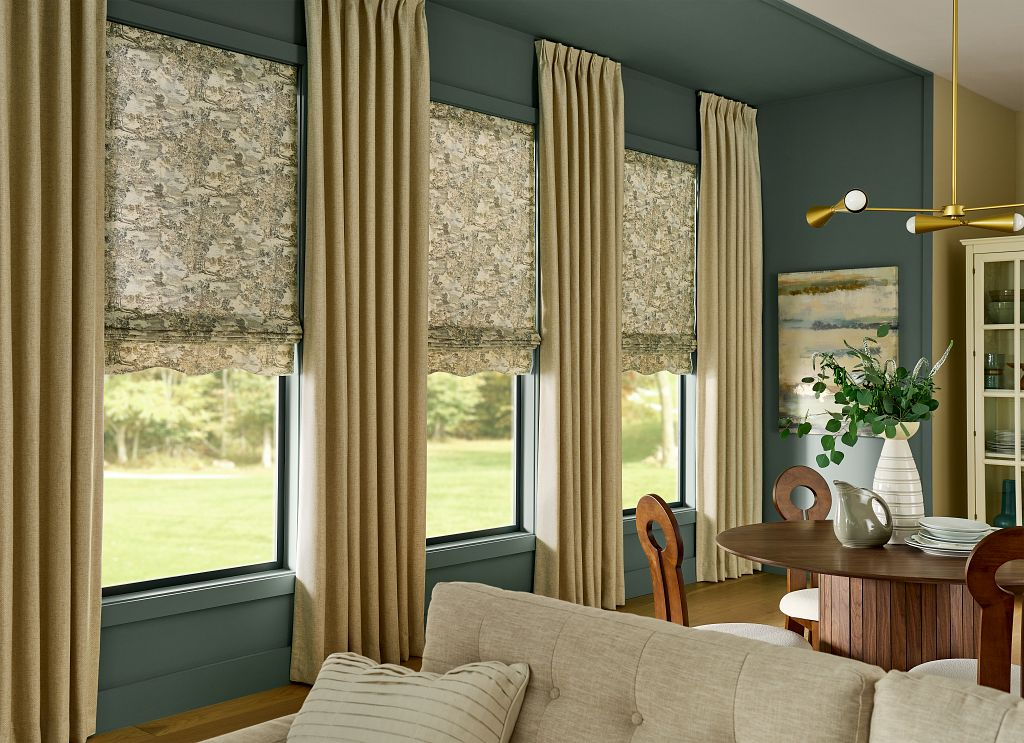
What’s the Difference Between Drapery Rods and Tracks?
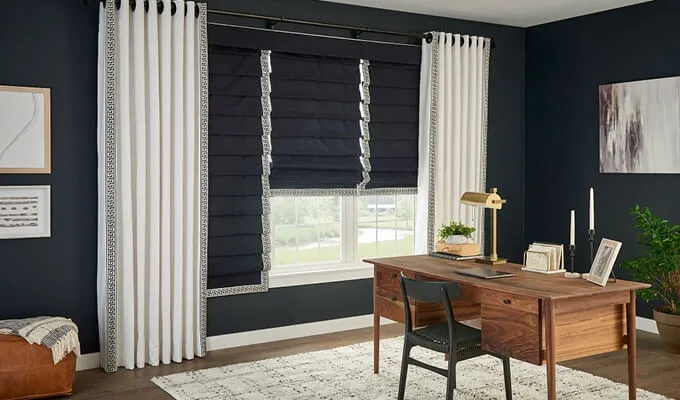
Drapery rods are typically visible hardware systems that support panels using rings, hooks, or other compatible attachments. They are available in various finishes, diameters, and decorative styles, making the hardware itself part of the overall design. Some rods are intended primarily for stationary panels, while others are designed to allow functional drapery to open and close.
Drapery tracks use a channel system with carriers or gliders that move along the track, allowing the panels to travel across the window. Tracks can be mounted on the wall or ceiling and are often selected for their streamlined appearance and smooth operation. Depending on the system, the track may be concealed behind the drapery header or incorporated discreetly into the installation.
Both options can work well with custom drapery, but the right choice depends on your design preferences and functional needs.
| Feature | Drapery Rods | Drapery Tracks |
|---|---|---|
| Appearance | Often decorative and visible | Typically discreet and streamlined |
| Hardware finishes | Wide variety of decorative finishes | Usually simpler, less decorative finishes |
| Operation | Depends on rings, attachments, and rod design | Carriers or gliders move along the track |
| Ceiling mounting | Available with certain systems | Common option |
| Large windows | Possible with appropriate support and hardware | Often well suited for wide openings |
| Motorization | Available with select specialized systems | Common with compatible motorized tracks |
| Common drapery styles | Pinch pleat and decorative panels | Ripplefold, pinch pleat, and other compatible headers |
| Best applications | Decorative installations and traditional or transitional interiors | Modern interiors, sliding doors, and frequently operated drapery |
Neither system is inherently better. The decision comes down to how you want your drapery to look and function.
When Should You Choose Drapery Rods?
Drapery rods are a popular choice when you want the hardware to contribute to the room’s design. Decorative rods can feature finishes such as matte black, brushed brass, or polished nickel, with coordinating rings and finials that complement other elements in the space. This makes them particularly appealing in living rooms, dining rooms, and bedrooms where the hardware is intended to be visible.
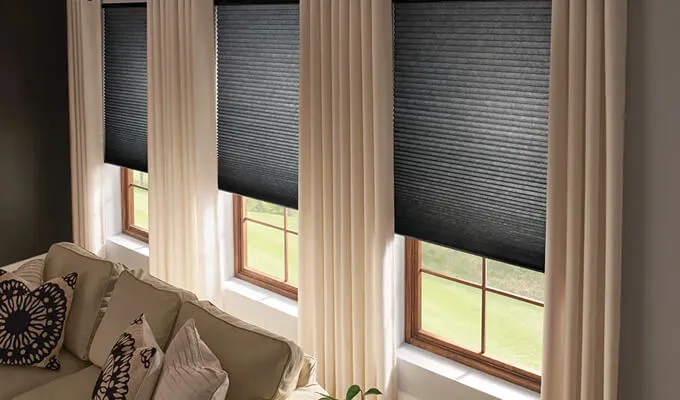
Rods also work well with stationary drapery panels, which are designed to frame the window rather than open and close. In these applications, the hardware can become an intentional design feature without needing to support frequent movement. For homeowners who prefer a more traditional or transitional appearance, a decorative rod paired with tailored pinch pleat drapery can create a finished, structured look.
However, not every rod is designed for frequent operation. Depending on the system, brackets may interrupt the movement of rings, and wide openings may require additional support. If your drapery needs to travel across a large window or sliding glass door, it’s important to select hardware specifically designed for that purpose rather than relying on a standard decorative rod.
When Are Drapery Tracks the Better Option?
Drapery tracks are often preferred when smooth operation and a discreet appearance are priorities. Because the panels move using carriers inside the track, these systems can provide consistent movement across wide windows and sliding glass doors. They are particularly useful for functional drapery that will be opened and closed regularly.
Tracks are also a natural fit for contemporary interiors, especially when homeowners want the fabric to remain the main design feature. A ceiling-mounted track can allow drapery to extend from near the ceiling to the floor, creating a clean, uninterrupted appearance. This approach is common in homes with tall ceilings, large expanses of glass, or modern architectural details.
Another advantage is compatibility with certain drapery header styles. Ripplefold drapery, for example, relies on a specialized track and carrier system to create its evenly spaced waves. Pinch pleat drapery can also operate on compatible tracks, offering a more tailored appearance without requiring a visible decorative rod.
For homes with unusual window configurations, tracks may provide additional flexibility. Some systems can accommodate curved layouts, corners, or other architectural requirements, although the available options depend on the manufacturer and installation conditions.
What About Motorized Drapery?
If you’re considering motorized drapery, the hardware becomes an especially important part of the decision. Motorized systems use specialized components that move the fabric along a compatible track or traversing system, allowing homeowners to open and close their drapery using a remote, app, or supported smart-home controls.
Motorized tracks are commonly used for large windows, tall installations, and sliding glass doors where manual operation may be inconvenient. They can also be useful for homeowners who want to adjust several window treatments without moving from room to room.
While certain specialized rod-style systems offer motorization, a traditional decorative rod generally cannot be converted to a motorized system simply by adding a motor. If motorization is something you’re interested in, it should be discussed early in the design process so the hardware, header style, fabric weight, and operating requirements can be selected together.
Which Hardware Is Right for Your Austin Home?
When deciding between drapery rods and tracks, start by considering how frequently the panels will move. If you’re installing stationary decorative panels, a rod may be an excellent option, particularly if you want to incorporate a decorative finish. If your drapery will open and close daily, a properly selected track or traversing rod may provide a more practical solution.
Window size and mounting location also matter. In Austin homes with expansive sliding glass doors or floor-to-ceiling windows, tracks are often worth considering because they can accommodate wide openings and discreet mounting. However, the appropriate system will depend on the window dimensions, fabric weight, wall construction, and available mounting space.
It’s also important to think about the drapery header style. A ripplefold design requires compatible track hardware, while pinch pleat panels offer more flexibility across different rod and track systems. The header, hardware, and fabric should be selected as a coordinated system rather than as separate decisions.
If you’re still deciding whether your panels need to move at all, our Stationary vs. Functional Drapery Guide explains how that choice affects your overall design. You can also explore our Guide to Drapery Length and Fullness for more information about placement and proportions.
Explore Custom Drapery Hardware in Austin, TX
The right drapery hardware should support the fabric, complement your home’s design, and operate reliably over time. Whether you prefer the decorative appearance of a rod or the streamlined functionality of a track, choosing the right system is an important part of creating custom drapery that works for your space.
At Bumble Bee Blinds of Austin, we help homeowners throughout Austin and the surrounding Central Texas communities select custom drapery, curtains, and hardware based on their windows, design preferences, and everyday needs. During your free in-home consultation, our Design Consultants can review fabric samples, hardware options, mounting considerations, and professional measurements to help you find the right fit.
Ready to explore custom drapery for your home? Schedule your free in-home design consultation to get started.