If you’re considering custom drapery for your Austin home, one of your first questions is probably: How much is this going to cost?
Custom drapery is an investment, but pricing can vary significantly depending on your windows, fabric selections, hardware, and whether you want decorative panels or fully functional drapes.
A pair of stationary panels framing a living room window is a very different project from floor-to-ceiling motorized drapery covering an entire wall of glass.
Understanding what goes into the price can help you establish a realistic budget before scheduling a consultation.
How Much Does Custom Drapery Typically Cost?
At Bumble Bee Blinds of Austin, custom drapery projects generally range from $1,500 to $35,000, depending on the size and scope of the project.
Here is a general breakdown of estimated project costs:
| Project Size | Estimated Cost |
|---|---|
| One room | $1,500–$4,500 |
| A few rooms (2–4) | $4,500–$11,000 |
| Most of the home (5–8 rooms) | $11,000–$20,000 |
| Whole-home drapery | $20,000–$35,000 |
These ranges are intended as budgeting guidelines rather than fixed prices. Your final cost depends on the specific windows, fabric, hardware, and operating system selected.
For a more personalized starting point, you can use our Austin Window Treatment Pricing Estimator.
What Affects the Cost of Custom Drapery?
Several factors determine the final price of custom drapery. While two installations may look similar, differences in fabric, dimensions, and functionality can create significant variations in cost.
1. Fabric Selection
Fabric is one of the biggest factors influencing drapery pricing.
Lightweight fabrics, textured blends, linen, velvet, and specialty materials all have different price points. Fabric quality, pattern, width, and construction can also affect the amount of material required.
In Austin homes, where large windows and strong afternoon sunlight are common considerations, choosing the right fabric involves more than appearance. Homeowners should also consider durability, light filtration, and how the material will perform in the space.
2. Window Size and Drapery Fullness
Larger windows generally require more fabric, which increases the overall cost. However, window width is only part of the equation.
Drapery fullness refers to how much fabric is used to create the folds and volume of the finished panels. A fuller design requires additional material, even when covering the same window.
Ceiling height also matters. Floor-to-ceiling drapery for a room with 12-foot ceilings will typically require more material than drapery installed over a standard-height window.
These details are why accurate measurements are so important when budgeting for custom drapery.
Not sure how high to hang your drapery or how much fabric you’ll need? Read our Guide to Drapery Length and Fullness to learn more.
3. Stationary vs. Functional Drapery
One of the biggest decisions homeowners make is whether their drapery needs to open and close.
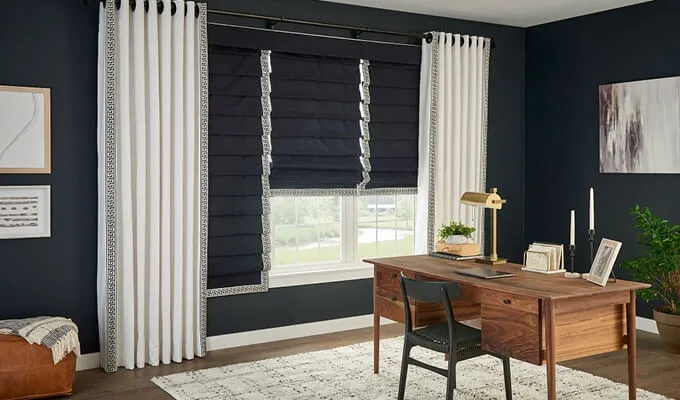
Stationary drapery panels are primarily decorative. They frame the window, introduce fabric and texture, and create a finished appearance without needing to travel across the glass.
Functional drapery is designed to open and close, providing additional privacy and light control.
Functional drapery may require more fabric and specialized hardware, depending on the window width and how the panels operate.
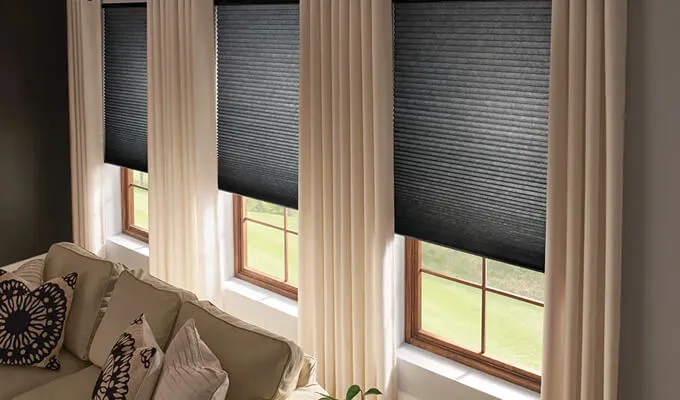
If you already have roller shades or another window treatment handling privacy and sunlight, stationary panels may be worth considering.
4. Drapery Hardware and Header Styles
Hardware is another important part of your drapery investment.
Depending on the design, your project may include decorative rods, rings, finials, ceiling-mounted tracks, or specialized systems for wide windows and sliding glass doors.
The header style also affects how the drapery looks and functions.
For example, ripplefold drapery creates consistent, flowing folds and typically operates on a track system. Pinch pleat drapery offers a more structured appearance and can be paired with compatible rods or tracks.
Your hardware must support the fabric’s weight while allowing the panels to operate smoothly.
5. Drapery Lining
Lining can affect both the performance and cost of custom drapery.
Depending on your needs, you may choose from light-filtering, privacy, room-darkening, or blackout lining options.
A primary bedroom may benefit from blackout lining, while a living room may only need a lighter lining that offers privacy without significantly darkening the space.
Lining can also help protect decorative fabrics from sunlight and improve the way the finished panels hang.
6. Motorized Drapery
Motorized drapery allows you to open and close your window treatments using a remote, app, or compatible smart-home controls.
This option can be especially useful for tall windows, wide openings, and drapery that is opened and closed frequently.
Motorization adds components such as a motorized track, controls, and potentially additional electrical or integration requirements.
The final price depends on the size of the installation, the system selected, and the features you want.
Is Custom Drapery More Expensive Than Ready-Made Curtains?
Generally, yes.
Ready-made curtains are produced in standard sizes and are often purchased separately from the hardware and installation.
Custom drapery is designed specifically for your windows and your home’s architecture.
Instead of choosing from predetermined lengths and widths, you can select the fabric, fullness, header style, lining, hardware, and operation that work best for your space.
Custom drapery also allows for more precise placement, which is particularly important for oversized windows, high ceilings, sliding doors, and unusual architectural features.
The value is not simply in the fabric. It is in having the entire window treatment designed, measured, and installed as one coordinated project.
For homes with angled windows, oversized openings, or unique architectural features, explore our Custom Drapery Solutions for Difficult Windows.
What Is Included in the Price of Custom Drapery?
At Bumble Bee Blinds of Austin, your custom window treatment project includes:
- A free in-home design consultation
- Professional window measurements
- Custom-made window treatments
- Professional installation
- Applicable manufacturer warranty coverage
During your consultation, your Design Consultant will review fabric samples, discuss how you want the drapery to function, and help you select appropriate hardware and finishing details.
Your quote is based on the selections and measurements for your project, giving you a clearer understanding of the total investment before placing an order.
How Can You Stay Within Your Drapery Budget?
If you’re working within a specific budget, there are several ways to approach your project.
Prioritize the rooms that matter most. You don’t have to install custom drapery throughout your entire home at once. Starting with a primary bedroom, living room, or dining room allows you to focus your investment.
Consider stationary panels. If privacy and light control are already handled by another window treatment, decorative panels may provide the appearance you’re looking for without requiring a fully functional drapery system.
Compare fabric and lining options. Different materials and linings can affect the final price. Your Design Consultant can help you compare selections that fit both your design preferences and budget.
Be intentional about motorization. Motorized drapery can be especially beneficial for large or difficult-to-reach windows, but manual operation may be practical in other areas of the home.
The goal is to find the right combination of design, function, and cost for your space.
Get a Custom Drapery Estimate in Austin, TX
There is no universal price for custom drapery because every home and window is different.
At Bumble Bee Blinds of Austin, we help homeowners throughout Austin and the surrounding Central Texas communities select custom drapery that fits their space, design preferences, and budget.
Whether you’re considering simple stationary panels, floor-to-ceiling drapery, or a motorized system, our team can walk you through your options and provide a personalized quote.
Ready to explore custom drapery for your home?
Schedule your free in-home design consultation or use our online pricing estimator to get started.
At Bumble Bee Blinds of Austin, we help homeowners throughout Austin and the surrounding Central Texas communities find custom drapery and curtains that fit their space, design preferences, and budget.