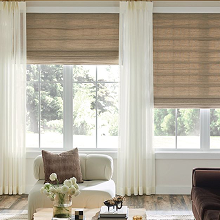
Custom drapery can completely change the way a room feels, but choosing the right fabric is only part of the equation. Length, fullness, placement, and hardware all play a major role in how the finished treatment looks and functions.
Even a beautiful fabric can feel underwhelming if the panels are too short, too narrow, or improperly proportioned for the space. Here are some of the most important details to consider when planning custom drapery for your home.
How Long Should Drapery Be?
In most homes, drapery looks best when it extends all the way to the floor. Where the fabric ends depends on the style you want and how the room will be used.
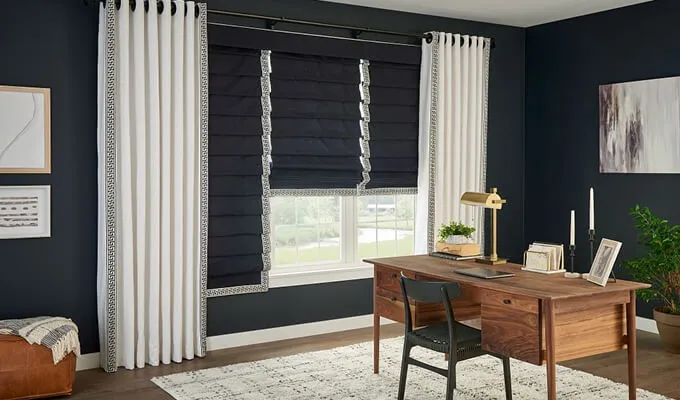
Just touching the floor is one of the most popular options for custom drapery. The panels are measured to meet the floor without excess fabric gathering at the bottom. This creates a clean, tailored appearance and works well in both traditional and contemporary spaces.
Breaking slightly at the floor allows a small amount of additional fabric to rest naturally at the bottom. The result feels softer and a little more relaxed while still looking intentional.
Puddled drapery uses additional length so the fabric gathers noticeably on the floor. This can create a dramatic, luxurious look, particularly with softer fabrics, but it requires more upkeep and is generally better suited to decorative panels rather than drapery that is opened and closed frequently.
One look we typically recommend avoiding is drapery that stops several inches above the floor. Unless there is a specific design reason for it, short panels can make both the drapery and the room feel smaller.
How High Should Drapery Be Mounted?
The placement of the drapery hardware can dramatically affect the finished proportions of a room.
Rather than automatically installing the rod directly above the window frame, the mounting height should be selected based on the architecture of the room, ceiling height, crown molding, window placement, and the overall design.
Mounting drapery higher can help visually elongate a space, but floor-to-ceiling drapery is not always the goal. The best placement is the one that feels intentional within the room and works with the surrounding architectural details.
Custom measurements allow the drapery to be made specifically for that placement instead of trying to force a predetermined curtain length to work.
A Custom Drapery Installation in Spicewood, Texas
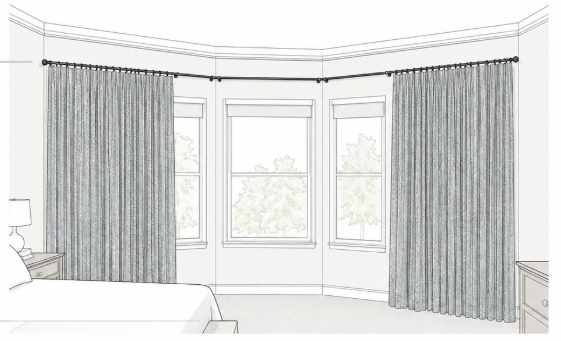
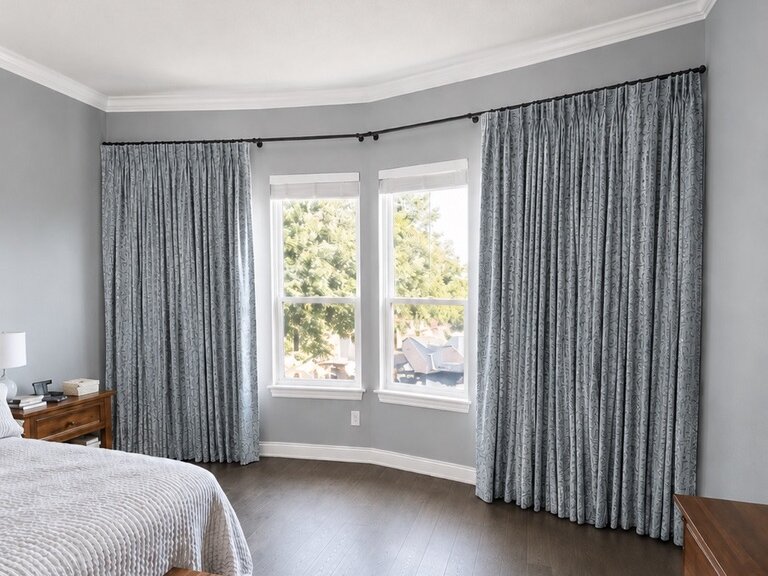
A recent primary bedroom project in Driftwood is a good example of why drapery proportions and installation details need to be considered together.
For this project, we worked alongside Bryce Vandergriff Design to create functional drapery that would provide privacy and light control while adding softness to the bedroom.
Bryce Vandergriff Design worked with the homeowners on the fabric selection, with particular attention paid to coordinating the drapery with new wallpaper being introduced into the room. The final selection was Graber Kelsey Navy, paired with a blackout lining and a classic pinch pleat.
The treatment consisted of two approximately 90-inch-wide sections, with the panels designed to fully open and close rather than serving as decorative side panels.
The finished treatment provides the privacy and room-darkening performance the homeowners needed while adding a much softer layer to the bedroom. The patterned navy fabric also gives the windows enough visual presence to feel intentional without overwhelming the rest of the room.
What Does Drapery Fullness Mean?
Fullness refers to how much fabric is used compared with the finished width of the drapery.
A panel that is technically wide enough to cover a window may still look flat once it is closed. Additional fabric creates the folds, movement, and volume associated with professionally designed drapery.
The appropriate amount of fullness depends on several factors, including:
- Fabric weight and thickness
- Pleat or header style
- Whether the drapery is decorative or functional
- The overall style of the room
- The width of the window or wall
Lighter fabrics often benefit from additional fullness because it gives them more body and movement. Heavier fabrics may require less because the material already creates substantial volume.
The pleat style matters as well. A structured style such as a pinch pleat creates consistent folds and a more tailored appearance, while other header styles can create a softer or more contemporary look.
Should Drapery Extend Past the Window?
In many cases, yes.
Extending the hardware beyond the edges of the window gives the drapery somewhere to stack when it is open. Instead of covering part of the glass, much of the fabric can sit against the wall.
This can make the window appear larger while allowing more natural light into the room.
It is especially important with functional drapery, where the panels will regularly be opened and closed. Properly planning the width of the rod or track helps ensure the treatment looks balanced in both positions.
What About Wide Windows and Unusual Architecture?
Large windows, patio doors, bay windows, angled walls, and other architectural details require additional planning.
The direction the panels open, available wall space, furniture placement, window width, mounting surface, and access to surrounding areas all need to be considered before the final dimensions and hardware are selected.
Sometimes the challenge is not the drapery itself. It is figuring out how to install the hardware correctly within the architecture of the home.
This is one of the major advantages of custom window treatments. Hardware, measurements, panel widths, and installation methods can be adapted to the space rather than being limited by standard curtain sizes or predetermined hardware configurations.
Why Custom Measurements Matter
Drapery proportions are highly dependent on the individual room. Ceiling height, window dimensions, flooring, baseboards, crown molding, hardware, and even wall angles can affect the final measurements.
With custom drapery, the treatment is designed around the space rather than asking the space to accommodate a standard curtain size.
That means the mounting height, panel length, finished width, fullness, pleat style, lining, and hardware can all be planned together for a more intentional result.
Choosing the Right Drapery for Your Home
There is no single drapery length or fullness that works for every room.
The best proportions depend on the architecture of the space, how the drapery needs to function, the fabric being used, and the overall look you want to create.
When those details are considered from the beginning, drapery can do much more than provide privacy or light control. It can soften a room, frame the architecture, add color and texture, and create a finished look that feels completely integrated with the rest of the home.
At Bumble Bee Blinds of Austin, we help homeowners and designers plan custom drapery around the actual dimensions and architecture of each space, including fabric, lining, pleat styles, hardware, measurements, and professional installation.