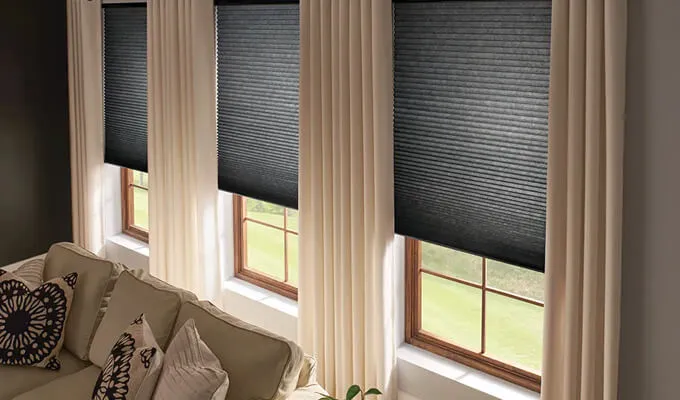
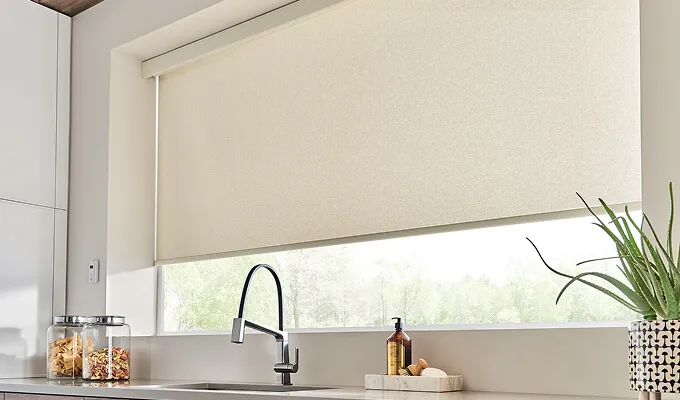
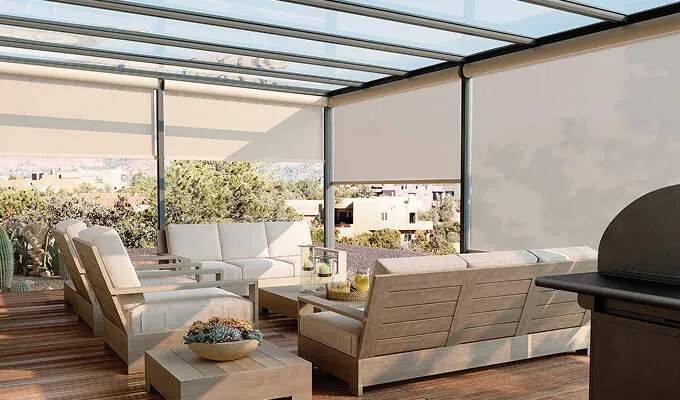
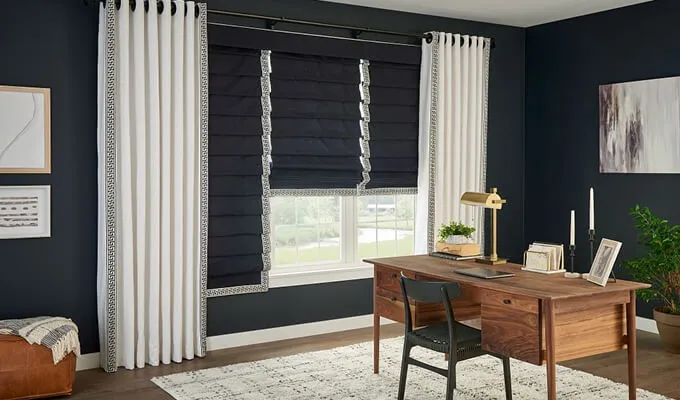
Not every window is a simple rectangle. Angled walls, extra-wide openings, patio doors, corner windows, and unusual architectural details can make choosing window treatments much more complicated. In these spaces, standard-size curtains and off-the-shelf hardware often fall short.
Custom drapery gives homeowners more flexibility because the fabric, hardware, fullness, mounting location, and operation can all be designed specifically for the room.
Why Difficult Windows Require a Custom Approach
With a standard window, measurements and installation are relatively straightforward. More complicated spaces require additional planning.
An angled wall, for example, can affect how a drapery rod connects to the wall and how the panels travel across the opening. An oversized window may require specialized hardware capable of supporting the additional weight of large fabric panels. Patio doors need enough clearance for everyday access while still providing privacy and light control when the drapery is closed.
These details need to be considered before the drapery is ordered, not during installation.
Angled Walls and Unusual Architecture
Angled walls are one of the best examples of where custom hardware becomes important.
Traditional drapery brackets are designed to attach to a flat surface. When walls meet at unusual angles, the mounting hardware may need to be modified or extended so the rod can remain properly positioned.
A professional installer can evaluate the angle, mounting surface, hardware requirements, and desired stack location to create a solution that looks intentional rather than improvised.
Oversized and Extra-Wide Windows
Large windows can create an impressive focal point, but they also require significantly more fabric.
For functional drapery that opens and closes, the hardware must support the weight of the panels while allowing them to move smoothly. The amount of fabric also needs to be calculated carefully so the drapery maintains the proper fullness when closed without creating an unnecessarily large stack when open.
Custom measurements allow the treatment to be proportioned to the entire wall rather than forcing multiple standard panels to cover a large opening.
Patio Doors and High-Traffic Openings
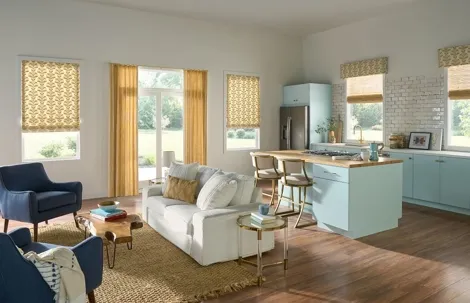
Drapery can work extremely well over patio and sliding doors when it is designed around how the door is actually used.
The panels can be configured to stack primarily on one side, split in the center, or move in another direction depending on the layout of the room. This helps keep the doorway accessible while still giving homeowners the ability to completely cover the glass when privacy or light control is needed.
For frequently used doors, the operating system and hardware are just as important as the fabric selection.
Corners and Multiple Windows
Rooms with windows positioned close to corners can create another challenge. Independent drapery rods may leave awkward gaps or interfere with one another.
Custom hardware configurations can create a more cohesive appearance across the room while accounting for limited mounting space. Drapery can also visually connect multiple windows, helping the entire wall feel more intentional.
Fabric and Lining Matter Too
The shape of the window is only part of the equation.
Fabric weight, lining, pleat style, and fullness all influence how finished drapery hangs and operates. A blackout-lined pinch pleat panel, for example, will behave differently from a lightweight sheer panel.
If privacy or room darkening is important, lining can significantly improve performance. In bedrooms, nurseries, media rooms, and other spaces where controlling outside light matters, blackout lining can help reduce light entering through the main body of the fabric.
Installation Can Make or Break the Finished Look
Beautiful fabric cannot compensate for poorly positioned hardware.
Professional measuring and installation are especially important with difficult windows because small changes in bracket placement, rod height, projection, or panel width can affect how the entire treatment hangs.
The goal is for the finished drapery to look like it was designed as part of the architecture of the room, even when the architecture itself creates challenges.
Difficult Windows Do Not Have to Limit Your Options
Unusual windows often need more planning, but they do not mean homeowners have to settle for a basic solution.
Custom drapery can be designed around angled walls, oversized windows, patio doors, corners, and other challenging spaces while providing the privacy, light control, and softness that make drapery such a versatile window treatment.
At Bumble Bee Blinds of Austin, we measure, design, and install custom window treatments based on the specific architecture and needs of each space. If you have a window that has been difficult to cover, a custom solution may provide far more options than you think.