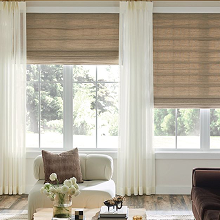
Drapery does more than cover a window. When it is designed specifically for the room, it can soften hard architectural lines, make ceilings feel taller, improve privacy and light control, and bring the entire space together.
That is one of the biggest differences between ready-made curtains and custom drapery. Instead of trying to make a standard-size panel work, every detail can be selected around the window, the architecture, and the way the room is actually used.
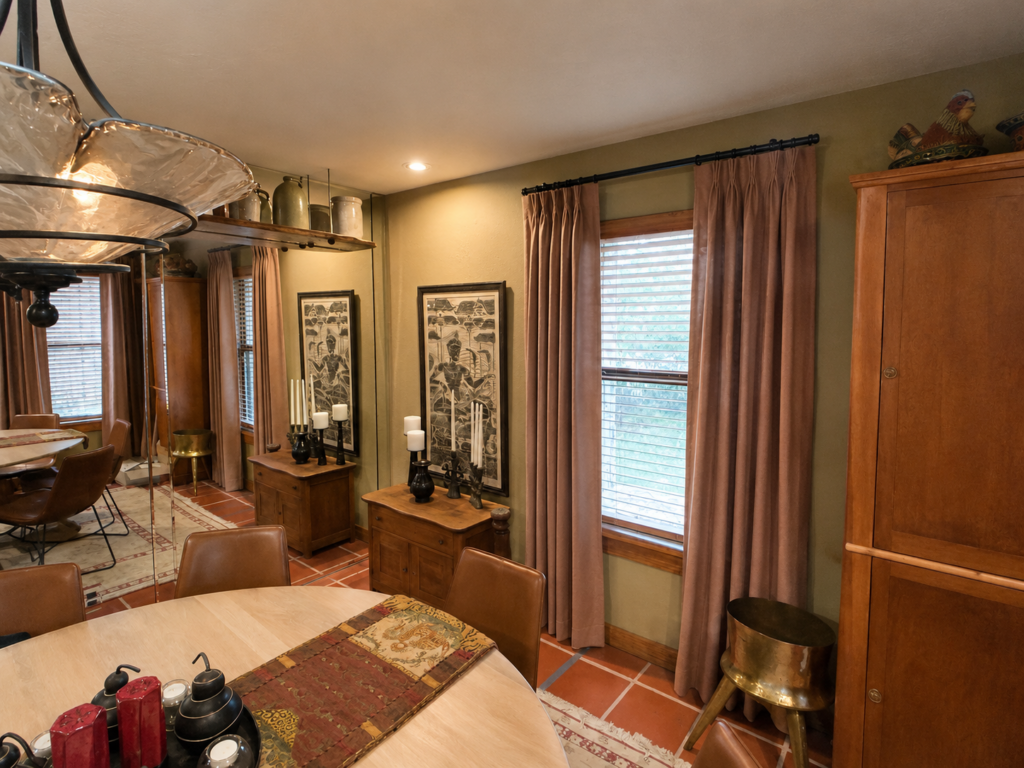
Custom Drapery Is Designed for the Window
Windows rarely come in perfectly standard sizes, especially in custom homes and new construction. Ceiling heights, window placement, wall angles, trim, doors, and surrounding furniture can all affect how drapery should be designed and installed.
With custom drapery, measurements are taken specifically for the space. Panel width, finished length, hardware placement, and stack-back can all be planned before the drapery is fabricated.
The result is a more intentional finished look without panels that feel too short, too narrow, or incorrectly proportioned for the room.
Fabric Changes More Than the Look
Fabric selection is one of the most important parts of designing drapery.
Color and pattern obviously affect the style of the room, but the weight, texture, and construction of the fabric also determine how the drapery hangs and moves.
A lightweight fabric can create a softer, more relaxed appearance, while a heavier textile can create deeper folds and a more structured look. Patterned fabrics can introduce personality without taking over the entire room, while textured neutrals can add dimension to spaces that already have a strong color palette.
Because there are so many options, custom drapery can be designed to complement nearly any interior style rather than forcing the room to work around a limited selection of premade curtains.
The Header Style Matters
One detail homeowners sometimes overlook is the top of the drapery panel.
Pleat and header styles have a major impact on the overall appearance of drapery. Pinch pleats, for example, create a tailored and structured look with consistent folds across the window. Other styles can create something softer, more contemporary, or more relaxed.
The right header should work with the fabric, hardware, and overall design of the room.
These smaller details are often what make professionally designed drapery feel noticeably different from standard curtain panels.
Drapery Can Improve Privacy and Light Control
Drapery can also be highly functional.
Depending on the fabric and lining selected, custom drapery can help reduce glare, create privacy, and control the amount of natural light entering a room.
For bedrooms, blackout lining can significantly reduce incoming light and create a darker sleeping environment. In living spaces, privacy or light-filtering linings can provide coverage while maintaining a softer feel.
Functional drapery panels can be opened when you want natural light and a clear view, then closed when privacy or additional light control is needed.
Drapery and Shades Can Work Together
Drapery does not necessarily have to be the only window covering.
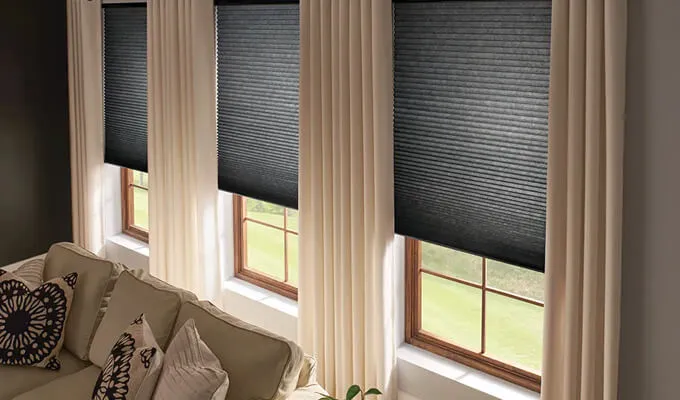
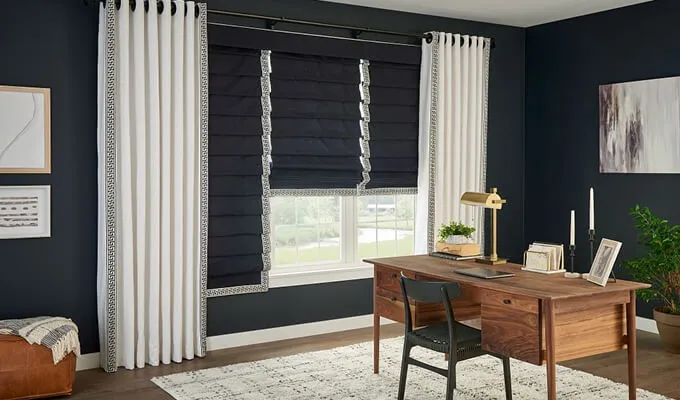
Layering drapery with roller shades, solar shades, woven shades, or other window treatments can provide both function and design flexibility.
For example, a shade can handle everyday privacy and sun control while drapery adds softness, color, and texture around the window. In bedrooms, a blackout shade paired with drapery can provide an additional layer of light control while creating a more finished appearance.
Layered window treatments are particularly useful when homeowners want the functionality of a shade without sacrificing the visual impact of fabric.
Hardware Is Part of the Design
Drapery hardware should not be treated as an afterthought.
Rod style, finish, diameter, brackets, rings, and finials all contribute to the finished appearance. Hardware also has to support the weight of the fabric and work with the architecture around the window.
Placement matters just as much. Installing hardware higher or extending it beyond the window opening can change the perceived proportions of the window and allow more of the glass to remain visible when the panels are open.
In rooms with angled walls, unusual ceilings, or limited mounting space, professional installation becomes even more important.
Custom Drapery Creates a Finished Room
One of the reasons designers frequently incorporate drapery is that fabric adds something hard surfaces cannot.
A room can have beautiful furniture, flooring, lighting, and artwork and still feel like something is missing. Drapery introduces softness and movement while visually connecting the windows to the rest of the space.
It can be subtle or dramatic. It can blend into the architecture or become one of the room’s primary design features.
The important part is that it feels intentional.
Custom Drapery in Austin
At Bumble Bee Blinds of Austin, we help homeowners and designers create custom drapery that works with both the architecture and the way the space is used. From fabric and lining selection to pleat styles, hardware, measurements, and professional installation, each detail is planned for the individual project.
Whether you are finishing a new home, updating a primary bedroom, adding privacy to a living space, or simply trying to make a room feel more complete, custom drapery can completely change the way the space looks and feels.
Ready to explore custom drapery for your home? Schedule a complimentary consultation with Bumble Bee Blinds of Austin to see fabrics, hardware, and window treatment options in your space.